

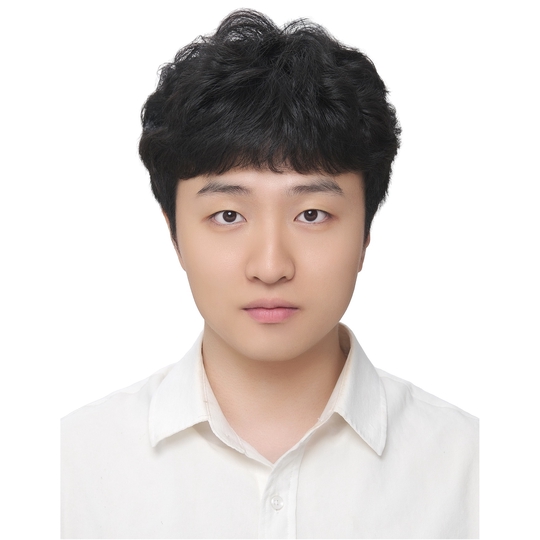
 Changhun Kim
· 4 previous affiliations
- University of British ColumbiaSince 2025
- External Collaboartor · 2025–2026
- External Collaborator · Since 2025
- University of Wisconsin–MadisonSince 2026
- Graduate Teaching Assistant · Since 2026
- Current
- Ph.D., Computer Science · 2026
- AITRICS2023–2026
- Researcher · 2023–2026
- M.S., Artificial Intelligence · 2022–2024
- B.S. Student · 2017–2022
- Undergraduate Research Assistant · 2019–2020
Research Overview
Changhun Kim focuses on trustworthy machine learning, out-of-distribution generalization, and explainable artificial intelligence across diverse modalities. His trajectory spans test-time adaptation for speech and spatial data, as well as generative modeling for audio synthesis. His most recent work emphasizes temporal feature attribution and structure-aware architectures for analyzing complex, asynchronous time series.
Research Trajectory
Kim’s early research addressed distribution shifts in machine learning models, particularly focusing on adapting pre-trained systems to unlabeled data during inference. He introduced SGEM: Test-Time Adaptation for Automatic Speech Recognition via Sequential-Level Generalized Entropy Minimization, a framework designed to adapt automatic speech recognition (ASR) models to test instances without requiring access to the original source data. Moving beyond naive greedy decoding at the frame level, this work utilized beam search to handle the sequential nature of model outputs. This contribution advanced the broader area of Robust Audio Modeling Under Acoustic Domain Shift and intersected with research directions such as Test Time Adaptation via Entropy Minimization and Learning from What an Input Is Not.
Expanding his focus on test-time adaptation to spatial modalities, Kim collaborated on CloudFixer: Test-Time Adaptation for 3D Point Clouds via Diffusion-Guided Geometric Transformation. This research tackled the performance degradation caused by noisy real-world sensor data, which frequently suffers from occlusion, limited resolution, and scale variations. By employing a pre-trained diffusion model to convert test instances back to the source domain, the work provided an input-adaptation strategy that contributed to the research direction of Unsupervised Domain Adaptation for Sparse 3D Point Clouds.
In the domain of audio generation, Kim participated in the development of Stable-TTS: Stable Speaker-Adaptive Text-to-Speech Synthesis via Prosody Prompting. This framework addressed the sensitivity of existing text-to-speech systems to the quantity and quality of target speech samples. By leveraging a small subset of high-quality prior samples, the method achieved consistent prosody while accurately capturing the target speaker's unique timbre.
Concurrently, Kim’s research expanded into explainable artificial intelligence (XAI), particularly for sequential and temporal data. He co-developed TIMING: Temporality-Aware Integrated Gradients for Time Series Explanation, which critiqued existing XAI methods for estimating point-wise attribution magnitudes without considering their directional impacts on predictions. To systematically evaluate how features contribute positively or negatively, the research introduced novel metrics—Cumulative Prediction Difference (CPD) and Cumulative Prediction Preservation (CPP). This work advanced the broader field of Distribution Compliant Feature Attribution.
Continuing his work on complex sequential data, Kim contributed to Structure-Aware Set Transformers: Temporal and Variable-type Attention Biases for Asynchronous Clinical Time Series. This research enhanced standard point-set models for analyzing electronic health records by injecting learned biases into the attention mechanism. This approach effectively reintroduced critical temporal and variable-type relationships that are typically lost during standard event tokenization, leading to improved prediction accuracy in clinical settings.
In the realm of representation learning, he collaborated on Soft Equivariance Regularization for Invariant Self-Supervised Learning. This work identified an optimal training balance for self-supervised models by maintaining invariance at the final output while enforcing equivariance in intermediate layers. The proposed regularization method improved classification, object detection, and overall robustness without adding significant computational overhead.
Most recently, Kim led the development of Delta-XAI: A Unified Framework for Explaining Prediction Changes in Online Time Series Monitoring. Addressing the challenge of interpreting fluctuating model predictions in real-time environments—such as monitoring a patient's risk of sepsis in an intensive care unit—this framework unified multiple existing XAI methods. It also introduced Shifted Window Integrated Gradients (SWING), an algorithm designed to capture temporal dependencies more accurately than traditional static explanation methods.
Current Directions
The most recent papers in the evidence indicate a strong focus on explainable AI for dynamic and sequential environments. Current work investigates how to reliably interpret machine learning models applied to asynchronous time series, particularly in online monitoring scenarios where predictions fluctuate over time. This involves developing temporality-aware attribution methods and structure-aware architectures that preserve complex variable relationships in clinical data. Additionally, recent efforts explore fundamental improvements to self-supervised learning by balancing invariance and equivariance, aiming to enhance the robustness and reliability of visual representations.
Profile updated
Loading new papers…
Other researchers whose papers cluster into the same research directions — a proxy for overlapping technical interests and shared intellectual neighborhoods.
See something wrong? Report a mistake