

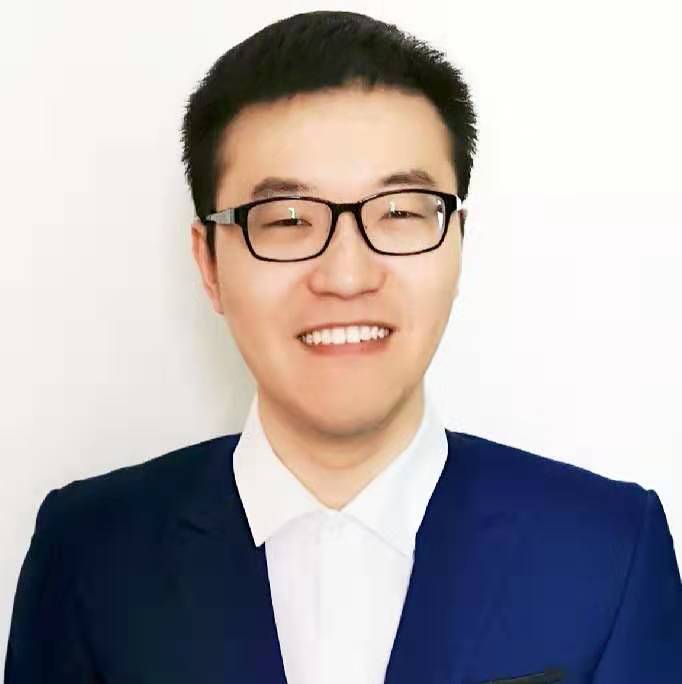
 Changde Du
· 2 previous affiliations
- Chinese Academy of SciencesSince 2023
- Associate Professor · Since 2023
- Huawei Technologies (China)2019–2021
- Researcher · 2019–2021
Research Overview
Changde Du focuses on neural encoding and decoding, multimodal neural computation, and brain-computer interfaces. His trajectory spans from early work in reconstructing visual stimuli from brain activity to developing unified frameworks that align neural signals with vision and language models. Currently, his research emphasizes brain-machine fusion, exploring how cognitive representations can enhance artificial intelligence and how large models can decode complex dynamic vision.
Research Trajectory
Changde Du’s early research established foundational methods for translating human brain activity into interpretable visual and semantic representations. In 2019, he introduced Reconstructing Perceived Images From Human Brain Activities With Bayesian Deep Multiview Learning, which provided a probabilistic framework for recovering visual stimuli from neural data. He subsequently expanded on these decoding techniques with Structured Neural Decoding With Multitask Transfer Learning of Deep Neural Network Representations in 2022, leveraging the hierarchical features of deep neural networks to improve decoding accuracy. This line of inquiry culminated in Decoding Visual Neural Representations by Multimodal Learning of Brain-Visual-Linguistic Features (2023), which demonstrated that jointly modeling brain signals alongside visual and linguistic data could yield richer, more accurate reconstructions of visual neural representations.
By 2024, Du’s focus broadened to encompass auditory processing and the integration of large language models (LLMs) into neural decoding pipelines, advancing the research direction of Multimodal Alignment for Neural Signal Decoding. He developed Brain Prompt GPT (BP-GPT) in Open-vocabulary Auditory Neural Decoding Using fMRI-prompted LLM, a novel system that treats functional magnetic resonance imaging (fMRI) signals as soft prompts to guide a pre-trained language model in reconstructing continuous speech. Parallel to this, he explored the broader area of Universal Neural Decoding Across Idiosyncratic Brains with Reverse the auditory processing pathway: Coarse-to-fine audio reconstruction from fMRI. This work mimicked the human auditory system in reverse, using contrastive language-audio pretraining (CLAP) to decode fMRI data into a semantic space before generating fine-grained audio. During this period, he also investigated how artificial systems mirror human cognition, participating in the discovery that Human-like object concept representations emerge naturally in multimodal large language models.
A significant portion of Du’s recent trajectory addresses the complex challenge of decoding human emotion from neural and physiological signals. In 2024, he introduced Augmented Emotional Semantics Learning (AESL) in Multi-label Class Incremental Emotion Decoding with Augmented Emotional Semantics Learning. This framework tackled challenges in the area of Low-Latency Architectures for Real-Time Neural Decoding and the domain of Task Order Sensitivity in Continual Learning by allowing models to learn new, fine-grained emotion categories over time without catastrophic forgetting. He extended this architecture the following year with EmoGrowth: Incremental Multi-label Emotion Decoding with Augmented Emotional Relation Graph, which utilized continuous affective dimensions like arousal and valence to map emotional relationships. His work on emotion also includes mapping the spatial organization of these processes in the brain, as detailed in Identifying the hierarchical emotional areas in the human brain through information fusion, and demonstrating that multimodal AI can predict neural responses to evocative stimuli, as shown in Bridging the behavior-neural gap: A multimodal AI reveals the brain's geometry of emotion more accurately than human self-reports.
In 2025 and 2026, Du’s research increasingly emphasized "brain-machine fusion"—using cognitive principles to improve AI, and using advanced generative AI to decode the brain. He proposed NeuralOOD: Improving out-of-distribution generalization performance with brain-machine fusion learning framework, which fuses visual features with fMRI-simulated cognitive knowledge to make deep neural networks more robust to domain shifts. Returning to visual decoding, he addressed the methodological challenge of Balancing Generative Priors and Neural Fidelity in Brain Decoding and the specific problem of Decoding Dynamic Vision from Slow Hemodynamic Signals with Mind-Animator. Detailed in Animate Your Thoughts: Reconstruction of Dynamic Natural Vision from Human Brain Activity, this two-stage framework reconstructs high-quality video from fMRI by independently decoding semantic, structural, and motion features using an inflated Stable Diffusion model. Most recently, Du and collaborators introduced Mind-Omni: A Unified Multi-Task Framework for Brain-Vision-Language Modeling via Discrete Diffusion (2026), which converts continuous brain signals into discrete tokens to enable joint modeling of images, text, and neural activity across multiple encoding and decoding tasks.
Current Directions
Based on his most recent work, Du’s current research focuses on building unified, multi-task architectures that seamlessly bridge biological intelligence and artificial foundation models. A primary direction is the development of generalist frameworks, such as Mind-Omni, that utilize discrete diffusion and tokenization to handle diverse brain-vision-language tasks simultaneously, moving away from specialized, single-purpose decoding models.
Additionally, he is actively investigating the reconstruction of dynamic, continuous experiences—such as natural vision and continuous speech—from slow hemodynamic brain signals. This involves adapting powerful generative priors, like video diffusion models, while ensuring the outputs remain faithful to the underlying neural activity rather than hallucinating details. Finally, his recent projects emphasize bidirectional brain-machine fusion, where insights extracted from human brain activity are used not only to decode cognitive states but also to fundamentally improve the out-of-distribution generalization and robustness of artificial neural networks.
Profile updated
Loading new papers…
Other researchers whose papers cluster into the same research directions — a proxy for overlapping technical interests and shared intellectual neighborhoods.
See something wrong? Report a mistake