

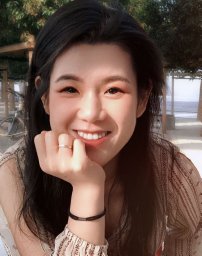
 Chang Sun
· 4 previous affiliations
- Maastricht UniversitySince 2015
- Assistant Professor · Since 2024
- Assistant Professor · Since 2023
- Postdoc · 2022–2024
- Postdoctoral Researcher · 2017–2022
- Doctor of Philosophy - PhD, Data Science · 2017–2021
- Intern researcher · 2016–2017
- Master of Science (M.S.), Artificial intelligence · 2015–2017
- Visiting Researcher · 2023
- Steno Diabetes Center Aarhus2022
- Visiting Researcher · 2022
- Centraal Bureau voor de Statistiek2017
- Internship Student · 2017
Research Overview
Chang Sun focuses on privacy-preserving health informatics, synthetic medical data generation, and the application of generative artificial intelligence to clinical domains. Early work established frameworks for secure, distributed health data analytics and citizen-centric data sharing. More recently, the research trajectory has shifted toward advanced generative models, including ontology-enhanced adversarial networks for simulating rare diseases and lightweight vision-language models for radiological analysis.
Research Trajectory
Chang Sun’s research evolution demonstrates a consistent focus on overcoming the barriers to accessing and utilizing sensitive medical data. The early phase of this trajectory centered on infrastructural and cryptographic approaches to data privacy. A foundational collaborative effort in this area is detailed in Using the Personal Health Train for Automated and Privacy-Preserving Analytics on Vertically Partitioned Data (2018). As a second author, Sun contributed to a proof-of-concept infrastructure designed to execute data mining algorithms across vertically partitioned datasets. This work addressed the critical bottleneck of analyzing big data across disparate healthcare and non-healthcare institutions without centralizing sensitive records or violating privacy constraints.
By 2023, Sun’s focus within health informatics had expanded to emphasize individual data ownership and consent. Leading the research as first author, Sun proposed the ciTIzen-centric DAta pLatform (TIDAL): Sharing distributed personal data in a privacy-preserving manner for health research. This platform was designed to align with stringent data protection regulations while empowering citizens to make fine-grained decisions about how their personal health data is used for secondary research. The project highlighted a shift toward decentralized, user-controlled data sharing mechanisms as a means to encourage broader public participation in health research.
Concurrently, Sun recognized that legal and privacy restrictions often render real patient data entirely inaccessible, prompting a significant methodological pivot toward synthetic data generation. In Generating synthetic personal health data using conditional generative adversarial networks combining with differential privacy (2023), Sun led the development of a framework that merged conditional Generative Adversarial Networks (GANs) with differential privacy guarantees. This work specifically tackled the algorithmic challenges of medical datasets, such as severe class imbalance and the difficulty of preserving complex variable relationships when simulating data for minority patient populations.
Building on this foundation, Sun’s subsequent first-author work addressed a fundamental limitation of standard GANs: their inability to generate data for conditions not present in the training set. In Generating unseen diseases patient data using ontology enhanced generative adversarial networks (2025), Sun introduced Onto-CGAN, a novel generative framework that integrates formal knowledge from disease ontologies into the adversarial training process. By bridging data-driven generation with structured medical knowledge, this approach enabled the synthesis of realistic electronic health records for rare or previously unseen diseases, evaluated rigorously through variable distributions and correlation coefficients.
Most recently, Sun has taken on senior leadership roles in expanding generative AI into multimodal clinical applications. As the principal investigator and last author of Adapting Lightweight Vision Language Models for Radiological Visual Question Answering (2025), Sun guided research into the intersection of medical imaging and natural language processing. This work addressed the scarcity of expert-labeled radiological images and the intricate visual patterns of medical scans by fine-tuning a lightweight, 3-billion-parameter vision-language model. The study demonstrated that smaller, highly curated models can achieve robust performance in complex clinical reasoning tasks without the computational overhead of massive foundation models.
Current Directions
The most recent papers in the evidence indicate that Chang Sun’s current research agenda is heavily focused on the maturation and clinical validation of generative AI across multiple medical modalities. A primary theme is the integration of external clinical knowledge—such as formal disease ontologies—into deep learning architectures to overcome the limitations of purely data-driven models, particularly in zero-shot scenarios involving rare diseases.
Additionally, Sun is actively involved in synthesizing and evaluating the broader landscape of medical AI. Recent collaborative work investigates the use of generative models not just for tabular electronic health records, but across imaging, text, and physiological signals. This direction emphasizes the need for robust evaluation methods, the incorporation of patient-specific context, and the development of standard benchmarks. The overarching goal of this current phase is to advance synthetic data and multimodal models beyond simple data augmentation, positioning them as reliable, privacy-preserving tools for fundamental medical research and clinical decision support.
Profile updated
| Paper | Venue | Year |
|---|---|---|
| Adapting Lightweight Vision Language Models for Radiological Visual Question AnsweringGitHubadishourya/ | Bnaic/benelearn | 2025 |
Loading new papers…
Loading research neighbors…
See something wrong? Report a mistake