

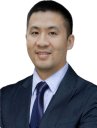
 Chang Su
· 2 previous affiliations
- Cornell UniversitySince 2023
- Assistant Professor · Since 2023
- Postdoc · 2018–2021
- Temple University2021–2023
- Assistant Professor · 2021–2023
4 other authors named Chang Su: Chang Su (Tsinghua University · 5 papers), Chang Su (Huawei Technologies (China) · 2 papers), Chang Su (Shanghai Jiao Tong University · 1 paper), Chang Su (Oracle (United States) · 1 paper)
Research Overview
Chang Su focuses on machine learning, healthcare data mining, and health informatics, with a particular emphasis on the integration of multi-modal biomedical data. His work addresses the challenges of synthesizing information from diverse sources, including electronic health records (EHR), multi-omics data, neuroimaging, and social determinants of health (SDoH). By developing advanced computational frameworks, Su aims to improve disease subtyping, predict clinical trajectories, and identify potential drug repurposing candidates, particularly for neurodegenerative conditions such as Parkinson’s disease and Alzheimer’s disease.
Research Trajectory
The evolution of Su’s research reflects a transition from general machine learning and social network analysis toward specialized applications in biomedical informatics and precision medicine. His early work (2013–2018) focused on fundamental problems in information fusion and network dynamics. During this period, he investigated semi-supervised classification for heterogeneous data and the propagation of topics within social networks. For instance, in Web page and image semi-supervised classification with heterogeneous information fusion, Su explored methods for combining disparate data types to improve classification accuracy, a methodological precursor to his later work in multi-modal health data. He also developed algorithms for community detection in directed online social networks and models for capturing heterogeneity in diffusion networks, establishing a foundation in graph-based modeling and the analysis of complex, interconnected systems.
Starting around 2019, Su’s focus shifted toward the biomedical domain, specifically addressing the challenges of information retrieval and semantic understanding in clinical contexts. He developed GRAPHENE: A Precise Biomedical Literature Retrieval Engine with Graph Augmented Deep Learning and External Knowledge Empowerment, which utilized graph-augmented document representation to capture global biomedical concepts from external knowledge sources. This period also saw contributions to semantic text matching, as seen in Interactive Attention Networks for Semantic Text Matching, which addressed issues of out-of-vocabulary keywords and sparse matching matrices in information retrieval tasks. Su also co-authored a comprehensive review on Federated Learning for Healthcare Informatics, surveying solutions for Decentralized Model Training via Federated Learning across fragmented and privacy-sensitive clinical environments.
In his current phase (2020–present), Su has concentrated on high-dimensional clinical and molecular data integration, biomedical knowledge graphs, and clinical subphenotyping. In 2020, Su developed methods for Knowledge-driven drug repurposing using a comprehensive drug knowledge graph. Su subsequently led the development of Biomedical Discovery through the integrative Biomedical Knowledge Hub (iBKH), constructing a large-scale graph learning pipeline for in silico drug repurposing, and contributed to surveying Recent advances in biomedical literature mining. That same year, Su examined Clinical subphenotypes in COVID-19: derivation, validation, prediction, temporal patterns, and interaction with social determinants of health. In 2022, Su investigated Improving suicide risk prediction via targeted data fusion: proof of concept using medical claims data and contributed to Developing and testing a prediction model for periodontal disease using machine learning and big electronic dental record data, incorporating Explainable Machine Learning for Clinical Trust. Extending this subphenotyping work, Su participated in Identifying progression subphenotypes of Alzheimer's disease from large-scale electronic health records with machine learning. This trajectory demonstrates a move toward Predicting Clinical Trajectories from Early Longitudinal Data and creating Shared Latent Spaces for Multimodal Data Integration.
Current Directions
Su’s current research program is organized around several key themes in digital health and artificial intelligence. A primary focus is the identification of disease progression subphenotypes. By applying machine learning to large-scale EHR and longitudinal clinical data, his work seeks to move beyond "snapshot" diagnoses to capture the temporal variability of chronic conditions. This involves Entity Normalization for Interoperable Knowledge Graphs to ensure that clinical concepts are consistently represented across different data sources.
Another significant direction involves the integration of single-cell multi-omics data. Su addresses the "bioinformatics bottleneck" by developing automated pipelines that can align disparate datasets even when certain data types are missing. This work often utilizes Robust Reasoning over Noisy Knowledge Graphs to ground predictions in established biological facts while accounting for the inherent noise in high-throughput sequencing.
Furthermore, Su is active in the area of drug repurposing and causal inference. By combining clinical observations with molecular networks, his research aims to identify existing medications that may be effective for new indications. This often involves Identifying Causal Drivers of Disease Using Mendelian Randomization to distinguish between biomarkers that are merely correlated with a disease and those that play a causal role in its progression. He also participates in collaborative efforts to "democratize" clinical risk prediction, contributing to frameworks that transfer knowledge from massive biobanks to smaller, resource-constrained clinical settings.
Representative Work
Su’s contributions to the field are exemplified by several key publications that demonstrate his methodological range and the clinical application of his work.
In Identification of Parkinson's disease PACE subtypes and repurposing treatments through integrative analyses of multimodal data, Su led the development of the PACE (Parkinson’s disease Progression Analysis and Community Extraction) framework. This study integrated longitudinal clinical data with molecular networks and real-world evidence from millions of patients to identify three distinct subtypes of Parkinson’s disease based on progression speed: Inching, Moderate, and Rapid. A significant outcome of this work was the identification of the diabetes drug metformin as a high-potential candidate for slowing the progression of Parkinson’s disease, illustrating the power of combining machine learning with large-scale clinical evidence.
Addressing the challenges of multi-omics integration, Su served as the senior author on Joint Analysis of Single-Cell Data across Cohorts with Missing Modalities. This paper introduced $SC^5$, a generative framework designed to integrate single-cell data across different research cohorts. The model uses a topic-modeling approach within a variational autoencoder to align disparate datasets and impute missing molecular features. Crucially, $SC^5$ does not require a "perfect" reference sample containing all modalities, making it highly applicable to real-world biological research where data is often fragmented.
Su’s earlier work on biomedical information retrieval is represented by GRAPHENE: A Precise Biomedical Literature Retrieval Engine with Graph Augmented Deep Learning and External Knowledge Empowerment. This first-author paper proposed a framework that combines graph-augmented document representation with query expansion. By constructing a document-concept graph that incorporates external knowledge sources, the system captures both local textual features and global biomedical relationships, significantly improving the precision of literature retrieval for informatics applications.
In the area of semantic matching, Su developed Interactive Attention Networks for Semantic Text Matching. This work addressed the limitations of existing models when dealing with low-frequency keywords and sparse matching matrices. The proposed interactive attention mechanism allows for a more nuanced alignment between source and target texts, which is essential for tasks such as question answering and clinical recommendation systems where precise terminology is critical.
Su also explored unsupervised domain adaptation in Memory Efficient Temporal & Visual Graph Model for Unsupervised Video Domain Adaptation. This research introduced a graph-based approach to video domain adaptation that models temporal and visual relationships between frames without the prohibitive memory costs associated with storing all frame combinations. While focused on video data, the underlying principles of memory-efficient graph attention and domain-invariant feature spaces are relevant to his broader work in aligning heterogeneous data types.
Finally, Su has contributed to collaborative projects aimed at improving clinical data utility. In work such as Unified Insights: Harnessing Multi-modal Data for Phenotype Imputation via View Decoupling, he participated in the development of the MPI (Multimodal data for Phenotype Imputation) framework. This research leverages biological data, such as proteomics and metabolomics, to fill in missing entries in patient medical records. By decoupling biological and clinical data into separate views and employing a teacher-student knowledge distillation strategy, the model effectively filters noise to provide more accurate patient profiles for downstream clinical analysis.
Profile updated
Loading new papers…
Other researchers whose papers cluster into the same research directions — a proxy for overlapping technical interests and shared intellectual neighborhoods.
See something wrong? Report a mistake