

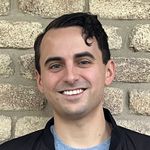
 Chandler Squires
· 4 previous affiliations
- Carnegie Mellon UniversitySince 2024
- Postdoctoral Research Associate · Since 2024
- Postdoc · 2024–2026
- Graduate Researcher at MIT IDSS · 2018–2024
- PhD student · 2019–2024
- Undergraduate Researcher · 2017–2018
- Undergrad student · 2014–2018
- Data Scientist · 2018
- New England Complex Systems Institute2017
- Research Intern · 2017
Research Overview
Chandler Squires focuses on causal structure learning, representation learning, and the foundations of neurosymbolic artificial intelligence. His earlier work established combinatorial and permutation-based methods for discovering causal graphs from observational and interventional data. More recently, he investigates causal disentanglement and unsupervised concept extraction to build interpretable, decision-centric machine learning systems for applications in computational biology and scientific discovery.
Research Trajectory
Squires’s early research addressed the fundamental challenge of identifying causal relationships from complex datasets. In 2018, he contributed to methods for estimating structural changes in gene regulatory networks, detailing a consistent algorithm for this task in Direct Estimation of Differences in Causal Graphs. This biological motivation informed a deeper theoretical investigation into the research direction of Permutation Based Causal Structure Learning. Because learning a directed acyclic graph (DAG) up to Markov equivalence can be framed as finding a sparse permutation of variables, he developed an efficient algorithm to tackle this NP-hard problem in Efficient Permutation Discovery in Causal DAGs.
He subsequently extended these permutation-based approaches to settings where intervention targets are hidden or only partially known, as presented in Permutation-Based Causal Structure Learning with Unknown Intervention Targets. This work advanced the broader area of Causal Discovery from Unlabeled Interventions. To further optimize the experimental design process, he introduced a theoretical framework for active learning in Active Structure Learning of Causal DAGs via Directed Clique Trees, demonstrating that the largest clique in a causal graph acts as a fundamental bottleneck for the number of required interventions.
By 2022, his focus expanded to accommodate latent variables and complex non-linear systems, contributing significantly to the research direction of Non-linear Causal Discovery via Functional Constraints. In Causal Structure Discovery between Clusters of Nodes Induced by Latent Factors, he formalized "latent factor causal models" to discover relationships between spatially clustered variables, such as genes regulated by unobserved transcription factors. This work also advanced the area of Identifiability Constraints for Latent Causal Discovery. Addressing the scalability of biological experiments, he proposed a method for predicting the effects of compounds on unseen cell types in Causal Imputation via Synthetic Interventions. Continuing his work on experimental design, he collaborated on Bayesian active learning frameworks to minimize the experiments needed to reach desired system states, as seen in Active learning for optimal intervention design in causal models.
In 2023, he synthesized much of his foundational work in a comprehensive review, Causal Structure Learning: A Combinatorial Perspective, which detailed the search space and equivalence classes of causal graphs. Concurrently, he addressed the challenge of recovering hidden causal relationships in linear generative models. His paper Linear Causal Disentanglement via Interventions provided a constructive algorithm utilizing partial orders, contributing to the research direction of Causal Disentanglement for Representation Learning.
Moving into 2025, his research began addressing high-dimensional estimation and heterogeneous data. He co-developed approaches for grouping populations based on causal responses rather than mere covariate similarity in Synthetic Potential Outcomes and Causal Mixture Identifiability. He also investigated the theoretical limits of covariate adjustment, providing PAC-learning bounds for discrete distributions in Probably approximately correct high-dimensional causal effect estimation given a valid adjustment set.
Current Directions
The most recent papers in the evidence point toward a synthesis of causal inference and representation learning, specifically focusing on unsupervised concept extraction and neurosymbolic artificial intelligence. In 2026, he introduced A Unifying Framework for Unsupervised Concept Extraction, which frames concept extraction as a generative modeling problem. This work provides meta-theorems for identifiability, simplifying the theoretical guarantees required for interpretable representations in dense vector spaces. Broadly, his current trajectory emphasizes a pragmatic, decision-centric approach to data science, seeking to build machine learning models that integrate symbolic reasoning with deep learning for robust applications in scientific discovery, cellular biology, and operations.
Profile updated
Loading new papers…
Other researchers whose papers cluster into the same research directions — a proxy for overlapping technical interests and shared intellectual neighborhoods.
See something wrong? Report a mistake