

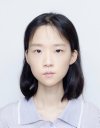
 Chaerin Min
· 6 previous affiliations
- Brown UniversitySince 2023
- PhD student · 2023–2028
- 박사 과정 학생 · Since 2023
- 구글2025
- Student Researcher · 2025
- Intern · 2025
- Hanyang University2021–2023
- MS student · 2021–2023
- MultiplEYE co. ltd.2022–2023
- Research Intern · 2022–2023
- University of Seoul2017–2021
- Undergrad student · 2017–2021
Research Overview
Chaerin Min focuses on computer vision and spatial reasoning, with specific emphasis on domain adaptation, implicit 3D mapping, and controllable image generation. Her trajectory spans from improving optical flow networks and robotic spatial reasoning to advancing generative models for complex anatomical structures. Her most recent work addresses the challenges of synthesizing physically plausible human hands using large-scale domain-specific diffusion models.
Research Trajectory
Chaerin Min's published research trajectory begins in the domain of computer vision, specifically addressing the generalization capabilities of deep neural networks. In 2023, Min led research on optical flow estimation, a critical component for understanding motion in video sequences. As the first author of Meta-Learning for Adaptation of Deep Optical Flow Networks, Min tackled the problem of weak cross-domain performance that arises when optical flow algorithms are trained primarily on synthetic datasets. To bridge this domain gap, the research introduced an instance-wise meta-learning algorithm designed for test-time domain adaptation, enabling the network to adapt more sensitively to incoming inputs in a target domain during inference.
In 2024, Min's focus expanded into 3D computer vision and spatial reasoning for robotics applications. Serving again as first author, Min published Fast Spatial Reasoning of Implicit 3D maps through Explicit Near-Far Sampling Range Prediction. This work addressed the computational bottlenecks associated with deep implicit mapping. While implicit representations are highly effective at capturing fine-grained 3D details necessary for autonomous navigation and object manipulation, they traditionally require costly neural network forward passes to search the full range of rays for object surfaces. Min's research proposed explicit near-far sampling range prediction to guide and optimize this sampling process, improving upon existing hierarchical sampling and occupancy grid methods.
Most recently, in 2025, Min's work has pivoted toward advanced generative models, contributing as the second author to FoundHand: Large-Scale Domain-Specific Learning for Controllable Hand Image Generation. This research directly engages with the broader research direction of Structural Priors for Anatomically Correct Human Image Synthesis. Despite the rapid advancement of diffusion models, generating realistic human hands remains notoriously difficult due to complex articulation and frequent occlusions. To solve this, the research team introduced a large-scale domain-specific diffusion model alongside a massive annotated dataset containing 10 million hand images with 2D keypoints and segmentation masks. The core insight of this work was utilizing 2D keypoints as a universal representation to encode both camera viewpoint and physical articulation, thereby enabling precise control over the generated output.
Current Directions
The most recent papers in the evidence indicate a focus on controllable generative modeling, particularly overcoming the geometric and anatomical limitations of standard diffusion models. This involves leveraging large-scale, annotated datasets and structural priors—such as 2D keypoints—to guide the synthesis of complex, highly articulated subjects. By treating keypoints as universal representations for both articulation and camera viewpoint, this direction aims to achieve physically plausible generation and precise user control in domains where general-purpose image generators frequently fail.
Profile updated
Loading new papers…
Other researchers whose papers cluster into the same research directions — a proxy for overlapping technical interests and shared intellectual neighborhoods.
See something wrong? Report a mistake