

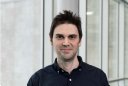
 Cem Subakan
· 5 previous affiliations
- Concordia UniversitySince 2022
- Affiliate Assistant Professor · Since 2022
- Université LavalSince 2023
- Assistant Professor · Since 2023
- Université de Sherbrooke2021–2022
- Postdoc · 2021–2022
- Researcher · 2019–2021
- Postdoc · 2018–2019
- PhD student · 2013–2018
Research Overview
Cem Subakan focuses on audio source separation, interpretable machine learning, and deep generative models for speech and audio processing. His early work developed probabilistic and spectral methods for latent variable models, which later evolved into transformer-based architectures for speech separation. Currently, he investigates listenable explanations for audio neural networks and the integration of discrete audio tokens into multimodal large language models.
Research Trajectory
Subakan's early research addressed foundational problems in latent variable modeling for audio and sequence data. He developed a framework detailed in Probabilistic latent tensor factorization framework for audio modeling, which unified graphical models with tensor factorization to enable hierarchical audio modeling for tasks like source separation and restoration. Expanding on efficient parameter estimation, he introduced a method-of-moments approach in Spectral Learning of Mixture of Hidden Markov Models. This work provided a computationally efficient alternative to the Expectation-Maximization algorithm, scaling independently of the number of data sequences.
Transitioning to deep learning architectures, Subakan explored implicit generative models for audio. He proposed the use of Wasserstein-GANs in Generative Adversarial Source Separation to implicitly learn data distributions for speech source separation, outperforming traditional non-negative matrix factorization methods. This work intersects with the research direction of The Perceptual Evaluation Gap in Generative Audio and the broader area of Expressive Latent Priors for Multimodal Generative Modeling. He also participated in the development of SpeechBrain: A General-Purpose Speech Toolkit, contributing to an open-source framework designed to accelerate neural speech processing research. Building on the shift away from recurrent architectures, he introduced the SepFormer architecture in Attention Is All You Need In Speech Separation, a multi-scale transformer network that learns short- and long-term dependencies to achieve strong performance on standard speech separation benchmarks.
A major theme in his recent trajectory is the interpretability of machine learning models, particularly in the audio domain. He initially explored this through Posthoc Interpretation via Quantization, which uses vector quantization to create a discrete, class-specific latent space that forces classifiers to reveal the input features driving their predictions. Extending this to audio, his lab developed methods in the area of Listenable Explanations for Audio Deep Learning. This includes Listenable Maps for Audio Classifiers, a post-hoc explanation method that trains a decoder to reconstruct the specific audio segments responsible for a model's prediction into a listenable waveform. This approach, which advances the broader field of Listenable Explanations for Audio Neural Networks, was further expanded in Listenable Maps for Zero-Shot Audio Classifiers to handle labels unseen during training. He also applied these interpretability principles to deepfake detection, developing Phoneme Discretized Saliency Maps for Explainable Detection of AI-Generated Voice to translate visually opaque spectrogram heatmaps into meaningful phonetic explanations.
Most recently, Subakan's research has focused on discrete audio tokenization and the integration of speech into multimodal large language models (LLMs). He proposed the Speech Enhancement Transducer in Autoregressive Speech Enhancement via Acoustic Tokens, shifting speech enhancement from continuous regression to discrete sequence modeling to better preserve speaker identity. He contributed to a comprehensive synthesis of this emerging field in Discrete Audio Tokens: More Than a Survey!, which aligns with the research direction of Bridging the Semantic-Acoustic Gap in Audio Tokenization. His work on efficient audio representations includes FocalCodec-Stream: Streaming Low-Bitrate Speech Coding via Causal Distillation, a neural audio codec that achieves high-quality reconstruction at ultra-low bitrates with minimal latency, contributing to the area of Layer Specialization in Deep Speech Representations.
Alongside tokenization, he has investigated the internal mechanics and reliability of multimodal systems. In Investigating Faithfulness in Large Audio Language Models, his team revealed a disconnect where models generate internally consistent chain-of-thought reasoning that is poorly grounded in the actual audio input. To quantify these internal dynamics, he introduced the Automatic Latent Alignment Score in ALAS: Measuring Latent Speech-Text Alignment For Spoken Language Understanding In Multimodal LLMs. His recent work also extends interpretability to new domains and scales, such as developing an Audio Prototypical Network for Controllable Music Recommendation to make user preference modeling more transparent, and participating in the design of RETREEVER, detailed in Hierarchical Retrieval at Scale: Bridging Interpretability and Efficiency, which optimizes tree-based retrieval frameworks for massive datasets.
Current Directions
The most recent papers in the evidence indicate a strong focus on the intersection of discrete audio representations and multimodal large language models. Current work investigates how audio tokenization can replace continuous regression in tasks like speech enhancement and low-bitrate streaming codecs, treating audio generation as a discrete sequence modeling problem. Concurrently, there is a significant emphasis on the interpretability and reliability of large audio language models. This includes developing metrics to measure latent speech-text alignment across transformer layers and probing the faithfulness of chain-of-thought reasoning to ensure that multimodal models are genuinely grounded in acoustic inputs rather than hallucinating explanations. Finally, ongoing research explores scalable, interpretable architectures, such as prototypical networks for controllable recommendation and hierarchical tree-based frameworks for efficient semantic retrieval.
Profile updated
| Paper | Venue | Year |
|---|---|---|
| LMAC-TD: Producing Time Domain Explanations for Audio ClassifiersGitHubfpaissan/ | ICASSP | 2025 |
Loading new papers…
Other researchers whose papers cluster into the same research directions — a proxy for overlapping technical interests and shared intellectual neighborhoods.
See something wrong? Report a mistake