

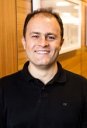
 Cem M Deniz
· 3 previous affiliations
- NYU Langone HealthSince 2007
- Assistant Professor · Since 2016
- Postdoc · 2012–2016
- PhD student · 2007–2012
- ETH Zurich2005–2007
- MS student · 2005–2007
- Boğaziçi University2000–2005
- Undergrad student · 2000–2005
Research Overview
Cem M Deniz focuses on multimodal representation learning, clinical foundation models, and predictive modeling in medical imaging. His work integrates diverse data streams—such as radiographic images, clinical reports, and structured electronic health records—to improve diagnostic accuracy and clinical decision-making. Recently, he has investigated transformer-based architectures for predicting surgical interventions and modeling longitudinal patient histories at scale.
Research Trajectory
In 2023, Deniz directed research exploring how multimodal stimuli can enhance biomedical computer vision. He led the development of Radiology Reports Improve Visual Representations Learned from Radiographs, which extended natural-image multimodal frameworks to the biomedical domain. This work contributes to several broader areas, including the research direction Cross-Modal Alignment for Data-Efficient Representation Learning and the area of Bridging the Semantic Gap in Medical Imaging. By leveraging textual radiology reports to guide visual representation learning, the study also intersects with work in the area of Medical Image Segmentation with Limited Labels and the broader field of The Information Bottleneck of Scientific Abstracts.
Expanding on the integration of clinical text and imaging, he collaborated on HIST-AID: Leveraging Historical Patient Reports for Enhanced Automatic Diagnosis in 2024. This project addressed a common limitation in AI-assisted radiology—the omission of longitudinal patient history—by introducing the Temporal MIMIC dataset. The resulting framework was designed to emulate a radiologist's comprehensive diagnostic approach, utilizing five years of historical reports and scans to improve automated diagnostic accuracy.
In 2025, his collaborative efforts scaled to broader electronic health record (EHR) systems. He participated in the development of Foundation Models for Clinical Records at Health System Scale, which introduced a generative pretraining strategy for sequential EHR data. This model autoregressively generates tokenized clinical events for future visits, inherently handling heterogeneous data types while identifying key evaluation pitfalls related to repeated event tokens in clinical datasets.
In parallel work in 2025, Deniz led research on Predicting the Year of Total Knee Replacement: A Transformer-Based Multimodal Approach. This study tackled the complex clinical decision-making surrounding joint replacement by integrating MR imaging with tabular clinical variables. Utilizing cross-modal attention mechanisms, the end-to-end transformer model successfully fused diverse feature sets from an image encoder and patient records to predict surgical timelines for individual subjects.
Current Directions
The most recent work in the evidence points toward a sustained focus on multimodal fusion and longitudinal predictive modeling in healthcare. Current directions emphasize the deployment of transformer-based architectures to synthesize highly heterogeneous clinical data, ranging from raw medical imaging (such as MRIs and radiographs) to structured tabular data and historical clinical text. A major ongoing theme is the development of end-to-end systems that can handle the complex, temporal nature of patient histories to forecast specific clinical events and surgical interventions. Additionally, there is a continued interest in adapting large-scale generative pretraining strategies to the unique constraints and structures of electronic health records, ensuring that foundation models can accurately capture and predict sequential clinical events at a health-system scale.
Profile updated
Loading new papers…
Other researchers whose papers cluster into the same research directions — a proxy for overlapping technical interests and shared intellectual neighborhoods.
See something wrong? Report a mistake