

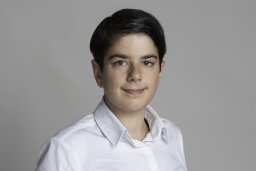
 Carolin Lawrence
· 4 previous affiliations
- NECSince 2019
- Researcher · Since 2019
- Principal Researcher · 2023–2026
- NEC Laboratories EuropeSince 2022
- Senior Manager & Chief Research Scientist · Since 2026
- Manager & Chief Research Scientist · 2023–2026
- Manager · 2022–2023
- Heidelberg University2012–2019
- PhD student · 2014–2019
- Graduate Research Assistant · 2014–2018
- Student Worker · 2014
- Master of Arts (M.A.), Computational Linguistics · 2012–2014
- Leibniz Institute for the German Language2010–2013
- Student Worker · 2010–2013
Research Overview
Carolin Lawrence focuses on the evaluation, interpretability, and refinement of machine learning systems, spanning from early work in statistical machine translation to modern large language models. Her trajectory includes developing behavioral testing frameworks for knowledge graphs and exploring uncertainty quantification in neural architectures. Most recently, she investigates how reasoning models can serve as process evaluators by scaling inference-time compute.
Research Trajectory
Lawrence's early research addressed the challenges of optimizing systems using historical log data. She introduced methods for Counterfactual Learning from Bandit Feedback under Deterministic Logging : A Case Study in Statistical Machine Translation, demonstrating how to optimize target translation systems using user feedback generated by deterministic commercial systems. This work contributed to the broader research areas of Implicit Exploration via Context Diversity and Counterfactual Learning from Deterministic Logging Policies by smoothing out deterministic components to enable effective learning despite a lack of exploration in the logged data.
Shifting toward neural architecture reliability, she explored uncertainty quantification in recurrent neural networks. In Uncertainty Estimation and Calibration with Finite-State Probabilistic RNNs, she and her collaborators proposed estimating uncertainty via stochastic discrete state transitions over recurrent timesteps. This approach, which intersects with the area of Dynamic Entropy Regulation with Adaptive Temperature, allows models to learn well-calibrated probabilistic automata from data.
Concurrently, Lawrence engaged deeply with the evaluation and interpretability of graph-based models. She participated in research on Interpreting Node Embedding with Text-labeled Graphs, addressing the challenge of making unsupervised latent space representations understandable to humans. To systematically evaluate where knowledge graph embedding (KGE) models succeed or fail, she helped develop a new evaluation framework in Behavioral Testing of Knowledge Graph Embedding Models for Link Prediction, applying software engineering principles to detect system failures prior to deployment. This focus on rigorous evaluation continued with her contributions to KGxBoard: Explainable and Interactive Leaderboard for Evaluation of Knowledge Graph Completion Models. Expanding on knowledge graph utility, she also co-authored Linking Surface Facts to Large-Scale Knowledge Graphs, which sought to bridge the gap between the high coverage of open information extraction and the semantic precision of canonical knowledge graphs.
In recent years, Lawrence's trajectory has focused on the capabilities, evaluation, and design of large language models (LLMs). She contributed to the AgoraBench framework in Evaluating Language Models as Synthetic Data Generators, which systematically compared the ability of different LMs to synthesize high-quality training data. She also explored how LLMs can amplify expert guidance in Large Language Models Enable Few-Shot Clustering, demonstrating their effectiveness in semi-supervised text clustering. Moving toward model architecture and scaling, she participated in analyzing the downstream impacts of architectural choices in Not-Just-Scaling Laws: Towards a Better Understanding of the Downstream Impact of Language Model Design Decisions, showing that data composition and design features are critical alongside raw scale.
Her most recent work investigates the intersection of test-time compute and automated evaluation. In Scaling Evaluation-time Compute with Reasoning Models as Process Evaluators, she and her co-authors examined how reasoning models that generate long chains of thought can be employed to evaluate complex LM outputs. This research advances several emerging directions, including Generative Reward Models for Interpretable Alignment, Rationale First Automated Evaluation, and the broader area of Inference Time Compute Scaling for Complex Reasoning.
Current Directions
The most recent papers in the evidence indicate a strong focus on the evaluation and scaling of large language models, particularly through the lens of reasoning and test-time compute. Recent work investigates how deliberative reasoning models can be leveraged as process evaluators, exploring methods to scale inference compute to better assess complex model outputs. Additionally, her current research addresses the broader design decisions of language models, examining how architectural choices and synthetic data generation capabilities impact downstream performance beyond traditional scaling laws.
Profile updated
Loading new papers…
Other researchers whose papers cluster into the same research directions — a proxy for overlapping technical interests and shared intellectual neighborhoods.
See something wrong? Report a mistake