

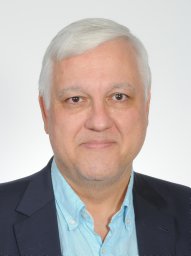
 Carles Casacuberta
· 2 previous affiliations
- Universitat de BarcelonaSince 2001
- Catedràtic · Since 2001
- Current
- Professor Titular · 1991–1993
- Universitat Autònoma de Barcelona1979–2001
- Professor Titular · 1993–2001
- Doctor en Matemàtiques · 1984–1988
- Llicenciat en Matemàtiques · 1979–1984
Research Overview
Carles Casacuberta focuses on algebraic topology, topological data analysis, and the mathematical foundations of deep learning. His early research explored the behavior of homology in the localization of finite groups and nilpotent spaces. More recently, his work investigates how topological structures like simplicial complexes and persistent homology can be used to analyze, regularize, and interpret neural networks.
Research Trajectory
The early arc of Casacuberta's research is rooted in pure algebraic topology, specifically focusing on localization theory and the properties of nilpotent groups. He established deep connections between the internal algebraic structure of finite groups and the topological properties of their associated spaces. In The Behaviour of Homology in the Localization of Finite Groups (1991), he demonstrated that the predictable behavior of homology under localization is not restricted to nilpotent groups, but effectively characterizes the broader class of $p$-nilpotent groups. He continued to explore the boundaries of localization techniques in On the rationalization of the circle (1993), investigating the mathematical surprises that arise when applying these tools outside the standard context of nilpotent actions.
Following this foundational work in pure mathematics, his later research bridges algebraic topology and modern machine learning, utilizing Topological Data Analysis (TDA) to address open problems in artificial intelligence. Before fully transitioning to TDA, he collaborated on applied network analysis, such as defining meme influence graphs and visual metrics for social media diffusion in Influence in Social Networks Through Visual Analysis of Image Memes (2022).
His core contributions to machine learning center on using topological summaries to interpret and improve neural networks. He tackled the inverse problem of TDA in Reconstruction of univariate functions from directional persistence diagrams (2022), proving that a small number of directional views are sufficient to locate the critical points of piecewise linear and smooth functions. This provided a new mathematical mechanism for data denoising and model explainability, contributing to the research direction of Learnable Filtrations for Topological Deep Learning. Building on these topological summaries, he introduced methods for peeking inside the "black box" of deep learning models. In Importance attribution in neural networks by means of persistence landscapes of time series (2023), he utilized persistence landscapes and specialized gating layers to identify the specific structural features of a time series that drive a network's classification decisions.
Alongside interpretability, Casacuberta has applied topology to network regularization and performance estimation. With collaborators, he developed novel regularization terms in Decorrelating neurons using persistence (2023). By computing the minimum spanning tree of a clique of neurons—where edge weights represent correlation dissimilarities—this approach successfully reduces redundant high correlations between neurons. He also explored how the shape of neural network activations can predict model performance on unseen data. In Predicting the generalization gap in neural networks using topological data analysis (2024), he introduced a method to estimate the generalization gap without relying on a test set, advancing the broader area of Vectorizing Topological Signatures for Machine Learning.
To synthesize and formalize this rapidly growing intersection of geometry and AI, Casacuberta co-authored Topological Data Analysis for Neural Network Analysis: A Comprehensive Survey (2023). This work treats neural networks as geometric objects, providing a structured overview of how TDA acts as a mathematical lens for understanding internal representations, thereby anchoring his work in the area of Scaling Topological Data Analysis for Deep Learning. He continues to consolidate this field with the upcoming publication Topological Data Analysis for Neural Networks (2026).
Most recently, his collaborative research has expanded into Topological Deep Learning (TDL), which moves beyond simple graphs to model higher-order interactions. He participated in the development of Higher-Order Molecular Learning: The Cellular Transformer (2025), a framework that extends graph transformers to cell complexes. This allows the model to natively capture higher-order topological structures like molecular rings, significantly improving property prediction. Recognizing the lack of intrinsically topological datasets required to train such models, he also contributed to MANTRA: The Manifold Triangulations Assemblage (2025). This benchmark addresses the data drought in TDL, supporting emerging research areas like Message Passing on Simplicial Complexes and Learning from Pure Topology in Unattributed Graphs.
Current Directions
The most recent papers in the evidence point to a sustained focus on Topological Deep Learning and the integration of higher-order mathematical structures into neural architectures. Recent work investigates how to move beyond traditional graph neural networks by utilizing cell complexes and simplicial complexes, which can natively capture complex, multi-way interactions in domains like molecular chemistry. Additionally, ongoing research addresses the foundational infrastructure of this field by establishing robust, intrinsically topological benchmarks to train and evaluate higher-order models. A parallel and continuing theme is the application of persistent homology to analyze the internal mechanics of deep learning, specifically aiming to predict generalization and interpret learned representations through a geometric lens.
Profile updated
Loading new papers…
Other researchers whose papers cluster into the same research directions — a proxy for overlapping technical interests and shared intellectual neighborhoods.
See something wrong? Report a mistake