

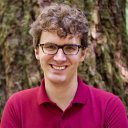
 Carl Vondrick
· 4 previous affiliations
- Columbia UniversitySince 2018
- Associate Professor · Since 2023
- Assistant Professor · 2018–2023
- Google (United States)2017–2018
- Research Scientist · 2017–2018
- PhD student · 2011–2017
- University of California, Irvine2008–2011
- Undergrad student · 2008–2011
Research Overview
Carl Vondrick focuses on computer vision, machine learning, and multimodal perception, developing systems that learn from unlabeled data and cross-modal interactions. His trajectory spans early work in feature visualization and predictive scene dynamics to recent advances in generative models and embodied AI. Currently, his research emphasizes integrating vision, physical reasoning, and novel modalities like olfaction for autonomous robotics and complex scene understanding.
Research Trajectory
Early in his career, Vondrick investigated the internal representations of computer vision models. He introduced HOGgles: Visualizing Object Detection Features (2013), an algorithm that allowed researchers to perceive images exactly as a HOG-based object detector does. This visualization revealed that false alarms often look deceptively similar to true positives in feature space, touching on the broader area of Coupled Dictionary Learning for Image Super-Resolution. Around this time, he also participated in research on human attention, contributing to Where are they looking? (2015), which proposed a deep neural network approach for gaze-following. This work supported emerging research directions such as Refining Gaze Estimation with Scene Saliency and Gaze as a Leading Indicator for Intent Prediction.
A major theme in his subsequent work is leveraging massive amounts of unlabeled video to learn scene dynamics and visual representations without manual supervision. He developed generative adversarial networks capable of untangling foregrounds from backgrounds to predict plausible futures in Generating Videos with Scene Dynamics (2016). Extending this predictive approach, he introduced a framework for Anticipating Visual Representations from Unlabeled Video (2016), training deep networks to forecast future visual states and advancing the area of Self-Supervised Representation Learning via Temporal Ordering.
Recognizing the natural synchronization between vision and sound, he collaborated on SoundNet: Learning Sound Representations from Unlabeled Video (2016). This research utilized a student-teacher training procedure to transfer discriminative visual knowledge into the acoustic domain, forming a key contribution to the direction of Self-Supervised Learning via Audio-Visual Temporal Alignment. He continued to explore self-supervised signals intrinsic to video in Tracking Emerges by Colorizing Videos (2018), demonstrating that training a model to colorize grayscale videos by copying colors from a reference frame naturally yields a robust visual tracking mechanism. Expanding into vision-language integration, he participated in the development of VideoBERT: A Joint Model for Video and Language Representation Learning (2019), which adapted the BERT architecture to learn bidirectional joint distributions over visual and linguistic tokens for tasks like action classification and video captioning.
In recent years, his lab has heavily integrated generative models with 3D vision, physical reasoning, and image editing. He guided work on amodal perception with pix2gestalt: Amodal Segmentation by Synthesizing Wholes (2024), fine-tuning diffusion models to hallucinate missing parts of occluded objects to improve downstream 3D reconstruction. Similarly, EraseDraw: Learning to Insert Objects by Erasing Them from Images (2024) reframed object insertion by training a diffusion model to reverse the erasure of objects, yielding highly realistic spatial and physical consistency. For dynamic scenes, his group developed Generative Camera Dolly: Extreme Monocular Dynamic Novel View Synthesis (2024), leveraging large-scale diffusion priors to generate synchronous videos from novel perspectives using only a single monocular video.
This generative and physical reasoning expertise extends deeply into embodied AI and robotics. He oversaw the development of Differentiable Robot Rendering (2024), which bridges the modality gap between visual and action data by making a robot's visual appearance differentiable with respect to its control parameters. To address the embodiment gap in manipulation, his lab introduced Dreamitate: Real-World Visuomotor Policy Learning via Video Generation (2024), fine-tuning video diffusion models on human demonstrations to synthesize task executions that directly control robots. Pushing autonomous design, he led PaperBot: Learning to Design Real-World Tools Using Paper (2024), an autonomous system that uses a neural surrogate model to design and manufacture paper tools through real-world trial and error. His group also tackled complex fluid dynamics in Self-Improving Autonomous Underwater Manipulation (2025), presenting AquaBot, a system that combines behavior cloning with self-learning optimization to surpass human teleoperation in underwater environments.
Expanding the scope of machine perception, he contributed to CAViAR: Critic-Augmented Video Agentic Reasoning (2025), a framework where a program-generating agent and a natural-language critic iteratively process complex video tasks. He also pioneered the integration of olfaction into multimodal learning by leading the creation of New York Smells: A Large Multimodal Dataset for Olfaction (2025), demonstrating that models can align raw electronic nose data with visual inputs to identify materials and objects. Most recently, he collaborated on Few-Shot Design Optimization by Exploiting Auxiliary Information (2026), introducing a transformer-based framework that leverages high-dimensional auxiliary data from past experiments to optimize new designs with minimal trials.
Current Directions
The most recent papers in the evidence address the intersection of generative AI, embodied robotics, and novel sensory modalities. Current work investigates how large-scale diffusion priors can be adapted for physical tasks, such as synthesizing novel views of dynamic scenes, hallucinating occluded object geometries, and generating video-based execution plans for robotic manipulation. Additionally, recent research explores autonomous self-improvement in challenging environments—such as underwater robotic manipulation and automated tool design—while expanding multimodal perception to include olfactory data and iterative, agentic reasoning for complex video understanding.
Profile updated
Loading new papers…
Other researchers whose papers cluster into the same research directions — a proxy for overlapping technical interests and shared intellectual neighborhoods.
See something wrong? Report a mistake