

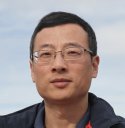
 Can Wang
· 1 previous affiliation
- Zhejiang UniversitySince 2022
- Full Professor · 2022–2070
- Current
10 other authors named Can Wang: Can Wang (23 papers), Can Wang (11 papers), Can Wang (Harbin Institute of Technology · 6 papers), Can Wang (University of Hong Kong · 4 papers), Can Wang (Griffith University · 3 papers), and 5 more
Research Overview
Can Wang focuses on recommender systems, knowledge distillation, and graph representation learning. His trajectory spans from early work on implicit feedback and matrix factorization to the development of collaborative distillation frameworks for complex networks. Most recently, his research investigates the geometric properties of diffusion models to accelerate sampling and advances ranking optimization in recommendation architectures.
Research Trajectory
Wang's early research addressed the challenges of sparse, rating-less environments in recommender systems. He introduced MIOE in Document recommendation in social tagging services, a graph-based algorithm mapping users, tags, and documents into a shared semantic space to resolve the ambiguity of implicit feedback. Building on this foundation, he later developed FAWMF in Fast Adaptively Weighted Matrix Factorization for Recommendation with Implicit Feedback, utilizing a Variational Auto-Encoder to learn personalized confidence weights for unobserved data, advancing sparsity-aware optimization for large-scale matrix problems.
Concurrently, Wang explored efficient model training through knowledge distillation. In Online Knowledge Distillation with Diverse Peers, he and his collaborators presented OKDDip, a teacher-free framework that maintains diversity among auxiliary peers to create a superior ensemble knowledge base. This work intersects with several formal research directions, including the area of Online Knowledge Distillation and Collaborative Peer Learning, the broader field of Training Efficient Models Without Large Teacher Supervision, and work in The Sensitivity of Multi-Objective Loss Balancing. He expanded these concepts to complex network structures in Collaborative Knowledge Distillation for Heterogeneous Information Network Embedding, addressing the inherent correlations among meta-paths. Further refining distillation techniques, he introduced SemCKD in SemCKD: Semantic Calibration for Cross-Layer Knowledge Distillation to automatically assign target layers and prevent negative regularization caused by semantic mismatch.
Returning to recommendation architectures, Wang integrated social context and adaptive sampling in SamWalker++: Recommendation With Informative Sampling Strategy, utilizing uncertainty-biased sampling for efficient model training. His focus on graph-based models also led to foundational work in evaluating graph neural networks. He oversaw the development of OpenGSL: A Comprehensive Benchmark for Graph Structure Learning, which standardized evaluation in the research direction of Graph Structure Learning for Robust Topological Denoising.
In recent years, Wang's trajectory has expanded to include the mathematical foundations of generative AI, specifically diffusion models. He co-authored Fast ODE-based Sampling for Diffusion Models in Around 5 Steps, introducing AMED-Solver to predict optimal mean directions within a two-dimensional subspace. This significantly advanced the direction of Low Dimensional Geometry of Diffusion Sampling Trajectories and the area of Informed Priors for Efficient Diffusion Trajectories. He further explored these geometric properties in On the Trajectory Regularity of ODE-based Diffusion Sampling, developing Geometry-Inspired Time Scheduling (GITS) to optimize sampling steps. To synthesize the rapidly growing field, his lab published Conditional Image Synthesis with Diffusion Models: A Survey.
Alongside generative models, Wang continued to push the boundaries of recommendation systems and graph learning. He addressed fundamental ranking optimization challenges in PSL: Rethinking and Improving Softmax Loss from Pairwise Perspective for Recommendation, replacing exponential functions with controlled activations to improve resistance to noisy data. In 2025, he contributed to decentralized training methodologies with A Single Global Merging Suffices: Recovering Centralized Learning Performance in Decentralized Learning. He also extended his graph structure learning research with Uncertainty-aware Graph Structure Learning, explicitly modeling node information uncertainty. His recent recommendation research culminated in two major 2025 papers: Breaking the Top-$K$ Barrier: Advancing Top-$K$ Ranking Metrics Optimization in Recommender Systems, which introduced SoftmaxLoss@$K$ to handle truncation, and Rankformer: A Graph Transformer for Recommendation based on Ranking Objective, a novel architecture inspired by the gradient of the ranking objective. Finally, his ongoing investigation into generative models produced Geometric Regularity in Deterministic Sampling of Diffusion-based Generative Models, further demystifying the high-dimensional paths of diffusion processes to mitigate discretization error.
Current Directions
Recent work investigates the mathematical foundations of generative AI and the structural optimization of recommendation systems. In the generative domain, Wang is exploring the geometric regularity of deterministic sampling in diffusion models. By analyzing the low-dimensional trajectories of ODE-based sampling, his research aims to mitigate discretization errors and dramatically accelerate image synthesis without sacrificing fidelity.
Concurrently, in recommender systems, his focus has shifted toward directly optimizing Top-$K$ ranking metrics. This involves developing continuous relaxations for discontinuous truncation challenges and designing ranking-inspired graph transformer architectures. Additionally, he continues to advance robust graph representation learning by explicitly modeling node uncertainty to improve structural denoising and decentralized learning performance.
Profile updated
Loading new papers…
Other researchers whose papers cluster into the same research directions — a proxy for overlapping technical interests and shared intellectual neighborhoods.
See something wrong? Report a mistake