

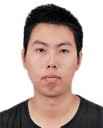
 Caiyong Wang
· 2 previous affiliations
- Associate Professor · Since 2025
- Current
- Lecturer · 2020–2024
- Chinese Academy of Sciences2017–2020
- PhD student · 2017–2020
Research Overview
Caiyong Wang focuses on biometric image processing, specifically the robust segmentation and localization of ocular traits in non-cooperative environments. Early work developed attention-assisted deep learning architectures for sclera and iris recognition, emphasizing multi-task frameworks that jointly model masks and geometric boundaries. More recently, this trajectory has expanded to include collaborative work in natural language processing tasks such as script event prediction.
Research Trajectory
Caiyong Wang’s primary research trajectory from 2019 to 2020 centered on overcoming the challenges of ocular biometrics in non-cooperative environments. Traditional biometric systems often struggle when faced with illumination variations, long capture distances, and moving subjects. Wang’s work addressed these limitations by designing specialized convolutional neural network (CNN) architectures that improve the accuracy and robustness of iris and sclera segmentation. This research contributes to the broader area of Non-Rigid Elastic Deformation Modeling in Biometrics, as it seeks to accurately map biological tissue that changes dynamically, such as pupil dilation or eye movement, rather than treating the eye as a static, rigid object.
In 2019, Wang led the development of a novel segmentation method detailed in ScleraSegNet: an Improved U-Net Model with Attention for Accurate Sclera Segmentation. Recognizing that standard U-Net architectures could be optimized for the specific organic geometry of the eye, Wang and collaborators embedded an attention module into the central bottleneck of the network. This channel-wise attention mechanism strengthened the model's ability to learn discriminative representations, effectively suppressing irrelevant background noise while highlighting the salient features of the sclera.
Concurrently, Wang expanded this architectural approach to iris recognition. In Joint Iris Segmentation and Localization Using Deep Multi-task Learning Framework, Wang proposed a framework that moved beyond simple pixel-wise classification. Because the iris is defined geometrically as an annular region between the pupil and the sclera, Wang utilized a multi-task learning approach to impose geometric constraints during the training process. By jointly optimizing for segmentation and localization, the model achieved higher accuracy in challenging, non-cooperative capture conditions. This methodology aligns with themes such as Transformation Consistency for Robust Visual Learning, where models are forced to learn the underlying geometry of a subject rather than relying on spurious visual shortcuts.
This multi-task paradigm culminated in the 2020 journal publication Towards Complete and Accurate Iris Segmentation Using Deep Multi-Task Attention Network for Non-Cooperative Iris Recognition. As first author, Wang introduced IrisParseNet, a comprehensive solution that actively modeled both the iris mask and the parameterized inner and outer iris boundaries within a unified network. Instead of relying solely on semantic segmentation frameworks, IrisParseNet demonstrated that explicitly modeling the structural boundaries of the iris yields a more complete and robust segmentation, particularly when the input images are degraded by adverse noise.
In the same year, Wang published an extended journal version of the sclera segmentation work, ScleraSegNet: An Attention Assisted U-Net Model for Accurate Sclera Segmentation. This research further refined the integration of attention modules, placing them not only in the central bottleneck but also within the skip connections of the U-Net architecture. A significant practical contribution of this refined model was its ability to implicitly learn to focus on the region of interest, thereby eliminating the need for an external, cascading region-of-interest (ROI) localization model.
Following this intensive period of first-author research in ocular biometrics, the evidence indicates a shift in collaborative focus. In 2022, Wang participated as a middle author in What happens next? Combining enhanced multilevel script learning and dual fusion strategies for script event prediction. This work transitioned from computer vision to natural language processing, specifically addressing the challenge of predicting subsequent events in a narrative sequence using multilevel script learning.
Current Directions
Based on the most recent paper in the provided evidence, dating to 2022, Wang's recent collaborative efforts investigate natural language processing and event prediction. The current focus addresses script event prediction, which requires models to understand and anticipate the temporal and causal relationships between events in a text. This involves developing enhanced multilevel script learning techniques and employing dual fusion strategies to better capture the complex narrative structures inherent in language data.
Profile updated
Loading new papers…
Loading research neighbors…
See something wrong? Report a mistake