

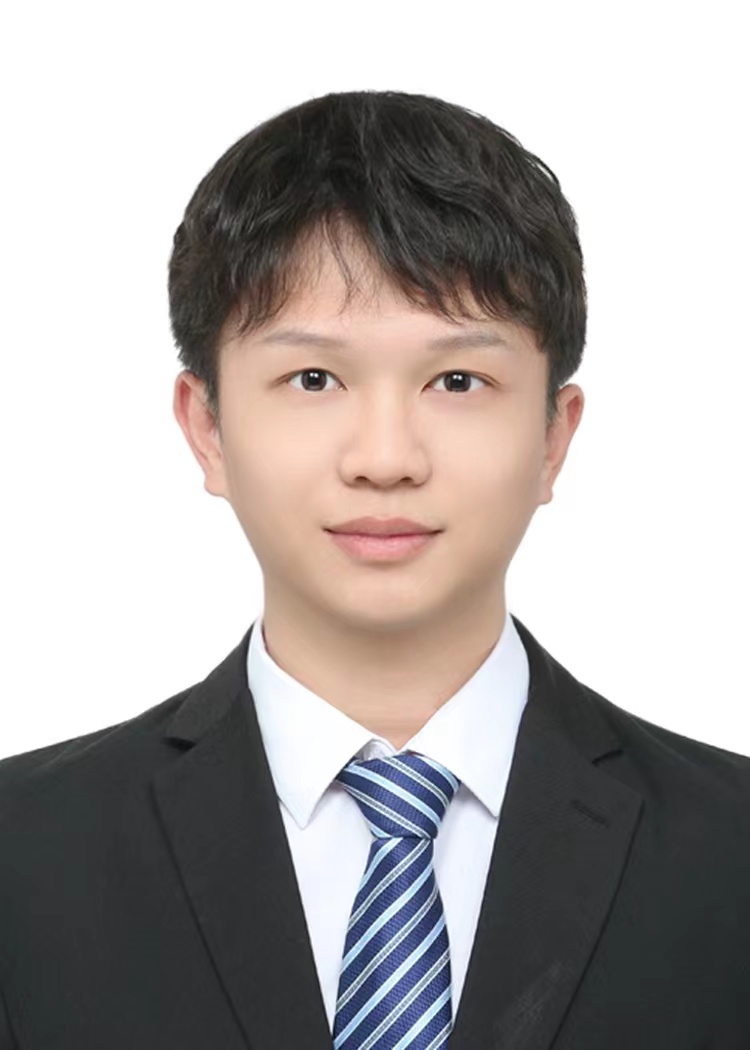
 Caixing Wang
· 3 previous affiliations
- Southeast UniversitySince 2025
- Assistant Professor · Since 2025
- Chinese University of Hong Kong2024–2025
- Postdoc · 2024–2025
- PhD student · 2019–2024
- Undergrad student · 2015–2019
Research Overview
Caixing Wang focuses on the theoretical and algorithmic foundations of nonparametric learning, with a particular emphasis on kernel-based methods, high-dimensional quantile regression, and distributed optimization. Their work addresses the challenges of scalability and robustness in modern statistical learning, developing methods that maintain minimax optimality while operating under constraints such as Fully Decentralized Peer-to-Peer Optimization, Distributionally Robust Optimization with Probability Metric Uncertainty Sets, and Robust High Dimensional Regression for Heavy Tailed Noise. Wang’s research trajectory demonstrates a consistent interest in bridging the gap between abstract statistical theory and the practical computational requirements of large-scale, heterogeneous, and privacy-sensitive data environments.
Research Trajectory
The evolution of Wang’s research reflects a transition from foundational nonparametric theory to the development of scalable, communication-efficient algorithms for complex data structures. In the early stages of this trajectory, the focus was primarily on the theoretical guarantees of kernel-based methods under non-standard conditions, such as distribution shift and transfer learning. This work established a baseline for understanding how nonparametric estimators behave when the training and testing distributions diverge, a problem central to Mitigating Importance Weight Variance under Distribution Shift.
By 2024, Wang’s work shifted significantly toward the computational challenges of the "Big Data" era, specifically addressing the $O(N^3)$ time complexity inherent in standard kernel methods. This period saw a concentrated effort in Scaling Kernel Methods with Random Fourier Features. Wang began integrating these approximation techniques with quantile regression to address Optimizing Non-Smooth Quantile Loss Functions. This shift was motivated by the need for models that are robust to outliers and heavy-tailed noise, where traditional mean-based regression often fails.
Most recently, Wang has expanded this framework into distributed and privacy-preserving settings. This involves the development of communication-efficient surrogate likelihoods and the application of differential privacy to high-dimensional models. The trajectory indicates an increasing preoccupation with the "mis-specified" setting—where the model assumptions do not perfectly match the underlying data-generating process—and the use of random projections to maintain statistical efficiency under these more realistic, less restrictive conditions.
Current Directions
Wang’s current research is concentrated in three primary areas: distributed nonparametric inference, the theory of random features for dependent data, and privacy-preserving high-dimensional statistics.
In the realm of distributed inference, Wang is developing algorithms that allow for high-dimensional quantile regression across multiple nodes without requiring the exchange of raw data. This work utilizes "double-smoothing" techniques to overcome the non-smoothness of the quantile loss function, effectively transforming it into a more computationally tractable problem that can be solved with low communication overhead. This is particularly relevant for heterogeneous datasets where data distributions vary across different local servers.
Another significant current focus is the theoretical analysis of kernel ridge regression with random features (KRR-RF) when applied to dependent data. While much of the existing literature assumes independent and identically distributed (i.i.d.) samples, Wang’s work explores how temporal or spatial dependencies affect minimax optimality. This research identifies critical thresholds in dependency decay—distinguishing between exponential and polynomial decay—that determine whether a model can achieve optimal learning rates.
Finally, Wang is investigating the intersection of differential privacy and high-dimensional regression. By integrating privacy-preserving mechanisms into the distributed quantile regression framework, this research aims to provide rigorous guarantees for individual data protection while maintaining the model's ability to perform accurate statistical inference and support recovery in the presence of heavy-tailed noise.
Representative Work
Wang’s contributions are characterized by a rigorous approach to minimax optimality and the use of embedding techniques to simplify complex optimization landscapes.
In Distributed High-Dimensional Quantile Regression: Estimation Efficiency and Support Recovery, Wang (as first author) introduced the DHSQR algorithm. This work addresses the challenge of performing quantile regression on high-dimensional, heterogeneous data distributed across multiple nodes. By employing a double-smoothing technique, the method circumvents the non-differentiability of the quantile loss function, allowing for a distributed approach that achieves near-oracle estimation accuracy and perfect support recovery with minimal communication costs.
Addressing the scalability of kernel methods, Optimal Kernel Quantile Learning with Random Features (first author) provides a framework for scaling nonparametric quantile regression. The paper demonstrates that by using random features, it is possible to reduce the computational burden of kernel methods from cubic to linear complexity relative to the number of samples, without sacrificing the robustness benefits of quantile-based learning. This work is foundational for applying kernel methods to large-scale datasets that contain significant outliers.
The paper Communication-Efficient Nonparametric Quantile Regression via Random Features (first author) further refines these techniques for distributed environments. It introduces a communication-efficient surrogate likelihood (CSL) combined with random feature embeddings. This approach allows for the construction of an extended surrogate loss function that can be optimized locally while still capturing the global structure of the data, specifically targeting the modeling of heterogeneous data in a Reproducing Kernel Hilbert Space (RKHS).
In a senior author role, Wang contributed to Towards Theoretical Understanding of Learning Large-scale Dependent Data via Random Features. This research provides a theoretical analysis of KRR-RF under data dependency. The study is significant for its identification of the "dependency wall," showing that while random features are effective for data with rapidly fading dependencies, their performance is fundamentally limited when dependencies are long-range, providing a nuanced view of the trade-offs between computational approximation and data structure.
Wang’s work on transfer learning, Minimax Optimal Transfer Learning for Kernel-based Nonparametric Regression (second author), investigates how to leverage information from source studies to improve performance on a target study. The paper proposes a two-step kernel-based estimator and establishes minimax optimal rates for both known and unknown transferable sources, bridging the gap between the practical application of transfer learning and its theoretical foundations in nonparametric settings.
Finally, Random Projections for Spectral Algorithms in Mis-specified Setting: Sobolev Norm Learning Rates and Minimax Optimality (first author) explores the use of random projections in spectral algorithms. This work is notable for its focus on the mis-specified setting, where the true regression function may lie outside the assumed RKHS. By leveraging the embedding properties of the RKHS and refined operator similarity analysis, Wang establishes optimal learning rates in Sobolev norms, demonstrating that random projections can preserve statistical efficiency even under general, less restrictive conditions.
Wang also participated in the development of a unified theoretical framework for kernel-based learning under distribution shift in Towards a Unified Analysis of Kernel-based Methods Under Covariate Shift, which introduced the Truncated Importance Ratio Weighted (TIRW) estimator to achieve optimal convergence rates across various loss functions. Additionally, Wang has contributed to the development of optimization frameworks such as Inertial Quadratic Majorization Minimization with Application to Kernel Regularized Learning, which seeks a middle ground between first-order and second-order optimization methods to improve convergence speeds in kernel-regularized learning.
Profile updated
Loading new papers…
Other researchers whose papers cluster into the same research directions — a proxy for overlapping technical interests and shared intellectual neighborhoods.
See something wrong? Report a mistake