

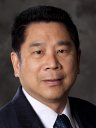
 C.-C. Jay Kuo
· 4 previous affiliations
- University of Southern CaliforniaSince 1989
- Ming Hsieh Chair Professor in Electrical and Computer Engineering-Systems · Since 2024
- Distinguished Professor · Since 2018
- Full Professor · 1998–2018
- Associate Professor · 1994–1998
- Assistant Professor · 1989–1994
- Research Assistant Professor · 1987–1988
- PhD, Electrical Engineering · 1982–1987
Research Overview
C.-C. Jay Kuo focuses on computer vision, image processing, and machine learning, with particular emphasis on 3D shape reconstruction, video object segmentation, and representation learning. His trajectory spans early foundational work in shape-from-shading and texture synthesis to recent deep learning architectures for unsupervised video analysis and distance metric learning. His most recent work investigates self-training frameworks for visual feature embeddings.
Research Trajectory
In the early 1990s, Kuo's research primarily addressed classical computer vision problems, particularly 3D shape reconstruction from 2D images. A significant focus of this period was improving shape-from-shading (SFS) and photometric stereo techniques. Early work identified inherent limitations in single-image SFS algorithms, motivating the development of more robust geometric approaches. In Shape from Shading with a Linear Triangular Element Surface Model, he and his collaborators introduced a method to approximate smooth surfaces using triangular patches, directly relating image brightness to nodal heights via a linearized reflectance map to minimize quadratic cost functionals.
As the decade progressed, his work expanded to encompass texture analysis and synthesis. This included modeling scale-dependent texture roughness using extended self-similar models and extracting surface depth directly from texture distortion. In Direct Shape from Texture Using a Parametric Surface Model and an Adaptive Filtering Technique, Kuo co-developed an iterative algorithm that inferred surface geometry by measuring local texture density variations under a semi-perspective projection model.
By the 2010s, Kuo's role transitioned to a senior principal investigator, guiding research in image segmentation, video processing, and the integration of deep learning into computer vision. His lab explored robust segmentation methods that combined spatial and color cues, as detailed in Robust Image Segmentation Using Contour-Guided Color Palettes. This work utilized mean-shift algorithms on contour-sampled colors to generate image-dependent palettes, refining spatial segmentation through leakage avoidance and boundary correction.
During the late 2010s, his group heavily investigated unsupervised video object segmentation and generative image manipulation. A key contribution to video analysis was Instance Embedding Transfer to Unsupervised Video Object Segmentation, where his team demonstrated how instance embeddings trained on static images could be adapted to link objects across consecutive video frames without online fine-tuning. Concurrently, his lab advanced generative computer vision tasks, such as filling missing image regions. In Contextual-Based Image Inpainting: Infer, Match, and Translate, they proposed a two-step deep neural network approach that separated the inpainting task into structural inference and texture translation, using heuristics to guide the propagation of local textures from the boundary into the missing region.
Around 2020, Kuo's portfolio also shows participation in multi-modal learning and audio processing, including contributions to the broader research direction of Modeling Sparse Salient Segments in Speech and Audio, exploring how acoustic evidence for labels is distributed over time. He also collaborated on unsupervised multi-modal neural machine translation, utilizing visual content to disambiguate language translation cycles.
Moving into the 2020s, his focus has increasingly incorporated self-supervised and weakly supervised learning paradigms to improve feature representation. As the senior author on Slade: A self-training framework for distance metric learning, he oversaw the development of a teacher-student architecture that leverages unlabeled data and pseudo-labels to enhance retrieval performance in embedding spaces, designing new feature basis learning components to mitigate the impact of noisy pseudo-labels.
Current Directions
The most recent papers in the evidence indicate a strong focus on representation learning, particularly through self-training and unsupervised frameworks. Current directions involve distance metric learning, where teacher-student models are employed to harness large volumes of unlabeled data via pseudo-labeling. This aligns with a broader thematic interest in reducing the reliance on fully annotated datasets in computer vision, extending earlier work on unsupervised video object segmentation into more generalized feature embedding and retrieval tasks. Recent architectures emphasize self-supervised initialization and robust feature basis learning to handle the noise inherent in unsupervised and semi-supervised pipelines.
Profile updated
Loading new papers…
Other researchers whose papers cluster into the same research directions — a proxy for overlapping technical interests and shared intellectual neighborhoods.
See something wrong? Report a mistake