

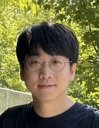
 Byungsoo Oh
7 previous affiliations
- Research Intern · 2025
- Graduate Student · 2024
- Cornell Tech2024
- PhD student · 2024
- Samsung Electronics (South Korea)2020–2024
- Software Engineer · 2020–2024
- Samsung (South Korea)2020–2024
- Researcher · 2020–2024
- Master of Science - MS, Computer Science · 2018–2020
- Sogang University2012–2018
- Undergrad student · 2012–2018
Research Overview
Byungsoo Oh focuses on machine learning systems, artificial intelligence infrastructure, and distributed training optimization. His early work addressed data processing frameworks and memory management before shifting toward accelerating deep learning pipelines on heterogeneous hardware. His current research investigates highly optimized, GPU-centric communication and kernel fusion for large-scale model architectures.
Research Trajectory
In 2019, Oh explored distributed ledger technologies, focusing on performance, reliability, and the practical challenges of supply chain management. He proposed an anomaly detection framework to verify the semantic correctness of business logic in Enhancing Trust of Supply Chain Using Blockchain Platform with Robust Data Model and Verification Mechanisms. This system utilized business context data to ensure transaction integrity across complicated resource tracking environments. Concurrently, he investigated serverless computing as an off-chaining model for compute and storage to improve the elasticity of microservice execution in Serverless-Enabled Permissioned Blockchain for Elastic Transaction Processing, leveraging event-driven architectures to overcome the performance limits of purely decentralized blockchains.
Expanding into computer vision and model robustness, he contributed to the research direction of The Arms Race Between Image Immunization and Purification and areas such as Preserving Spatial Detail in Encoder Decoder Networks. This was demonstrated in DAPAS : Denoising Autoencoder to Prevent Adversarial attack in Semantic Segmentation, where he and his collaborators utilized denoising autoencoders to defend semantic segmentation models against adversarial perturbations that easily fool standard deep learning architectures.
Returning to core systems research, Oh addressed large-scale data processing inefficiencies. In PokéMem: Taming Wild Memory Consumers in Apache Spark, he helped develop an enhanced memory management scheme for in-memory processing systems. The work incorporated untracked "wild" memory consumers—which execute external codes and consume large amounts of memory—into Spark's managed pools, successfully mitigating out-of-memory exceptions and high garbage collection overheads.
This focus on systems optimization naturally transitioned into machine learning infrastructure, specifically addressing bottlenecks in deep learning training. To mitigate data stalls caused by CPU-intensive input data pipelines, he co-developed FastFlow: Accelerating Deep Learning Model Training with Smart Offloading of Input Data Pipeline. This system dynamically offloads pipeline components to remote CPUs, making real-time decisions about when and how much to offload based on performance profiling, thereby significantly improving GPU utilization without requiring manual configuration. Building on the theme of heterogeneous hardware, he contributed to Metis: Fast Automatic Distributed Training on Heterogeneous GPUs, an automated system designed to find optimal distribution strategies for training massive models across diverse GPU clusters, reducing the complexity of manual setup.
Current Directions
The most recent papers in the evidence address the extreme performance demands of large language models and sparse architectures. A major focus is the area of GPU Centric Communication for Distributed Systems and Mitigating the All-to-All Communication Bottleneck in Distributed MoEs.
In FlashDMoE: Fast Distributed MoE in a Single Kernel, Oh introduced a "megakernel" approach that fuses the entire distributed Mixture-of-Experts (MoE) operator—including computation, scheduling, and inter-GPU communication—into a single persistent GPU kernel. By eliminating CPU-managed orchestration, this work bypasses traditional synchronous communication bottlenecks. This research was further refined in FlashMoE: Fast Distributed MoE in a Single Kernel, which moves scheduling and networking logic entirely onto the GPU. By replacing synchronous "All-to-All" transfers with asynchronous, one-sided RDMA, the system achieves substantially higher GPU utilization and lower latency than standard MoE frameworks. This work also intersects with the broader areas of Agentic GPU Kernel Optimization and Specialized Kernels for Non-Uniform Mixed-Precision Quantization.
Additionally, recent work investigates the training efficiency of autonomous systems. In Tvcache: A Tool-Value Cache for Post-Training LLM Agents, Oh and collaborators addressed the slowdowns caused by external tool calls during agent training. They developed a stateful caching mechanism that intelligently reuses tool call results based on an agent's complete action history, significantly accelerating the post-training phase for LLM agents without sacrificing performance.
Profile updated
Loading new papers…
Other researchers whose papers cluster into the same research directions — a proxy for overlapping technical interests and shared intellectual neighborhoods.
See something wrong? Report a mistake