

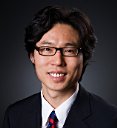
 Byung-Woo Hong
· 1 previous affiliation
- ChungAng UniversitySince 2008
- Full Professor · Since 2008
Research Overview
Byung-Woo Hong focuses on computer vision, medical image analysis, and machine learning, with an emphasis on developing algorithms that interpret complex visual scenes. His trajectory spans from foundational work in shape representation and image matching to advanced optimization techniques for deep neural networks. Most recently, his research investigates test-time adaptation and the integration of language priors to resolve ambiguities in monocular depth estimation and medical imaging.
Research Trajectory
Hong’s early research concentrated on robust shape representation and image matching. He introduced methods utilizing integral kernels to characterize local shape geometry, which provided resilience against noise without the need for presmoothing. This framework is detailed in Shape Representation based on Integral Kernels: Application to Image Matching and Segmentation, contributing to the broader area of integral measures for robust shape analysis. This work also intersected with diffeomorphic constraints for physically plausible image registration by establishing meaningful correspondences that preserve local singularity geometry. He further expanded on these concepts with collaborators in Integral Invariants for Shape Matching, defining functionals invariant to the Euclidean group. To address variations in imaging conditions, he contributed to Locally Rotation, Contrast, and Scale Invariant Descriptors for Texture Analysis.
Moving toward complex image partitioning, he proposed efficient algorithms in A New Model and Simple Algorithms for Multi-label Mumford-Shah Problems, which advanced work in robust initialization for centroid-based clustering and breaking circular dependencies in dynamic scene analysis. He consolidated his shape analysis framework in Shape Matching Using Multiscale Integral Invariants, creating compact, multiscale shape signatures invariant to group transformations such as translation, rotation, and scaling.
Transitioning toward deep learning and complex inverse problems, Hong began investigating unsupervised methods and adaptive regularization. In Bilateral Cyclic Constraint and Adaptive Regularization for Unsupervised Monocular Depth Prediction, he explored training on stereo pairs without ground-truth depth labels, contributing to the area of scaling depth estimation with self-supervision, and the research direction of Spatially Adaptive Parameter Maps for Image Restoration. He formalized dynamic regularization approaches in Adaptive Regularization of Some Inverse Problems in Image Analysis, which utilized a robust Huber loss optimized via ADMM. This work advanced the research direction of data-driven regularization for ill-posed inverse problems and the area of Hybrid Linear Quadratic Loss Functions for Robust Optimization.
His focus on optimization extended into deep neural networks, where he developed novel first-order algorithms. He introduced a stochastic batch size approach in Stochastic batch size for adaptive regularization in deep network optimization, contributing to the area of optimization strategies for rugged neural loss landscapes. He also explored the use of label noise combined with example trimming to improve generalization in Regularization in Network Optimization via Trimmed Stochastic Gradient Descent With Noisy Label, aligning with the broader area of label noise as a regularizer for robust generalization.
In recent years, Hong’s research has expanded into generative models, continual learning, and test-time adaptation. He investigated explicit control mechanisms for generative models in Unsupervised Image to Image Translation With Additional Mask. To address catastrophic forgetting, he developed an orthonormal basis set leveraging loss variance in A Continual Learning Algorithm Based on Orthogonal Gradient Descent Beyond Neural Tangent Kernel Regime. His work on depth estimation evolved significantly with WorDepth: Variational Language Prior for Monocular Depth Estimation, which uses natural language captions to resolve scale ambiguity. This contributed to several research areas, including robust depth perception across diverse real-world environments and the use of language priors for metric scale in monocular vision.
Most recently, he has focused on enabling models to correct their own errors during deployment. He developed a region-based shape energy model in Progressive Test Time Energy Adaptation for Medical Image Segmentation, advancing the areas of source-free domain adaptation and robust medical image analysis. Similarly, he contributed to ETA: Energy-based Test-time Adaptation for Depth Completion, which utilizes adversarial perturbations to refine depth estimates on-the-fly, intersecting with the research direction of energy-based out-of-distribution detection and geometric anchors for robust sim-to-real transfer. He has also explored modern generative techniques for restoration, as seen in Inpainting the Degraded Area with Diffusion Model.
Current Directions
The most recent papers in the evidence indicate a strong focus on test-time adaptation and the integration of multi-modal priors to resolve ambiguities in computer vision. Recent work investigates energy-based models that allow deployed systems—such as medical image segmentation and depth completion networks—to detect and correct their own out-of-distribution errors on the fly, without requiring access to original training data. Additionally, his current research explores the use of natural language context as a variational prior to establish metric scale in monocular vision, alongside the application of diffusion models for image restoration and inpainting.
Profile updated
Loading new papers…
Other researchers whose papers cluster into the same research directions — a proxy for overlapping technical interests and shared intellectual neighborhoods.
See something wrong? Report a mistake