

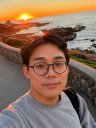
 Byoungwoo Park
· 2 previous affiliations
- PhD student · Since 2026
- Current
- Georgia Institute of TechnologySince 2025
- Visiting Researcher · Since 2025
Research Overview
Byoungwoo Park focuses on generative AI, AI for science, and time series modeling, with an emphasis on stochastic optimal control and dynamic optimal transport. His trajectory spans from foundational methods for irregular time series to advanced generative modeling in infinite-dimensional function spaces. Currently, he investigates the application of these theoretical frameworks to complex scientific domains, including neuroimaging and molecular transition path sampling.
Research Trajectory
Byoungwoo Park’s research trajectory is characterized by the progressive integration of stochastic optimal control and dynamic optimal transport into machine learning, particularly for modeling complex, continuous-time dynamics. His early collaborative work explored game-theoretic approaches to temporal data, participating in the development of Neural Stochastic Differential Games for Time-series Analysis. This research treated past observations as neural agents in a cooperative stochastic differential game, utilizing a deep neural fictitious play algorithm to reach Nash equilibria for robust prediction.
Building on this interest in temporal dynamics, Park focused on the pervasive challenge of irregularly sampled data in domains like healthcare and climate science. He introduced Efficient Modeling of Irregular Time-Series with Stochastic Optimal Control, which proposed a continuous dynamics-based model to overcome the limitations of transformer architectures in handling long sequences without inductive biases. By framing the problem through stochastic optimal control, this work provided a pathway for accurate Bayesian inference of dynamic states while managing computational complexity.
In 2024, Park significantly expanded the scope of his methodological framework by extending diffusion-based generative models from finite-dimensional vectors to infinite-dimensional domains. In Stochastic Optimal Control for Diffusion Bridges in Function Spaces, he bridged optimal control theory with Doob’s $h$-transform in Hilbert spaces. This theoretical advance enabled resolution-free image generation and sophisticated inference for continuous data. Consequently, this work made foundational contributions to the research direction of Generative Diffusion as Stochastic Optimal Control and the broader area of Generative Modeling and Inference in Infinite Dimensional Function Spaces. Furthermore, by allowing models to operate independently of fixed grid resolutions, the research advanced the fields of Generative Modeling over Continuous Neural Fields and Resolution Agnostic Generative Models for Arbitrary Scale Synthesis.
Continuing his focus on irregular time series, Park developed a highly efficient framework in Amortized Control of Continuous State Space Feynman-Kac Model for Irregular Time Series. By combining variational inference with stochastic optimal control and leveraging parallel scan algorithms, this simulation-free latent dynamics approach drastically reduced the computational costs typically associated with sequential continuous-time models, demonstrating strong performance across healthcare and climate datasets.
Park subsequently applied these continuous-time control principles to complex biological and medical data. He led the development of the Brain Dynamics with Optimal control (BDO) framework, detailed in A Foundational Brain Dynamics Model via Stochastic Optimal Control. By treating noisy functional magnetic resonance imaging (fMRI) signals as a continuous-time control problem, the BDO model achieved highly efficient, simulation-free inference for predicting clinical diagnoses and demographics. This research directly supports the area of Continuous Time Foundations for Neural Dynamics and addresses critical challenges in the direction of Clinical Readiness for Medical Foundation Models. He further collaborated on extending this paradigm in Stochastic Optimal Control for Continuous-Time fMRI Representation Learning, which modeled brain activity as continuous latent dynamics rather than discrete patches, yielding significant computational efficiency gains over existing large-scale brain models.
Expanding his work in biological modeling, Park introduced Multi-Marginal Schrödinger Bridge Matching. This algorithm addresses the challenge of reconstructing the continuous evolutionary trajectory of a population from discrete, unpaired snapshots—a common problem in single-cell RNA sequencing and other biological processes. By decomposing long trajectories into local segments and unifying them with a shared neural network, the method accurately models complex population dynamics over time.
Most recently, Park has focused on scaling these theoretical frameworks to highly complex physical systems. In Functional Adjoint Sampler: Scalable Sampling on Infinite Dimensional Spaces, he proposed a novel diffusion-based framework for sampling from Gibbs distributions defined over infinite-dimensional function spaces. Utilizing the Stochastic Maximum Principle, this scalable training objective allows for the efficient discovery of rare transition paths in molecular systems, ensuring perfect boundary enforcement and discretization invariance.
In 2026, Park expanded into long-horizon temporal modeling and single-step generative forecasting. In LongTake: Learning to Sustain Dynamics in Long-Horizon Video Generation, Park introduced a two-stage training pipeline with long-horizon teacher forcing to sustain visual dynamics and visual quality across extended autoregressive video rollouts. Park also contributed to Proper Scoring Rule-based Diffusion for Probabilistic Weather Forecasting, which incorporates auxiliary conditional denoising tasks trained under proper scoring rules to improve single-step probabilistic forecasting at extended horizons.
Current Directions
Recent work investigates the intersection of generative AI and AI for science, extending into long-horizon video generation and probabilistic weather forecasting alongside continuous-time models. The most recent papers in the evidence address the application of diffusion frameworks and stochastic optimal control to sustained video dynamics, global weather forecasting, molecular transition path sampling, and fMRI representation learning. By developing simulation-free inference methods, parallel scan algorithms, and scalable sampling techniques, this ongoing research aims to provide theoretically sound, computationally efficient tools for modeling highly nonlinear biological and physical systems.
Profile updated
Loading new papers…
Other researchers whose papers cluster into the same research directions — a proxy for overlapping technical interests and shared intellectual neighborhoods.
See something wrong? Report a mistake