

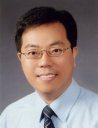
 Byoung-Tak Zhang
· 1 previous affiliation
- Seoul National UniversitySince 1997
- Full Professor · Since 2006
- Associate Professor · 2001–2006
- Assistant Professor · 1997–2001
Research Overview
Byoung-Tak Zhang focuses on neurocognitive computational modeling, multimodal intelligence, and lifelong learning architectures. His work spans from early active learning methods to recent developments in vision-language-action models and energy-based neural dynamics. Currently, he investigates physically grounded robotic control, dynamic 3D scene reconstruction, and the integration of Hopfield dynamics into modern deep learning frameworks.
Research Trajectory
Zhang's research trajectory begins with foundational work in machine learning efficiency, as seen in his early exploration of Accelerated Learning by Active Example Selection. Over the following decades, his focus expanded toward building computational models that emulate human cognitive processes, particularly in how systems process multimodal information and learn continuously over time.
By the mid-2010s, his group was actively developing architectures for visual reasoning and lifelong learning. In the domain of visual question answering (VQA), he guided the development of Multimodal Residual Learning for Visual QA, which extended deep residual learning to fuse visual and textual streams. Concurrently, his research addressed the challenge of continuous learning from real-world human behavior. With Dual-Memory Deep Learning Architectures for Lifelong Learning of Everyday Human Behaviors, he proposed a system that processes both slow-changing global patterns and fast-changing local behaviors, contributing to the broader area of Optimizing the Stability-Plasticity Tradeoff in Sequential Learning. He continued to refine multimodal attention mechanisms with Bilinear Attention Networks, introducing a method to compute bilinear interactions between vision and language channels more efficiently than standard co-attention models.
Moving into the 2020s, Zhang's work increasingly emphasized complex narrative understanding and robust online learning. He participated in the design of Message Passing Adaptive Resonance Theory for Online Active Semi-supervised Learning, a framework that builds topological graphs from data streams to identify informative samples under strict memory constraints. To push video understanding beyond simple pattern matching, his lab introduced DramaQA: Character-Centered Video Story Understanding with Hierarchical QA. This benchmark evaluated AI on complex narrative arcs and social dynamics, advancing the research direction of Hierarchical Task Evaluation for Large Models.
In recent years, Zhang has investigated the theoretical underpinnings of neural dynamics and generative modeling. His team explored the geometric properties of latent spaces in Shaping Latent Geometry with Noise-Injected Hopfield Dynamics, proposing a differentiable module that uses Gaussian noise to control the transition between discrete attractors and continuous manifolds. He also contributed to improving the stability of probabilistic generative models with Variational Online Mirror Descent for Robust Learning in Schrödinger Bridge. Alongside these theoretical contributions, his group developed training-free reasoning frameworks for large models. This includes Confidence-guided Refinement Reasoning for Zero-shot Question Answering, which uses internal confidence scores to filter noisy reasoning paths, and Instruction-tuned Self-Questioning Framework for Multimodal Reasoning, which enables vision-language models to iteratively generate intermediate sub-questions for complex visual tasks.
Most recently, Zhang's research has expanded into physically grounded robotic control and dynamic scene reconstruction. To address the limitations of fixed embeddings in robotic policies, his lab proposed Making Your Action Policies Interpretable: Mixture of Action Queries, modeling action chunks as mixtures of primitive queries for better adaptivity across environments. In computer vision, he oversaw the development of Kinematics-Driven Gaussian Shape Deformation for Blurry Monocular Dynamic Scenes, a framework that aligns 3D Gaussians with motion trajectories to reconstruct dynamic scenes from blurry video without external supervision. He has also continued to bridge modern deep learning with classical energy-based models, demonstrating in Deep Neural Networks as Finite-Step Hopfield Dynamics that layer updates can be mathematically framed as gradient descent steps on a Hopfield-style energy functional. Finally, to improve the robustness of robotic control systems, his team introduced Disentangling Spurious Correlations in Vision-Language-Action Models via Predicting Domain-Invariant Latent Lookahead, a representation-learning approach designed to mitigate shortcut learning under visual distribution shifts.
Current Directions
The most recent papers in the evidence indicate a strong focus on bridging theoretical neural dynamics with embodied, multimodal intelligence. Zhang is currently investigating the mathematical foundations of deep learning by framing network architectures through the lens of Hopfield dynamics and energy-based models. In parallel, his applied work addresses the robustness and interpretability of Vision-Language-Action (VLA) models for robotic control, developing methods to disentangle spurious visual correlations and represent complex behaviors through mixtures of action queries. His recent research also extends to advanced 3D computer vision, specifically utilizing kinematic principles to reconstruct dynamic scenes using 3D Gaussian splatting.
Profile updated
Loading new papers…
Other researchers whose papers cluster into the same research directions — a proxy for overlapping technical interests and shared intellectual neighborhoods.
See something wrong? Report a mistake