

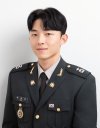
 Byeonghyun Pak
· 4 previous affiliations
- Agency for Defense DevelopmentSince 2023
- Researcher · 2023–2026
- Republic of Korea ArmySince 2023
- First Lieutenant · Since 2023
- University of Maryland, College ParkSince 2026
- PhD student · Since 2026
- Undergraduate Intern · 2021–2023
- Bachelor's degree · 2019–2022
Research Overview
Byeonghyun Pak focuses on computer vision, implicit neural representations, and vision-language models, with an emphasis on enabling robust generalization in dynamic environments. His trajectory spans from continuous scene reconstruction for super-resolution to domain-generalized semantic segmentation using linguistic concepts. Currently, he investigates the evaluation and acceleration of generative models, alongside unified representations for 3D geometry and open-world semantics.
Research Trajectory
In his early work, Pak focused on continuous scene reconstruction and the unique challenges of processing non-natural images. This is exemplified by his research on B-Spline Texture Coefficients Estimator for Screen Content Image Super-Resolution. Screen content images, which frequently contain text and graphics, exhibit sharp edges and homogeneous areas that differ significantly from the pixel distributions of natural photographs. To prevent the distortion of these informative components when scaling to different display resolutions, Pak introduced an implicit neural representation utilizing B-splines. This method extracts scaling, translating, and smoothing parameters, which are then processed by a multilayer perceptron to achieve arbitrary-scale super-resolution while preserving critical edge and texture information.
Building on his interest in robust visual representations, Pak’s research subsequently expanded into vision-language models and their capacity to improve performance in unseen environments. He developed a novel segmentation framework detailed in Textual Query-Driven Mask Transformer for Domain Generalized Segmentation. This architecture, known as tqdm, replaces the randomly initialized object queries typically found in mask transformers with text embeddings derived from vision-language models like CLIP. By anchoring visual recognition in domain-invariant linguistic concepts, the framework allows the model to effectively identify classes—such as cars and roads—even when presented in extreme, unseen visual styles like sketches or cubist art. This work contributes to the broader area of Addressing Overfitting in Few-Shot Learning and addresses challenges within the research direction of Linguistic Brittleness in Vision Language Models. Furthermore, the architectural improvements align with ongoing developments in the fields of Single Stream Transformers for Joint Feature Interaction and Stabilizing Transformer Set Prediction with Consistent Query Assignment.
More recently, Pak has investigated the efficiency and evaluation of generative models, particularly diffusion processes. With collaborators, he addressed the computational bottleneck of diffusion model sampling in Tortoise and Hare Guidance: Accelerating Diffusion Model Inference with Multirate Integration. The team proposed a training-free method that treats the sampling process as a multirate system. By computing highly sensitive noise estimates frequently (the "Tortoise") while updating less-sensitive guidance terms on a much coarser grid (the "Hare"), the approach significantly accelerates inference without sacrificing generation quality. This methodology advances the research direction of High Order Numerical Solvers for Fast Diffusion Sampling and intersects with techniques in the area of Adaptive Step Size Control via Local Error Estimation.
Continuing his work on generative AI, Pak has also examined the foundational metrics used to assess these models. In Rethinking FID Through the Geometry of the Reference Dataset, he and his co-authors analyzed the reliability of the Fréchet Inception Distance (FID), long considered the standard metric for evaluating image generators. The research demonstrates that FID's alignment with human judgment is highly dependent on the geometry of the reference dataset. While it remains a reliable proxy for quality in concentrated datasets like human faces, the metric can paradoxically worsen as image quality improves when applied to diverse, dispersed datasets like COCO, highlighting critical limitations in current evaluation paradigms.
Current Directions
The most recent papers in the evidence indicate a strong focus on the fundamental mechanics, acceleration, and rigorous evaluation of generative models. Pak is actively investigating how to optimize diffusion model inference through advanced numerical integration techniques and how to better align automated evaluation metrics with true perceptual quality across diverse datasets. Alongside these generative modeling efforts, his broader research agenda encompasses spatiotemporal scene representations. He aims to build unified frameworks that integrate dynamic 3D geometry with open-world semantics, ultimately seeking to enable robotic agents to generalize to novel scenarios and execute long-horizon tasks in complex environments.
Profile updated
Loading new papers…
Other researchers whose papers cluster into the same research directions — a proxy for overlapping technical interests and shared intellectual neighborhoods.
See something wrong? Report a mistake