

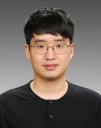
 Byeongho Heo
· 3 previous affiliations
- Naver (South Korea)Since 2018
- Researcher · Since 2019
- Intern · 2018–2019
- NAVER Cloud (South Korea)Current
- Current
- Technical Leader · 2023–2026
- Technical Leader · 2021–2023
- AI Research Scientist · 2019–2023
- Research Intern · 2018–2019
- Seoul National University2008–2024
- Visiting Assistant Professor · 2022–2024
- PHD Candidate · 2012–2019
- Undergrad student · 2008–2012
Research Overview
Byeongho Heo focuses on computer vision architectures, knowledge distillation, and the optimization of deep neural networks. His early work explored feature transfer and decision boundary distillation to improve model compression and efficiency. More recently, his research investigates the structural design of vision transformers, multimodal learning, and mechanistic interpretability in large vision-language models.
Research Trajectory
Heo’s published work begins in 2013 with collaborative research in visual tracking. In Initialization-Insensitive Visual Tracking through Voting with Salient Local Features, he participated in developing a tracking method that utilizes motion and descriptor saliency alongside Generalized Hough Transform voting. This approach was designed to maintain robustness against inaccurate bounding box initializations and severe occlusions, addressing common causes of model drift.
By 2019, his focus shifted significantly toward model compression, specifically advancing the research direction of Knowledge Distillation in Low Data Regimes. He introduced novel perspectives on transferring knowledge from teacher to student networks. In Knowledge Distillation with Adversarial Samples Supporting Decision Boundary, he demonstrated that transferring information closely related to a classifier's decision boundary improves generalization. Expanding on this concept, he proposed Knowledge Transfer via Distillation of Activation Boundaries Formed by Hidden Neurons, which minimizes an activation transfer loss to align the separating hyperplanes of hidden neurons between networks. He also contributed to the broader area of Cross Architecture Layer Mapping for Knowledge Distillation in A Comprehensive Overhaul of Feature Distillation, designing a distillation loss that synergizes teacher and student transforms, feature positions, and distance functions to skip redundant information during compression.
Moving into the 2020s, Heo's research broadened to encompass the fundamental architectural design and optimization of deep neural networks. He collaborated on investigating the structural conventions of lightweight models in Rethinking Channel Dimensions for Efficient Model Design, analyzing the rank of output features to optimize channel configurations. Applying similar foundational scrutiny to emerging architectures, he led Rethinking Spatial Dimensions of Vision Transformers, which adapted the dimension reduction principles of convolutional neural networks to transformer models. Concurrently, he addressed optimization challenges in AdamP: Slowing Down the Slowdown for Momentum Optimizers on Scale-invariant Weights, identifying and mitigating the rapid reduction in effective step sizes caused by momentum in scale-invariant weights.
His work during this period also extended to data representation and compression. In the area of Parallel Local-Global Feature Extraction, he developed the Information Transformer in Joint Global and Local Hierarchical Priors for Learned Image Compression, a learned entropy model that captures image dependencies without incurring quadratic computational complexity. He also contributed to improving dataset fidelity in Re-Labeling ImageNet: From Single to Multi-Labels, From Global to Localized Labels, which addressed the mismatch between single-label annotations and multi-label image content during training with random crops.
In 2022, Heo explored the research direction of Navigating the Head-Tail Performance Trade-Off in imbalanced datasets. He collaborated on The Majority Can Help the Minority: Context-rich Minority Oversampling for Long-tailed Classification, a data augmentation strategy that pastes minority-class objects onto diverse majority-class backgrounds to boost generalization. Around the same time, he directed research in the area of Preserving Tiny Features Against Spatial Resolution Degradation. In Learning Features with Parameter-Free Layers, his team demonstrated that built-in parameter-free operations could effectively replace trainable spatial operations to improve practical model speed without sacrificing performance.
Continuing his focus on architectural efficiency and training methodologies, Heo introduced a novel training framework in Augmenting Sub-model to Improve Main Model, utilizing a masked sub-branch that learns via self-distillation to stabilize and enhance supervised training across diverse architectures. He also revisited established architectures in DenseNets Reloaded: Paradigm Shift Beyond ResNets and ViTs, methodically refining architectural components and training recipes to revitalize Densely Connected Convolutional Networks as competitive, memory-efficient alternatives to modern models.
In his most recent work, Heo has investigated the behavior and interpretability of complex models. He participated in analyzing text-to-image diffusion models in DNNs May Determine Major Properties of Their Outputs Early, with Timing Possibly Driven by Bias, finding that deep neural networks lock in major output properties during early inference stages. He also contributed to the mechanistic interpretability of vision-language models in VisualScratchpad: Inference-time Visual Concepts Analysis in Vision Language Models, helping to uncover alignment issues between visual and textual concepts. Finally, he led the development of Preference-Instructed Vision OpTimization in RL makes MLLMs see better than SFT, demonstrating that reinforcement learning can significantly enhance the visual capabilities of multimodal large language models at a fraction of typical training costs.
Current Directions
The most recent papers in the evidence indicate a strong focus on the interpretability, optimization, and multimodal capabilities of large-scale models. Recent work investigates the internal mechanics of vision-language models, utilizing tools like sparse autoencoders to debug inference-time errors and understand the alignment between visual and textual concepts. Additionally, ongoing research explores the application of reinforcement learning to multimodal large language models, aiming to optimize vision encoders more efficiently than traditional supervised fine-tuning. This trajectory reflects a broader interest in understanding the early decision-making processes of deep neural networks and improving the training paradigms for complex, multimodal architectures.
Profile updated
Loading new papers…
Other researchers whose papers cluster into the same research directions — a proxy for overlapping technical interests and shared intellectual neighborhoods.
See something wrong? Report a mistake