

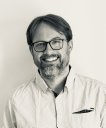
 Bruno Galerne
· 3 previous affiliations
- Université d'OrléansSince 2018
- Full Professor · Since 2018
- Université Paris Descartes2011–2018
- Assistant Professor · 2011–2018
- PhD student · 2007–2011
Research Overview
Bruno Galerne focuses on image generative modeling, with a particular emphasis on the mathematical foundations of texture synthesis, imaging inverse problems, and the theoretical analysis of diffusion models. His work operates at the intersection of applied probability, image processing, and machine learning, transitioning from classical stochastic models to modern deep generative frameworks. Currently a Professor at the Université d'Orléans and a member of the Institut Denis Poisson, his research investigates how to bridge the gap between rigorous mathematical analysis and the empirical success of deep learning in computer vision and graphics.
Research Trajectory
The evolution of Galerne’s research began with a focus on the theoretical analysis and algorithmic development of stochastic image models. During his doctoral and early post-doctoral work (2007–2011), he concentrated on micro-texture synthesis, exploring the properties of random phase noise (RPN) and asymptotic discrete spot noise (ADSN). This period was characterized by the use of Fourier-based methods to synthesize textures that are characterized by their power spectrum. In Micro-Texture Synthesis by Phase Randomization, he demonstrated that for a specific class of "micro-textures," phase randomization in the Fourier domain is sufficient to produce high-quality synthesis results. This work established a mathematically elegant alternative to more computationally intensive patch-based methods of the time, further detailed in the comprehensive study Random Phase Textures: Theory and Synthesis.
In the mid-2010s, Galerne’s work shifted toward integrating local image structures—patches—with global statistical constraints. This period saw an increased use of variational methods and optimal transport (OT) to refine texture models. In Semi-discrete Optimal Transport in Patch Space for Enriching Gaussian Textures, he proposed a bilevel model that uses OT to map continuous Gaussian distributions toward discrete exemplar patch distributions. This approach provided a way to "enrich" simple Gaussian textures with the structural complexity found in real-world samples while maintaining statistical guarantees. During this time, he also contributed to the analysis of established algorithms, such as the The Heeger & Bergen Pyramid Based Texture Synthesis Algorithm, and explored physically realistic models for specific phenomena like analog film grain in Analysis of a Physically Realistic Film Grain Model, and a Gaussian Film Grain Synthesis Algorithm.
Between 2017 and 2021, his research expanded into broader problems of image redundancy and maximum entropy methods. He participated in the development of statistical frameworks for analyzing spatial redundancy in natural images, as seen in Patch Redundancy in Images: A Statistical Testing Framework and Some Applications, which utilized a contrario models to define patch similarity. He also collaborated on Maximum Entropy Methods for Texture Synthesis: Theory and Practice, which investigated the relationship between convolutional neural networks (CNNs) and information geometry, specifically looking at sampling schemes that yield maximum entropy under expected constraints.
Since 2022, Galerne’s focus has moved decisively toward deep generative models, particularly diffusion and score-based models. His recent work seeks to provide a rigorous mathematical understanding of these models' performance, especially in the context of Unbiased Posterior Sampling for Diffusion Models. A significant portion of this current effort involves analyzing diffusion models in restricted frameworks—such as Gaussian data distributions—where exact solutions can be derived to control for initialization, truncation, discretization, and score approximation errors.
Current Directions
Galerne’s current research is centered on the theoretical and practical aspects of Error Decomposition for Generative Diffusion and Flow Models. By studying the convergence of these models through the lens of Closed-Form Divergences and Tractable Information Geometry, he aims to quantify the accuracy of diffusion-based solvers for inverse problems. This involves investigating Stochastic Correction for Robust Generative Sampling to improve the stability and fidelity of generated images.
Recent projects also include the application of optimal transport to image restoration, as evidenced by work on Semi-Unbalanced Regularized Optimal Transport for Image Restoration. This research promotes images whose patch distributions align with learned generative priors or uncorrupted references. Additionally, he has extended his expertise in generative modeling to 3D scenes through Gaussian Splatting, specifically focusing on style transfer in large-scale environments. His latest work, accepted at ICML 2025 and CVPR 2025, continues to explore the exact evaluation of diffusion models and the scaling of style transfer techniques.
Representative Work
Micro-Texture Synthesis by Phase Randomization (2011). This paper introduces a method for synthesizing micro-textures by keeping the Fourier modulus of an exemplar image while randomizing its phase. It demonstrates that for textures characterized by their spatial frequency content rather than distinct geometric shapes, this simple stochastic process is highly effective.
Random Phase Textures: Theory and Synthesis (2011). In this work, Galerne provides a rigorous mathematical analysis of Random Phase Noise (RPN) and Asymptotic Discrete Spot Noise (ADSN). The paper clarifies that while these two stochastic processes are mathematically distinct, they produce perceptually similar results when applied to texture synthesis, linking them to early theories of human texture discrimination.
Semi-discrete Optimal Transport in Patch Space for Enriching Gaussian Textures (2017). This research proposes a bilevel texture model that combines the global properties of Gaussian random fields with the local structural detail of patch-based methods. By applying optimal transport between a continuous Gaussian distribution and a discrete set of exemplar patches, the method provides a fast synthesis algorithm with statistical guarantees.
Analysis of a Physically Realistic Film Grain Model, and a Gaussian Film Grain Synthesis Algorithm (2017). Serving as the senior author, Galerne here analyzes a Boolean model for analog film grain. The paper derives the expected value and covariance of the grain texture and proposes a Gaussian-based synthesis algorithm that approximates the physical properties of film grain for digital photography applications.
Semi-Unbalanced Regularized Optimal Transport for Image Restoration (2023). This work explores the use of unbalanced optimal transport as a regularization term for inverse problems. The approach is designed to promote images whose patch distributions match a reference set, showing particular utility in super-resolution tasks where traditional balanced OT might be too restrictive.
Diffusion models for Gaussian distributions: Exact solutions and Wasserstein errors (2025). In this recent study, Galerne and his co-author analyze the behavior of diffusion models when the underlying data distribution is Gaussian. Because the score function is linear in this case, the authors are able to derive exact solutions for the backward SDE and the associated flow ODE, allowing for a precise decomposition of the errors inherent in the diffusion sampling process. This work is further extended in Exact Evaluation of the Accuracy of Diffusion Models for Inverse Problems with Gaussian Data Distributions.
Profile updated
Loading new papers…
Other researchers whose papers cluster into the same research directions — a proxy for overlapping technical interests and shared intellectual neighborhoods.
See something wrong? Report a mistake