

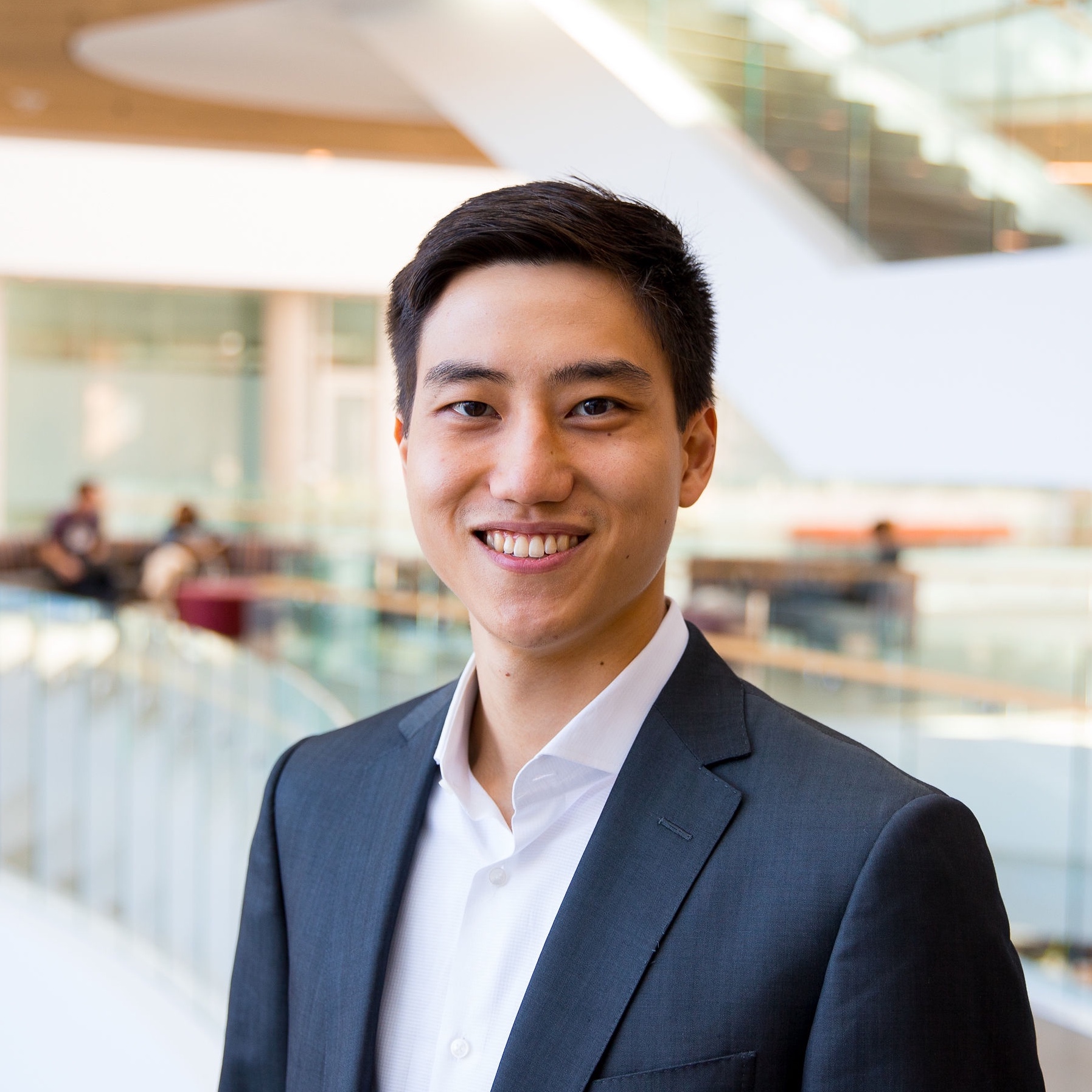
 Brian Yan
1 previous affiliation
- Carnegie Mellon University2021–2026
- PhD student · 2021–2026
Research Overview
Brian Yan focuses on speech and language processing, with an emphasis on end-to-end neural networks for multilingual speech recognition and speech translation. His trajectory spans foundational improvements to sequence-to-sequence modeling and connectionist temporal classification, extending into complex bilingual and code-switched domains. Recently, his work investigates the scaling laws governing massive multilingual speech models.
Research Trajectory
The evolution of Brian Yan’s research is anchored in improving the efficiency, accuracy, and flexibility of end-to-end speech recognition and translation systems. Much of his early trajectory centers on refining Connectionist Temporal Classification (CTC) frameworks to better handle complex sequence-to-sequence tasks. In BERT meets CTC: New formulation of end-to-end speech recognition with pre-trained masked language model, he and his collaborators addressed the limitations of conventional CTC by relaxing its strict conditional independence assumptions—a constraint that traditionally limits a model's ability to learn internal linguistic structures. By integrating a pre-trained masked language model, this formulation leverages self-attention mechanisms to capture deep inter-dependencies between audio and token representations while preserving the inherent training efficiency of CTC.
Building on these foundational improvements to sequence modeling, he explored how CTC alignments could directly benefit downstream generation tasks in CTC Alignments Improve Autoregressive Translation. This work demonstrated that the explicit alignment structures derived from CTC can be harnessed to guide and enhance autoregressive translation models. Further addressing the structural uncertainties inherent in CTC—specifically the ambiguity of selecting the most probable alignment path among many potential sequences—he contributed to BAYES RISK CTC: CONTROLLABLE CTC ALIGNMENT IN SEQUENCE-TO-SEQUENCE TASKS. This research introduced mechanisms to better control alignment predictions, a methodological advance that intersects with several broader research areas, including the research direction of Internalizing Alignment for End-to-End Speech Synthesis, the area of Temporal Alignment for Streaming Knowledge Distillation, and the broader area of Hierarchical Token Pruning for Efficient Transformers.
Alongside core architectural refinements, his research extends into the practical challenges of complex linguistic environments, particularly bilingual and code-switched speech. In Joint Modeling of Code-Switched and Monolingual ASR via Conditional Factorization, he proposed a general framework to simultaneously model monolingual and intra-sententially code-switched utterances, a notoriously difficult task due to the fluid transitions between vocabularies and acoustics. By enforcing label-to-frame synchronization for monolingual sub-tasks, the framework allows the joint model to be conditionally factorized, enabling an end-to-end differentiable neural network to produce accurate bilingual outputs using only monolingual information.
To address the structural limitations of purely end-to-end models in decomposable sequence tasks like speech translation, he participated in the development of Searchable hidden intermediates for end-to-end models of decomposable sequence tasks. Recognizing that cascaded systems often outperform end-to-end approaches due to their compositionality and search capabilities, this work introduced a framework that learns searchable hidden representations at intermediate stages. By applying beam search to these hidden intermediates, the system enhances overall performance and allows for the integration of external models mid-stream, bridging the gap between the simplicity of end-to-end training and the modularity of cascaded pipelines.
More recently, his focus has expanded to the macro-level dynamics of model scaling. In OWLS: Scaling Laws for Multilingual Speech Recognition and Translation Models, he and his co-authors trained a suite of open-source speech models ranging up to 18 billion parameters on massive multilingual datasets. This empirical study established comprehensive neural scaling laws for speech tasks, demonstrating highly predictable performance trajectories as compute and data increase. The findings contribute significantly to the area of Scaling Speech Recognition to Low Resource Languages, advance the research direction of The Mechanistic Foundations of Neural Scaling Laws, and inform the broader area of Hybrid CTC Attention Sequence Learning.
Current Directions
The most recent work in the evidence investigates the empirical scaling behaviors of massive multilingual speech models. A primary focus is understanding how increasing parameter counts and training data volumes predictably influence performance across diverse linguistic tasks. This research aims to formalize neural scaling laws specifically for speech recognition and translation, moving beyond heuristic model design to predictable, mathematically grounded scaling trajectories. A key theme within this current direction is the application of these scaling principles to improve outcomes for low-resource languages, demonstrating that massive, unified models can effectively transfer representations to domains with limited training data. Additionally, this work continues to explore the architectural foundations necessary to support such scale, including hybrid attention and sequence recognition frameworks capable of processing hundreds of thousands of hours of multilingual audio.
Profile updated
Loading new papers…
Other researchers whose papers cluster into the same research directions — a proxy for overlapping technical interests and shared intellectual neighborhoods.
See something wrong? Report a mistake