

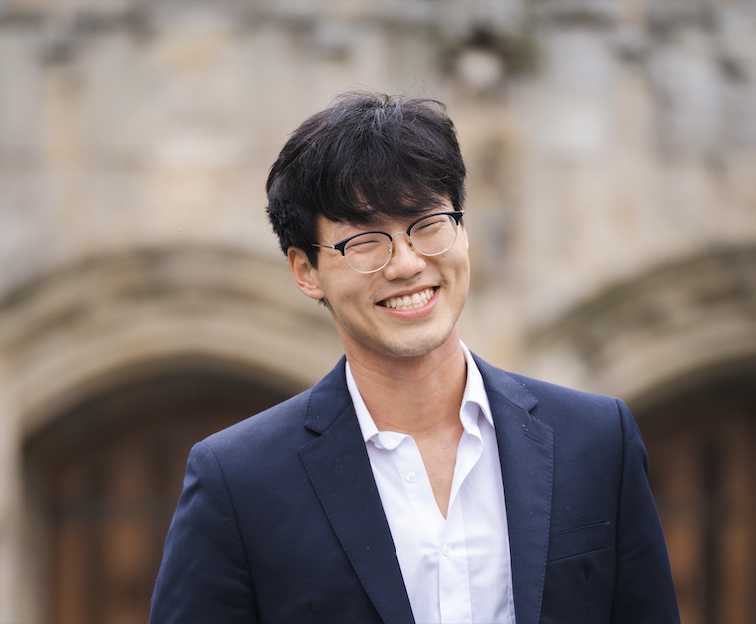
 Brian M Cho
· 6 previous affiliations
- Netflix (United States)Since 2026
- AI/ML Research Intern · Since 2026
- Meta (United States)2024–2025
- Research Science Intern · 2024–2025
- Yale University2018–2022
- Research Assistant · 2021–2022
- Undergrad student · 2018–2022
- Doctor of Philosophy - PhD, ORIE · 2022
- Cornell Tech2022
- PhD student · 2022
- Investment Associate Intern · 2021
Research Overview
Brian M Cho focuses on causal inference, experimental design, and anytime-valid statistical testing, particularly for applications in high-risk domains such as healthcare and policy. His work bridges theoretical statistics and machine learning to develop robust methods for adaptive experimentation and safe policy learning. Recently, he has concentrated on sequential hypothesis testing and simulation-based inference to improve decision-making under uncertainty.
Research Trajectory
Cho's documented research arc begins with methodological contributions to debiasing and sequential testing. In 2024, he addressed the challenge of Aligning Predictive Models with Causal Objectives by introducing Kernel Debiased Plug-in Estimation: Simultaneous, Automated Debiasing without Influence Functions for Many Target Parameters. This method automates the removal of bias from machine learning-based statistical estimates using kernel methods, contributing to the broader area of Finite Dimensional Reductions via the Representer Theorem. That same year, he advanced the research direction of Anytime Valid Inference via Testing by Betting with Peeking with PEAK: Sequential, Nonparametric Composite Hypothesis Tests for Means of Multiple Data Streams, developing sequential tests that allow researchers to continuously monitor data streams without inflating error rates.
Building on these foundations in sequential testing, his 2025 research expanded significantly into multi-armed bandits and adaptive experimental design. In Reward Maximization for Pure Exploration: Minimax Optimal Good Arm Identification for Nonparametric Multi-Armed Bandits, he combined reward-maximizing sampling with nonparametric anytime-valid sequential tests to efficiently identify arms exceeding a target threshold. He further explored the area of Statistical Inference for Adaptively Collected Data by developing a "simulation with optimism" framework in Simulation-Based Inference for Adaptive Experiments, which achieves valid error control and narrower confidence intervals for adaptive trials. With collaborators, he also addressed real-world experimental complications in Efficient Adaptive Experimentation with Noncompliance, tackling scenarios where subjects do not adhere to assigned treatments in clinical or A/B testing environments.
A parallel theme in his 2025 work involves the direction of High Confidence Safety Guarantees for Machine Learning. He contributed to CSPI-MT: Calibrated Safe Policy Improvement with Multiple Testing for Threshold Policies, which utilizes double machine learning and simultaneous confidence bands to ensure new decision rules statistically outperform the status quo before adoption. Similarly, he developed a framework for learning and evaluating policies on the same dataset without the statistical penalty of data-splitting in SNPL: Simultaneous Policy Learning and Evaluation for Safe Multi-Objective Policy Improvement.
Reflecting an interest in high-stakes domains, Cho also participated in interdisciplinary biomedical research concerning the area of Overcoming Immune Evasion with Dual Checkpoint Inhibition. He co-authored 982 Targeting glycans for cancer immunotherapy and Antibody-lectin chimeras for glyco-immune checkpoint blockade, which describe a modular bispecific platform designed to prevent immune evasion by cancer cells through the blockade of glyco-immune checkpoints.
Continuing his focus on sequential analysis, his 2026 work includes GAAVI: Global Asymptotic Anytime Valid Inference for the Conditional Mean Function. This research provides a statistical framework for testing hypotheses about conditional mean functions—such as heterogeneous treatment effects—allowing researchers to stop experiments early with high confidence while supporting flexible machine learning models for high-dimensional data. Cho also contributed to the direction of Anytime Valid Inference via Testing by Betting in Agent Evaluation Without Ground Truth: A Null Proportion Perspective, introducing a framework that uses sequences of e-values as statistical evidence to assess autonomous agent decision quality from noisy, inconclusive experiments without ground-truth labels. Additionally, Cho examined theoretical aspects of reinforcement learning in Exploration in the Limit.
Current Directions
Recent work investigates the intersection of sequential hypothesis testing, autonomous agent evaluation, and flexible machine learning for heterogeneous treatment effects. The most recent papers in the evidence address anytime-valid inference for conditional mean functions, allowing for continuous data monitoring and early stopping without compromising statistical validity. Additionally, ongoing efforts focus on safe policy improvement and adaptive experimentation, particularly in environments characterized by noncompliance or the need to evaluate multiple candidate policies simultaneously. These directions emphasize the development of robust, simulation-based, and nonparametric statistical tools that provide high-confidence guarantees in complex, data-driven decision-making scenarios.
Profile updated
Loading new papers…
Other researchers whose papers cluster into the same research directions — a proxy for overlapping technical interests and shared intellectual neighborhoods.
See something wrong? Report a mistake