

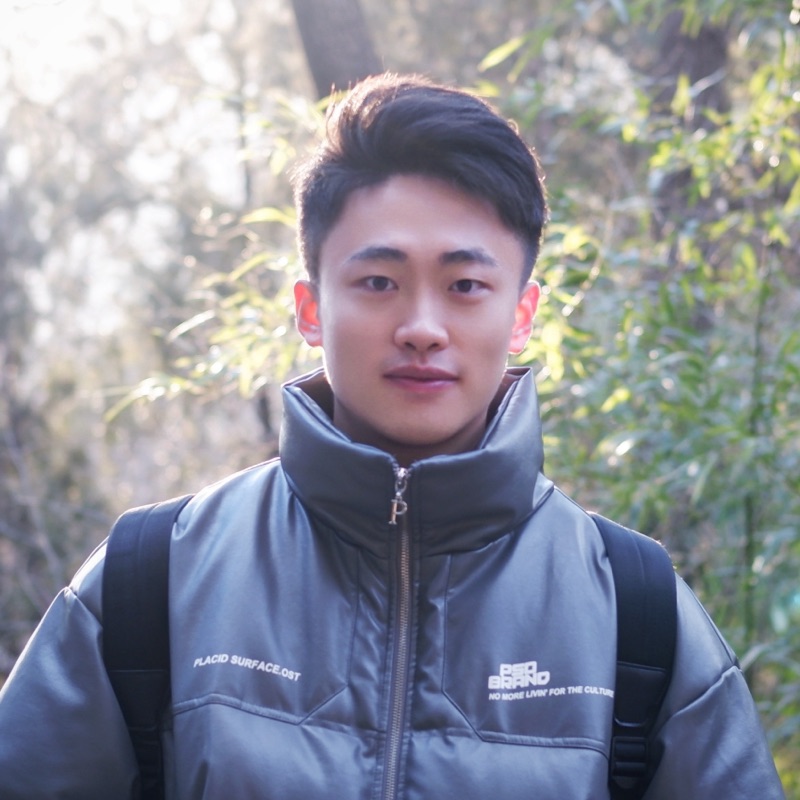
 Boyu Tian
1 previous affiliation
- Tsinghua University2020–2025
- PhD student · 2020–2025
1 other author named Boyu Tian: Boyu Tian (1 paper)
Research Overview
Boyu Tian focuses on computer systems architecture, specifically memory-centric designs and scalable infrastructure for artificial intelligence. His earlier work explores near-data processing, memory disaggregation, and hardware-software co-optimization to address the memory wall in data-intensive applications. More recently, he investigates efficient serving architectures and resource reconfiguration for large-scale machine learning models.
Research Trajectory
Boyu Tian’s research initially focused on hardware acceleration for specialized workloads, beginning in 2022 with his collaborative work on FINGERS: exploiting fine-grained parallelism in graph mining accelerators. This early interest in optimizing data-intensive computation naturally transitioned into a sustained focus on Near-Data Processing (NDP) and Processing-in-Memory (PIM) architectures.
In 2023, he introduced ABNDP: Co-optimizing Data Access and Load Balance in Near-Data Processing. Addressing the fundamental tradeoff between minimizing remote data accesses and achieving computational load balance in 3D-stacked memories, this work proposed a hardware-software co-optimization approach to simultaneously alleviate both bottlenecks. Continuing this trajectory in memory-centric architecture design, he developed NDPBridge: Enabling Cross-Bank Coordination in Near-DRAM-Bank Processing Architectures in 2024, which provided new mechanisms for coordinating operations across memory banks.
Throughout 2024, his contributions expanded across several facets of memory and PIM optimization. He participated in research on data management for extended memory systems in Stream-Based Data Placement for Near-Data Processing with Extended Memory. He also collaborated on evaluating graph workloads on physical hardware, detailed in PimPam: Efficient Graph Pattern Matching on Real Processing-in-Memory Hardware. Alongside NDP, his work addressed broader memory hierarchy challenges, such as reducing overheads in hybrid memory systems, as seen in Trimma: Trimming Metadata Storage and Latency for Hybrid Memory Systems.
By 2025, the scope of his research broadened to encompass rack-scale memory pooling and specialized infrastructure for large-scale artificial intelligence. He contributed to the design of MemTunnel: A CXL-Based Rack-Scale Host Memory Pooling Architecture for Cloud Service and continued his near-memory research with ANSMET: Approximate Nearest Neighbor Search with Near-Memory Processing and Hybrid Early Termination.
His most recent work heavily emphasizes the systems and infrastructure required to serve massive machine learning models efficiently. He collaborated on Expert-as-a-Service: Towards Efficient, Scalable, and Robust Large-scale MoE Serving, a system that disaggregates stateless expert modules to improve fault tolerance and resource allocation for models like DeepSeek-V3. This work aligns with the broader research direction of Elastic Resource Reconfiguration for Deep Learning Systems. Additionally, he participated in algorithmic and system-level transformer optimizations in Twilight: Adaptive Attention Sparsity with Hierarchical Top-$p$ Pruning, contributing to the research areas of Adaptive Sparse Attention via Dynamic Budgeting, Generalizing Model Pruning Across Diverse Neural Architectures, and Low-Bit Attention Estimation for Sparse Transformers.
Current Directions
The most recent papers in the evidence indicate a strong focus on scalable infrastructure and optimization for large-scale artificial intelligence models. This includes architectural support for Mixture-of-Experts (MoE) serving, where disaggregation techniques are used to manage compute resources elastically and maintain high throughput during hardware failures. Additionally, current work investigates algorithmic and system-level optimizations for transformer models, such as adaptive attention sparsity and hierarchical pruning methods designed to accelerate inference. This focus on AI infrastructure is complemented by ongoing research into advanced memory architectures, including CXL-based memory pooling and near-memory processing, to support the massive data requirements of modern cloud and machine learning workloads.
Profile updated
Loading new papers…
Other researchers whose papers cluster into the same research directions — a proxy for overlapping technical interests and shared intellectual neighborhoods.
See something wrong? Report a mistake