

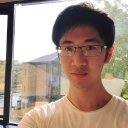
 Boyan Gao
3 previous affiliations
- University of Oxford2023–2026
- Postdoc · 2023–2026
- University of Edinburgh2017–2021
- PhD student · 2017–2021
- Queen Mary University of London2015–2016
- MS student · 2015–2016
Research Overview
Boyan Gao focuses on bi-level optimization, robust generalization, and the efficient adaptation of large language models. His early work explored automated loss function search and meta-learning to improve model resilience against label noise and domain shifts. More recently, his research addresses the scalability, alignment, and uncertainty quantification of foundation models, alongside controllable generation in diffusion architectures.
Research Trajectory
Boyan Gao’s early research addressed fundamental challenges in representation learning and clustering by integrating discrete optimization into deep learning pipelines. In Deep Clusteringwith Concrete K-Means (2020), he introduced a novel method leveraging the Gumbel-Softmax reparameterization trick to overcome the non-differentiability of discrete cluster assignments. This approach enabled simultaneous, gradient-based optimization for both feature representation and clustering, contributing to the broader area of Direct Discrete Optimization for Unsupervised Partitioning.
Following this, his focus shifted toward improving model robustness through automated loss function design. In Searching for Robustness: Loss Learning for Noisy Classification Tasks (2021), he explored a "learning to learn" approach to discover white-box classification loss functions resilient to label noise. By parameterizing a flexible family of loss functions with Taylor polynomials and applying evolutionary strategies, this work provided a plug-and-play module for diverse downstream tasks, advancing research in the direction of Noise-Robust Loss Functions for Weakly Supervised Learning. He extended this meta-learning paradigm to domain generalization in Loss Function Learning for Domain Generalization by Implicit Gradient (2022). This research proposed meta-learning a superior alternative to standard cross-entropy loss, sitting at the intersection of the research areas Automated Loss Function Search via Bi-level Optimization and Efficient Bi-level Optimization via Implicit Differentiation. Continuing his work on optimization fundamentals, he developed MetaMD: Principled Optimiser Meta-Learning for Deep Learning (2023), which departed from traditional gradient descent perspectives by utilizing mirror descent and meta-learning the corresponding Bregman divergence to improve convergence speed.
By 2024, Gao began applying his expertise in optimization and efficiency to the rapidly expanding domain of Large Language Models (LLMs). To address the massive computational and energy overhead of running LLMs, he proposed SpikeLLM: Scaling up Spiking Neural Network to Large Language Models via Saliency-based Spiking (2024), adapting energy-efficient spiking neural networks to large-scale architectures. Concurrently, he investigated the intersection of LLMs and domain-specific explainability in Cognition Chain for Explainable Psychological Stress Detection on Social Media (2024). This framework integrated psychological theory into language models to move beyond binary classifications, generating step-by-step, theory-grounded explanations for stress detection.
In 2025, Gao’s work broadened to encompass instruction tuning, few-shot adaptation, and the geometric properties of generative models. Overseeing a large-scale alignment project, he and his collaborators developed Infinity Instruct: Scaling Instruction Selection and Synthesis to Enhance Language Models (2025). This research utilized a two-phase pipeline for data selection and evolutionary synthesis to create a high-quality instruction dataset, significantly bridging the performance gap between open-weight and proprietary models. To improve how these models adapt to new tasks, he introduced Optimization Inspired Few-Shot Adaptation for Large Language Models (2025). This method reinterpreted the LLM forward pass as a sequence of preconditioned gradient descent steps, tuning LayerNorm parameters to achieve efficient few-shot generalization without the heavy inference costs of standard in-context learning.
During this period, he also participated in research applying sharpness-aware minimization to dataset condensation in Enhancing Generalization via Sharpness-Aware Trajectory Matching for Dataset Condensation (2025), helping to mitigate the time-space complexity of inner-loop unrolling in bi-level optimization. Returning to themes of robustness, he developed a Lagrangian dual approach in Computing Strategic Responses to Non-Linear Classifiers (2025) to train and evaluate neural networks in environments where users strategically modify their features to game the system.
Gao has also made recent contributions to generative vision models. In Exploring the latent space of diffusion models directly through singular value decomposition (2025), he investigated the latent space of diffusion models using SVD, uncovering a "mobility in order" property where semantic attributes shift across singular vector ranks. This enabled a fast, data-free image editing framework and contributed to the areas of Linear Semantic Geometry in Generative Models and Timestep Aware Quantization for Diffusion Models. In the video domain, he introduced Is Temporal Prompting All We Need For Limited Labeled Action Recognition? (2025), designing a lightweight temporal visual prompting mechanism using 1D convolutions to adapt the CLIP vision-language model for highly efficient zero-shot and few-shot video action recognition.
Most recently, Gao has focused on the reliability of deployed language models. He collaborated on Semantic Self-Distillation for Language Model Uncertainty (2026), a framework designed to distill the uncertainty of LLMs into a lightweight student model. By predicting a semantic distribution over possible answers rather than a simple scalar score, this work enables efficient, real-time uncertainty estimation for high-stakes applications.
Current Directions
The most recent papers in the evidence indicate a strong focus on the reliability, efficient adaptation, and geometric interpretability of foundation models. A major ongoing theme is the development of parameter-efficient strategies to adapt massive models to specific tasks or modalities, whether through optimization-inspired forward passes for LLMs or lightweight temporal prompting for vision-language models.
Additionally, current work addresses the critical need for safe and reliable deployment of AI systems. This includes quantifying uncertainty in language models via semantic self-distillation, as well as designing robust non-linear classifiers capable of withstanding strategic manipulation by users. Finally, ongoing research investigates the latent geometry of generative architectures, utilizing techniques like singular value decomposition to achieve precise, training-free control over image synthesis.
Profile updated
Loading new papers…
Other researchers whose papers cluster into the same research directions — a proxy for overlapping technical interests and shared intellectual neighborhoods.
See something wrong? Report a mistake