

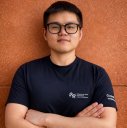
 Bowei He
· 2 previous affiliations
- Postdoc · Since 2025
- City University of Hong Kong2022–2025
- PhD student · 2022–2025
Research Overview
Bowei He focuses on recommender systems, large language model optimization, and search-integrated reasoning. His early work developed dynamic and interpretable architectures for streaming recommendation, while his recent research addresses the efficiency, robustness, and reasoning capabilities of foundation models. He currently investigates model compression, knowledge distillation, and retrieval-augmented generation.
Research Trajectory
His early research explored how to build more nuanced and transparent recommender systems by incorporating external signals and balancing competing objectives. In Expenditure aware rating prediction for recommendation (2016), he and his collaborators demonstrated that real-world spending habits significantly correlate with user ratings, leveraging this data to improve prediction accuracy. This interest in complex user modeling expanded into a comprehensive taxonomy of result diversification in A Survey of Diversification Techniques in Search and Recommendation. This work categorized metrics and algorithms designed to balance user satisfaction with provider fairness, contributing to the broader area of Transparent Reasoning for Personalized Recommendation and the research direction of Determinantal Point Processes for Diverse Subset Selection.
Moving into 2023 and 2024, the focus shifted toward the computational challenges of streaming data and dynamic environments. He developed adaptive architectures to handle continuously evolving interaction graphs, introducing Dynamic Embedding Size Search with Minimum Regret for Streaming Recommender System and Dynamically Expandable Graph Convolution for Streaming Recommendation. Alongside these structural innovations, he continued to refine ranking mechanisms, as seen in Interpretable Triplet Importance for Personalized Ranking.
The emergence of foundation models prompted an integration of semantic reasoning into recommendation pipelines. With collaborators, he developed the Llama4Rec framework in Integrating Large Language Models into Recommendation via Mutual Augmentation and Adaptive Aggregation. This system synthesizes training data and provides collaborative context for prompts, advancing the area of Efficient LLM Integration for Real Time Recommendation and the research direction of Bridging the Semantic-Behavioral Gap in Generative Recommendation. He further explored this intersection by participating in the development of SRA-CL, detailed in Semantic Retrieval Augmented Contrastive Learning for Sequential Recommendation, which uses LLM-guided semantic retrieval to solve low-quality pair problems in the field of Contrastive Learning for Sparse Sequential Recommendation.
By 2025, his research trajectory broadened significantly to address the core efficiency, reasoning, and robustness of large language models. To tackle model compression, he introduced the COLA framework in Preserving LLM Capabilities through Calibration Data Curation: From Analysis to Optimization, demonstrating that curating calibration data for representativeness in the activation space better preserves complex reasoning in compressed models. He expanded on pruning techniques in Beyond One-Size-Fits-All Pruning via Evolutionary Metric Search for Large Language Models. Concurrently, he investigated how LLMs retrieve and process information, proposing a Monte Carlo Tree Search-inspired approach in Reasoning in Action: MCTS-Driven Knowledge Retrieval for Large Language Models to align retrieved knowledge with human logical flow. He also addressed security vulnerabilities, developing defenses against backdoor attacks in Certifying Language Model Robustness with Fuzzed Randomized Smoothing: An Efficient Defense Against Backdoor Attacks. Applying representation learning to the natural sciences, he bridged protein sequences and 3D structures for virtual screening in S2Drug: Bridging Protein Sequence and 3D Structure in Contrastive Representation Learning for Virtual Screening..
His most recent work in 2026 focuses on refining autonomous reasoning, agent architectures, and serving systems. He introduced Search-R2 in Search-R2: Enhancing Search-Integrated Reasoning via Actor-Refiner Collaboration, a framework that surgically repairs flawed reasoning steps during training to improve how AI agents utilize search engines. In MOSAIC: Scaling Long-Horizon Language Agents via Multi-Scale Adaptive Inference Control, He led the development of a hierarchical agent framework that allocates inference-time compute dynamically across strategic, tactical, and operational scales. They also explored the scaling dynamics of device-situated systems in Scaling Mobile Agent Systems: From Capability Density to Collective Intelligence. Turning to agent security, He co-developed RuntimeTickets: Source-Grounded Security Obligations for Agent Skills, introducing verifiable runtime obligations that govern third-party agent skills at egress boundaries. In LLM serving systems, He senior-authored The $1/\mathcal{W}$ Law: Context Length is the Dominant Energy Lever in LLM Inference Fleets, showing that context length serves as the primary determinant of decode energy efficiency and demonstrating significant fleet-level gains through context routing. To recover performance in compressed models, he developed PASER: Post-Training Data Selection for Efficient Pruned Large Language Model Recovery. Finally, he re-imagined knowledge distillation as a systematic teaching process in Pedagogically-Inspired Data Synthesis for Language Model Knowledge Distillation, applying educational theories to help smaller models retain the complex reasoning capabilities of frontier teacher models.
Current Directions
The most recent papers in the evidence indicate a strong focus on the post-training optimization and reasoning capabilities of large language models. Recent work investigates how to efficiently compress massive models—through pruning and targeted data selection—without sacrificing their ability to perform complex logic or coding tasks. Additionally, there is an ongoing emphasis on autonomous agent architectures, including multi-scale inference scheduling, mobile agent systems, runtime security enforcement for third-party skills, and the systems-level energy efficiency of serving long-context language models. A parallel theme involves structured knowledge distillation, leveraging pedagogical frameworks to synthesize training data that effectively transfers reasoning skills from frontier models to smaller, deployable architectures.
Profile updated
Loading new papers…
Other researchers whose papers cluster into the same research directions — a proxy for overlapping technical interests and shared intellectual neighborhoods.
See something wrong? Report a mistake