

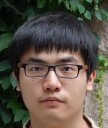
 Botong Wu
· 1 previous affiliation
- Peking UniversityCurrent
- Current
- PhD student · 2015–2021
Research Overview
Botong Wu focuses on Causal Representation Learning for Out-of-Distribution Generalization, latent variable modeling, and the application of causal inference to time-series forecasting in medical contexts. His research addresses the fundamental challenge of Provable Causal Representation Learning to ensure that machine learning models rely on stable, causative relationships rather than domain-dependent spurious correlations. By integrating causal discovery with deep learning, Wu’s work seeks to improve the robustness and interpretability of predictive models, particularly in safety-critical domains such as healthcare where understanding the underlying mechanisms of disease progression is essential.
Research Trajectory
The evolution of Wu’s research reflects a transition from traditional multi-modal optimization to advanced causal modeling. In the early stages of his career, around 2015, his work centered on cross-modal search and high-dimensional data retrieval. This period was characterized by an interest in optimizing the relationship between different data domains, specifically through hashing techniques that could facilitate fast search across disparate data types.
By 2020, Wu’s focus shifted significantly toward the intersection of causality and representation learning. This shift was motivated by the limitations of standard supervised learning, which often fails when encountering distributional shifts because it captures statistical shortcuts rather than invariant causal structures. During this period, he contributed to the development of the Latent Causal Invariance Model (LaCIM), a framework designed to separate causative factors from those influenced by confounders. This work positioned him within the broader effort of Invariant Representation Learning Across Diverse Environments, aiming to build models that remain accurate even when the environment or data distribution changes.
In recent years, spanning 2021 to 2026, Wu has specialized in applying these causal frameworks to temporal and medical data. His work has increasingly focused on Monotonicity Constraints for Irreversible Process Modeling, particularly in the context of chronic and irreversible diseases. This trajectory demonstrates a move from general algorithmic optimization to the development of domain-specific causal architectures that incorporate physical or biological priors, such as the irreversibility of certain medical conditions.
Causal Representation and Generalization
A primary theme in Wu’s work is the pursuit of Causal Representation Learning from Raw Observations. Traditional causal inference often assumes that variables are predefined and symbolic; however, Wu’s research operates on the premise that these variables must be learned from high-dimensional, unstructured data. This involves solving the identifiability problem—ensuring that the latent factors recovered by a neural network actually correspond to the true underlying causal mechanisms.
In the development of the LaCIM framework, as seen in Latent Causal Invariant Model, Wu addressed the issue of spurious correlations. By explicitly modeling the generating mechanisms from latent space to observed data as causally invariant, the framework attempts to isolate factors that have a direct causative effect on the output. This approach is further refined in Recovering Latent Causal Factor for Generalization to Distributional Shifts, where the focus is on guiding the model to ignore domain-dependent features that do not generalize. This line of inquiry is critical for Sample Efficient Causal Discovery through Shared Inductive Biases, as it allows models to learn robust features even when data from diverse environments is limited.
Temporal Modeling and Medical Applications
Wu’s recent research applies causal principles to the challenges of time-series forecasting, specifically for irreversible medical conditions. This work addresses the safety-critical need for early and robust disease prediction. In Causal Hidden Markov Model for Time Series Disease Forecasting, Wu and his collaborators introduced a model that separates hidden variables into clinical-related, non-clinical-related, and spurious components. By propagating only the causally relevant hidden states through time, the model avoids the confounding biases often found in longitudinal medical records.
This focus on biological priors is further exemplified in Forecasting Irreversible Disease via Progression Learning. In this work, Wu utilizes an "irreversibility prior" to model the progression of symptoms like Parapapillary atrophy (PPA). The framework, known as Disease Forecast via Progression Learning (DFPL), decomposes the factors contributing to future disease states into the current state and the progression trend. This methodology ensures that the model’s predictions are consistent with the physical reality that once a disease is diagnosed, it cannot spontaneously revert, a constraint that standard recurrent neural networks often fail to respect.
Representative Work
Wu’s contributions are documented across several key publications that track his methodological evolution:
- Quantized Correlation Hashing for Fast Cross-Modal Search: As first author, Wu presented a hashing approach (QCH) that simultaneously optimizes quantization loss and domain correlation. This early work established his foundation in multi-modal data analysis and optimization.
- Latent Causal Invariant Model: In this second-author paper, Wu contributed to the introduction of the LaCIM framework, which separates latent variables into causative and spurious factors to improve model interpretability and OOD robustness.
- Recovering Latent Causal Factor for Generalization to Distributional Shifts: This work further develops the LaCIM approach, specifically targeting the problem of distributional shifts by specifying the underlying causal structure and the source of those shifts.
- Causal Hidden Markov Model for Time Series Disease Forecasting: Wu served as a key contributor to this model, which applies causal separation to hidden Markov structures to achieve robust early-stage disease prediction while mitigating confounding bias.
- Forecasting Irreversible Disease via Progression Learning: As first author, Wu proposed the DFPL framework, which incorporates the irreversibility prior into the forecasting of eye diseases, demonstrating a sophisticated integration of domain-specific constraints with deep learning.
- Causal hidden markov model for time series disease forecasting: This 2026 iteration of the causal HMM research continues the investigation into separating causative hidden variables for medical treatment planning, emphasizing the long-term trajectory of this research direction.
Profile updated
Loading new papers…
Other researchers whose papers cluster into the same research directions — a proxy for overlapping technical interests and shared intellectual neighborhoods.
See something wrong? Report a mistake