

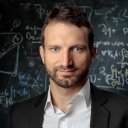
 Boris Bonev
· 3 previous affiliations
- Nvidia (United States)Current
- Current
- Researcher · 2023–2026
- PhD student · 2017–2021
- Technical University of Munich2016–2017
- Researcher · 2016–2017
Research Overview
Boris Bonev focuses on computational methods for scientific applications, machine learning for physical systems, and numerical algorithms. His early work developed robust numerical schemes for fluid dynamics and wave problems before transitioning to deep learning approaches for physical simulation. Currently, his research emphasizes neural operators and geometric deep learning to scale probabilistic weather forecasting and resolution-independent scientific computing.
Research Trajectory
Bonev’s early research focused on rigorous numerical methods for fluid dynamics and wave propagation. He developed a well-balanced Discontinuous Galerkin scheme for the spherical shallow water equations with applications to tsunami modeling and prediction (2018), enabling locally adaptive simulations on rotating spheres that remain consistent across wet and dry areas. Expanding into data-driven methods, he collaborated on Generating Liquid Simulations with Deformation-aware Neural Networks (2019), which learned to synthesize dense volumetric deformation fields. This work captured complex non-linear behaviors in liquid simulations, contributing to the research direction of Overcoming the Fixed Topology Constraint in 3D Modeling. Alongside these machine learning integrations, he continued advancing pure numerical algorithms with A Hierarchical Preconditioner for Wave Problems in Quasilinear Complexity (2022).
In 2023, Bonev’s focus shifted toward scaling deep learning for global physical systems, particularly atmospheric dynamics. He introduced Spherical Fourier Neural Operators: Learning Stable Dynamics on the Sphere, a novel architecture that replaces standard flat-map Fourier transforms with Spherical Harmonic Transforms. This work significantly advanced the area of Deep Learning on the Spherical Manifold and established new standards in the domain of Geometric Equivariance for Physical Deep Learning by enabling stable, physically plausible weather simulations over long time horizons. Building on these stable operator architectures, he directed the project ACE: A fast, skillful learned global atmospheric model for climate prediction (2023). By emulating high-resolution physics-based models, ACE achieved century-long stability and high energy efficiency, directly addressing the core challenge of Mitigating Compounding Errors in Autoregressive Physical Simulators.
Continuing to refine neural operator architectures in 2024, Bonev and collaborators explored methods to capture fine-grained local details in partial differential equations. He contributed to Neural Operators with Localized Integral and Differential Kernels, which reduced errors in complex fluid dynamics by learning local interactions while maintaining resolution independence. This approach aligns with his broader contributions to the field of Spectral Neural Operators for Solving Partial Differential Equations. Concurrently, he addressed temporal resolution in weather forecasting by developing Modulated Adaptive Fourier Neural Operators for Temporal Interpolation of Weather Forecasts. By modulating the operator with time-dependent embeddings, this method successfully reconstructed high-frequency weather events from coarse data, advancing techniques related to Residual State Prediction for Neural Dynamics.
Most recently, Bonev has focused on generalizing these architectures and scaling probabilistic forecasting. His work on FourCastNet 3: A geometric approach to probabilistic machine-learning weather forecasting at scale (2025) leverages spherical geometry to achieve highly accurate, large-scale ensemble forecasts. To further adapt foundation models to non-Euclidean data, he designed Attention on the Sphere (2025), proposing a rotationally equivariant spherical attention mechanism that minimizes the geometric distortions typical of standard Transformers. Beyond atmospheric science, he contributed to translating these physics-aware models to medical imaging in Accelerating 3D Photoacoustic Computed Tomography with End-to-End Physics-Aware Neural Operators (2025), which embeds physical laws directly into the architecture for real-time volumetric reconstruction. He and his colleagues also formalized these architectural shifts in Principled Approaches for Extending Neural Architectures to Function Spaces for Operator Learning (2025), providing a generalized framework for converting discrete deep learning models into continuous, discretization-agnostic neural operators.
Current Directions
Recent work investigates the generalization of deep learning architectures for continuous physical systems and non-Euclidean geometries. A primary focus is the development of discretization-agnostic neural operators that can map between function spaces rather than fixed discrete grids, enabling zero-shot super-resolution and resolution-independent scientific computing. Alongside this architectural research, current efforts emphasize geometric deep learning on the spherical manifold. By designing rotationally equivariant attention mechanisms and spherical Fourier operators, this line of research seeks to eliminate the distortions inherent in flat-map projections. These foundational improvements are being actively applied to scale probabilistic machine-learning weather forecasting and to accelerate physics-aware volumetric reconstruction in domains ranging from global climate modeling to medical imaging.
Profile updated
Loading new papers…
Other researchers whose papers cluster into the same research directions — a proxy for overlapping technical interests and shared intellectual neighborhoods.
See something wrong? Report a mistake