

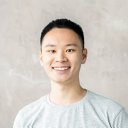
 Boqi Chen
· 6 previous affiliations
- Computer Vision LaboratorySince 2023
- PHD Student · Since 2023
- ETH AI CenterSince 2023
- PHD Student · Since 2023
- ETH Zurich2020–2027
- Doctor of Philosophy - PhD · 2027
- Master of Science - MS · 2023
- MS student · 2020–2022
- Intern · 2026
- Intern · 2021–2023
- IBM2021–2022
- Machine Learning Researcher · 2021–2022
1 other author named Boqi Chen: Boqi Chen (Google (United States) · 2 papers)
Research Overview
Boqi Chen focuses on computational pathology, medical image analysis, and domain generalization. His work develops deep learning frameworks to extract high-dimensional biological insights from standard clinical images and improve model robustness across diverse medical modalities. Recently, he has expanded into physics-informed neural networks for surgical simulation and feedforward 3D reconstruction techniques.
Research Trajectory
Beginning his published trajectory in 2022, Chen introduced ZoomMIL in Differentiable Zooming for Multiple Instance Learning on Whole-Slide Images. This framework addresses the computational bottleneck of analyzing gigapixel whole-slide images by mimicking the workflow of human pathologists. By incorporating a differentiable top-K selection module, the model learns to identify and selectively process the most diagnostically relevant regions at high resolution using only slide-level labels. This work contributes to the broader area of Differentiable Region Selection for Visual Recognition, achieving significant efficiency gains over traditional multiple instance learning approaches.
Continuing his focus on robust medical image analysis, Chen explored methods to maintain model performance across shifting clinical environments. In Generative appearance replay for continual unsupervised domain adaptation, he developed techniques to adapt models to new domains without forgetting previously learned representations, a critical requirement for deploying diagnostic tools across different hospitals and imaging equipment.
A major theme in Chen's trajectory is the translation of low-cost, standard clinical imaging into high-dimensional molecular representations. With collaborators, he developed the Multi-V-Stain framework, initially detailed in Multi-V-Stain: Multiplexed Virtual Staining of Histopathology Whole-Slide Images. This image-to-image translation method predicts highly multiplexed protein expression patterns—which typically require expensive Imaging Mass Cytometry—directly from standard Hematoxylin and Eosin (H&E) stained tissue samples. He subsequently expanded on this framework in Histopathology-based Protein Multiplex Generation using Deep Learning. By introducing an adaptive contrastive perceptual loss to handle misaligned tissue slices, this research enables the rapid visualization of complex tumor microenvironments. This line of inquiry advances research directions such as Mapping Cellular Neighborhoods with Multiplexed Spatial Proteomics and Overcoming the Gene Independence Assumption in Genomic Models.
In 2025, Chen addressed the challenge of cross-modality generalization. He contributed to Generalizable Single-Source Cross-Modality Medical Image Segmentation via Invariant Causal Mechanisms, which proposes a framework for training segmentation models on a single modality (such as CT) that can generalize to unseen modalities (like MRI or X-ray). By combining causal theory with generative diffusion models, the approach simulates diverse imaging styles while strictly preserving anatomical content. This methodology intersects with the research direction of Bridging the Simulation to Reality Gap in Clinical AI and advances the field of Overcoming the Modality Gap in Medical Image Segmentation.
Expanding his methodological scope into physical simulation, Chen explored the intersection of graph neural networks and biomechanics. In MIXPINN: Mixed-Material Simulations by Physics-Informed Neural Network, he and his co-authors introduced a physics-informed architecture designed to simulate interactions between soft tissues and rigid anatomical structures. By augmenting the network with virtual nodes and edges to enforce rigid body constraints, the model achieves significant computational speedups over traditional Finite Element Methods while maintaining high accuracy, offering new avenues for real-time surgical training and robotic interventions.
Returning to digital pathology at scale, Chen participated in research on training vision foundation models. The paper Revisiting Automatic Data Curation for Vision Foundation Models in Digital Pathology tackles the complexities of unsupervised data curation by employing hierarchical clustering on tile embeddings alongside a stratified batch sampling strategy. This work provides a scalable approach to managing the massive datasets required for foundation models in pathology.
Most recently, Chen has investigated efficient 3D scene reconstruction. In YoNoSplat: You Only Need One Model for Feedforward 3D Gaussian Splatting, he contributed to a versatile feedforward model capable of generating high-quality 3D Gaussian Splatting representations from unposed image collections. By eliminating the need for pre-computed camera poses and intrinsics through a novel intrinsic-prediction module and mix-forcing training strategy, the framework enables highly efficient reconstruction of complex scenes.
Current Directions
The most recent papers in the evidence indicate a dual focus on scaling foundation models for medical imaging and advancing real-time physical and spatial reconstruction. In the medical domain, recent work investigates scalable, unsupervised data curation strategies to improve the training of vision foundation models on complex histopathology datasets. Concurrently, Chen is exploring the integration of physical constraints into neural architectures, utilizing physics-informed graph networks to simulate mixed-material biomechanics for surgical applications. Beyond traditional medical imaging, his latest research addresses fundamental challenges in computer vision, specifically developing feedforward architectures for rapid 3D Gaussian Splatting from uncalibrated image collections.
Profile updated
Loading new papers…
Other researchers whose papers cluster into the same research directions — a proxy for overlapping technical interests and shared intellectual neighborhoods.
See something wrong? Report a mistake