

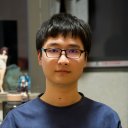
 Boheng Li
· 1 previous affiliation
- Nanyang Technological UniversitySince 2024
- PhD student · 2024–2028
- Current
Research Overview
Boheng Li focuses on trustworthy machine learning, model security, and the responsible deployment of multimodal generative systems. His early work addressed intellectual property protection and backdoor vulnerabilities in deep neural networks. More recently, he investigates safety-driven unlearning, red teaming for text-to-image diffusion models, and privacy risks in large language models.
Research Trajectory
Beginning in 2023, Li’s research addressed the intellectual property protection of machine learning models. He developed a box-free verification scheme for generative adversarial networks in What can Discriminator do? Towards Box-free Ownership Verification of Generative Adversarial Networks. By repurposing the discriminator to map output distributions into a high-dimensional space, this work advanced the area of Ownership Verification for Deep Neural Networks without requiring specific trigger inputs. During this period, he also collaborated on alternative IP protection methods, participating in the design of a plug-and-play watermarking scheme that injects an independent proprietary model to avoid the inefficiencies of traditional data poisoning in Free Fine-tuning: A Plug-and-Play Watermarking Scheme for Deep Neural Networks. Concurrently, his work extended to computer vision tasks, where he co-authored Dual-level Interaction for Domain Adaptive Semantic Segmentation. This research mitigated noisy pseudo-labels near semantic boundaries by aligning both semantic-level and instance-level predictions, contributing to fields such as Scaling Memory Banks for High Dimensional Features.
In 2024, his focus expanded to model vulnerabilities and multimedia forensics. He introduced techniques to address quantization-conditioned backdoors in Purifying Quantization-conditioned Backdoors via Layer-wise Activation Correction with Distribution Approximation. Additionally, he contributed to the detection of localized image forgeries by co-developing a framework to identify lip-syncing deepfakes in Lips Are Lying: Spotting the Temporal Inconsistency between Audio and Visual in Lip-Syncing DeepFakes. This system exploited temporal inconsistencies between audio signals and biological lip movements to achieve robust detection in real-world video scenarios.
By 2025, Li’s trajectory shifted heavily toward the security, privacy, and safety of large-scale generative models. He explored how vulnerabilities transfer during model compression in Taught Well Learned Ill: Towards Distillation-conditional Backdoor Attack, demonstrating that backdoors can remain dormant in a large teacher model but activate in a smaller student model after knowledge distillation. He also investigated privacy risks in foundational models, contributing to Towards Label-Only Membership Inference Attack against Pre-trained Large Language Models, which revealed that LLMs are vulnerable to membership inference even without access to internal probabilities. This line of privacy research continued with his participation in External Data Extraction Attacks against Retrieval-Augmented Large Language Models, which introduced an optimization-driven attack to extract private documents verbatim from safety-aligned retrieval-augmented generation systems.
A major theme of his 2025 work became the responsible deployment of diffusion models. He addressed the unauthorized use of data in personalized text-to-image models in Towards Reliable Verification of Unauthorized Data Usage in Personalized Text-to-Image Diffusion Models, proposing mechanisms to embed external coatings for data traceability. He also tackled the fragility of safety constraints in Towards Resilient Safety-driven Unlearning for Diffusion Models against Downstream Fine-tuning. By utilizing implicit optimization and meta-learning, this framework prevents models from relapsing into harmful generation after benign fine-tuning, intersecting with the broader area of Loss Landscape Flattening for Sequential Learning.
His most recent work in 2026 continues to advance the auditing and safety of text-to-image systems. He introduced a scalable red-teaming framework in DREAM: Scalable Red Teaming for Text-to-Image Generative Systems via Distribution Modeling, which models the distribution of unsafe prompts to proactively identify vulnerabilities before deployment. Furthermore, he collaborated on RECOVER: Reliable Detection of Unauthorized Data Usage in Text-to-Image Diffusion Models via Inversion Robustness, a non-intrusive framework that detects unauthorized training data by exploiting a fine-tuned model's ability to reconstruct specific images even under significant noise.
Current Directions
The most recent papers in the evidence indicate a strong focus on the security and safety of large-scale generative systems, particularly text-to-image diffusion models and large language models. Recent work investigates scalable red-teaming methodologies to proactively discover harmful generation triggers in text-to-image systems. Additionally, there is an ongoing emphasis on data provenance and privacy, addressing how to reliably detect unauthorized data usage in personalized diffusion models without requiring access to the original pre-fine-tuned weights. This intersects with broader efforts to ensure that safety-driven unlearning remains resilient against downstream fine-tuning and that retrieval-augmented language models are protected against data extraction attacks.
Profile updated
Loading new papers…
Other researchers whose papers cluster into the same research directions — a proxy for overlapping technical interests and shared intellectual neighborhoods.
See something wrong? Report a mistake