

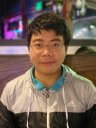
 Bohan Chen
· 6 previous affiliations
- California Institute of TechnologySince 2024
- Postdoc · 2024–2027
- Postdoctoral Researcher · Since 2024
- Caltech CMSCurrent
- Current
- Ph.D., Applied Mathematics · 2018–2024
- Discover2018–2024
- PhD student · 2018–2024
- Los Alamos National Laboratory2021–2024
- UC National Lab‑in‑Residence Graduate Fellow · 2021–2024
- Peking University2014–2018
- Undergrad student · 2014–2018
1 other author named Bohan Chen: Bohan CHEN (University of Liverpool · 4 papers)
Research Overview
Bohan Chen focuses on remote sensing image analysis, graph-based active learning, and probabilistic modeling for complex systems. His trajectory spans from hyperspectral image classification to the development of differentiable graph layers and advanced filtering techniques. Recently, his work investigates single-step conditional image generation and neural augmentations for data assimilation.
Research Trajectory
Chen’s early work addresses the challenges of material identification and composition estimation in complex environments. In Material Identification in Complex Environments: Neural Network Approaches to Hyperspectral Image Analysis (2023), he collaborated on evaluating deep learning methods, including contrastive learning and autoencoders, for detecting plastics in hyperspectral imagery characterized by high intraclass variability and significant mixing. To further mitigate data scarcity in this domain, he introduced novel semi-supervised methods, specifically GLU and GRSU, in Graph-Based Active Learning for Nearly Blind Hyperspectral Unmixing. By leveraging graph-based active learning, these techniques significantly improved material composition estimation while requiring only a fraction of a percent of labeled pixels.
Expanding on active learning in remote sensing, Chen contributed to a batch active learning framework designed to accelerate the labeling of complex datasets. Detailed in Novel Batch Active Learning Approach and Its Application to Synthetic Aperture Radar Datasets, this research combined a novel core-set selection method (DAC) with a diversity-aware sampling strategy (LocalMax) to achieve high classification accuracy with substantially less human effort, advancing the broader area of Bridging the Natural to Remote Sensing Domain Gap.
Concurrently, Chen explored the integration of graph learning into other domains. He developed an automated method for generating lightweight knowledge graphs from text in AutoKG: Efficient Automated Knowledge Graph Generation for Language Models, utilizing large language models for keyword extraction to enhance interconnected knowledge retrieval mechanisms. Building on his expertise in graph structures, he subsequently co-authored GLL: A Differentiable Graph Learning Layer for Neural Networks in 2024. This work introduced a neural network layer that embeds graph-based label propagation directly into end-to-end training, yielding improvements in generalization, smoother training dynamics, and structural robustness against adversarial attacks.
In 2025, Chen returned to multispectral image analysis with CGAP: A Hybrid Contrastive and Graph-Based Active Learning Pipeline to Detect Water and Sediment in Multispectral Images. This pipeline enhanced his previous graph-based active learning frameworks to identify surface water and near-water sediment, achieving robust performance with orders of magnitude less training data than conventional convolutional neural networks. His interest in environmental applications also extended into game-theoretic modeling. In Modeling illegal logging in Brazil, he formulated a mathematical model based on optimal control theory to simulate the strategic interactions between loggers and law enforcement, providing a data-driven framework for evaluating patrol strategies against deforestation.
During the same period, Chen participated in research addressing the limitations of traditional filtering distributions in hidden Markov models. In Learning Enhanced Ensemble Filters, he and his collaborators proposed approximating mean-field evolution in state-observation space using a measure neural mapping (MNM). This approach circumvents the accuracy limits of the Gaussian ansatz in ensemble Kalman filters by taking probability distributions directly as input, contributing to research directions such as Neural Augmentation of Classical Bayesian Filters, Nonlinear Data Assimilation for High-Dimensional Systems, and Zero Shot Scale Generalization in Neural Combinatorial Optimization.
Current Directions
The most recent papers in the evidence indicate a shift toward advanced generative modeling and image restoration. In 2026, Chen contributed to the development of Variational Flow Maps (VFM), detailed in Variational Flow Maps: Make Some Noise for One-Step Conditional Generation. This research addresses the computational bottleneck of iterative diffusion models by shifting the focus toward learning an optimal starting noise distribution rather than guiding a lengthy sampling path. This approach enables high-quality, single-step conditional image generation for tasks like deblurring and inpainting. Moving forward, his work appears centered on the research direction of Trajectory Consistency for Fast Diffusion Sampling and the broader area of Probabilistic Modeling for Ill-Posed Image Restoration, emphasizing efficiency and speed in probabilistic generative frameworks.
Profile updated
Loading new papers…
Other researchers whose papers cluster into the same research directions — a proxy for overlapping technical interests and shared intellectual neighborhoods.
See something wrong? Report a mistake