

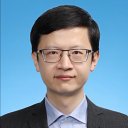
 Bo Yuan
· 3 previous affiliations
- The University of QueenslandSince 2023
- Honorary Associate Professor · Since 2023
- Research Institute of Tsinghua University in Shenzhen2021–2025
- Researcher · 2021–2025
- Tsinghua University2007–2021
- Associate Professor · 2007–2021
8 other authors named Bo Yuan: Bo Yuan (Rutgers, The State University of New Jersey · 39 papers), Bo Yuan (15 papers), Bo Yuan (7 papers), Bo Yuan (4 papers), Bo Yuan (3 papers), and 3 more
Research Overview
Bo Yuan focuses on the intersection of evolutionary computation, machine learning, and high-performance computing. His research spans the development of robust optimization frameworks, efficient data mining algorithms, and the acceleration of neural network architectures through hardware-aware design. Recently, his work has addressed the computational bottlenecks of modern deep learning, specifically through Semantic Context Compression for Large Language Models and the integration of evolutionary strategies with reinforcement learning to enhance sample efficiency and robustness in complex control tasks.
Research Trajectory
The early stages of Yuan’s career were defined by a rigorous investigation into the fundamental properties of evolutionary algorithms (EAs) and their application to optimization and classification. In the early 2000s, he addressed the lack of standardized testing environments for EAs by developing continuous landscape generators based on Gaussian functions. This work provided a principled framework for evaluating how different algorithms navigated complex fitness landscapes. By the late 2000s and early 2010s, his focus shifted toward the practical challenges of classification, particularly in high-stakes or imbalanced domains. He explored dimension reduction techniques for bank credit scoring and developed training schemes that directly optimized for non-standard performance metrics like G-mean and ROC curves, bridging the gap between the objective functions used during training and the measures used for final evaluation.
In the mid-2010s, Yuan’s research evolved to address the "big data" challenge by leveraging emerging hardware capabilities. Recognizing that serial implementations of classic clustering algorithms were becoming insufficient for modern datasets, he transitioned into high-performance computing (HPC). This period was marked by the development of parallelized algorithms for Graphics Processing Units (GPUs), specifically targeting the ISODATA clustering method and the visual assessment of cluster tendency (VAT). These contributions focused on utilizing features like dynamic parallelism in CUDA to reduce computational complexity and improve the scalability of data mining tools. During this time, he also participated in broader systems research, including the design of forward error correction decoders for optical networking and the conceptualization of ubiquitous robotics frameworks.
Since 2018, Yuan has increasingly focused on the efficiency and applicability of deep learning and reinforcement learning (RL). This current phase of his work is characterized by two main pillars: architectural efficiency and hybrid learning paradigms. He has investigated Circulant Matrices and the Fast Fourier Transform for Efficient Neural Networks to reduce the parameter count and computational load of fully connected layers. Simultaneously, he has returned to his roots in evolutionary computation by developing hybrid Evolutionary Reinforcement Learning (ERL) frameworks. These systems use surrogate-assisted controllers to mitigate the high computational cost of evaluating genetic populations in real-world environments, effectively combining the sample efficiency of RL with the global search capabilities of EAs.
Current Directions
Yuan’s current research program is highly interdisciplinary, applying machine learning to scientific discovery and human-centric AI. He is involved in developing Zero-Shot Prediction of Cellular Response to Perturbation, which aims to overcome the combinatorial explosion of genetic and chemical interactions in biology. This work aligns with his broader interest in Differentiable Mechanistic Modeling for Scientific Discovery, where neural networks are used to tune and enhance traditional ordinary differential equation (ODE) models.
On the hardware and systems side, he continues to explore Hardware Efficient Approximation of Non Linear Operations, seeking to reduce the "silicon tax" of transcendental functions like Softmax and GELU in specialized AI accelerators. His most recent explorations also touch upon the social implications of AI, specifically The Social Buffer Effect of Non-Judgmental AI, which examines how AI agents might reduce social desirability bias in human-computer interactions.
Representative Work
On building a principled framework for evaluating and testing evolutionary algorithms: a continuous landscape generator In this early first-author work, Yuan addresses the methodological challenges of evaluating evolutionary algorithms. By proposing a landscape generator based on Gaussian functions, the paper provides a controllable environment for generating diverse continuous fitness functions. This allowed researchers to systematically test the performance of EAs across varying levels of complexity, establishing a more rigorous foundation for the field's benchmarking practices.
A Measure Oriented Training Scheme for Imbalanced Classification Problems As the first author, Yuan investigates the discrepancy between error-based objective functions and the evaluation metrics (such as G-mean) typically used for imbalanced datasets. The paper proposes a training scheme that directly searches the hypothesis space using the target evaluation measure itself. This approach demonstrated improved performance on benchmark problems by aligning the learning process with the desired outcome in skewed data distributions.
An efficient parallel ISODATA algorithm based on Kepler GPUs Serving as the senior author, Yuan presents a parallelized version of the ISODATA clustering algorithm designed for the Kepler GPU architecture. The research utilizes CUDA’s dynamic parallelism to handle the heuristic splitting and merging of clusters, which is traditionally difficult to parallelize. This work significantly improved the efficiency of clustering for large-scale datasets, marking a key point in his trajectory toward high-performance data mining.
Parallel edge-based visual assessment of cluster tendency on GPU In this second-author paper, Yuan contributes to the acceleration of the visual assessment of cluster tendency (VAT) algorithm. The authors propose eVAT, an edge-based algorithm that replicates the output of more complex formulations while being highly suitable for parallel execution. The implementation on GPUs allowed for the rapid generation of cluster tendency images for complex datasets, reducing the computational burden from cubic to quadratic complexity.
PuppeteerGAN: Arbitrary Portrait Animation With Semantic-Aware Appearance Transformation As the second author, Yuan contributed to the development of a two-stage generative framework for zero-shot portrait animation. PuppeteerGAN decouples pose retargeting from appearance transformation, using a semantic-aware warping technique to animate diverse subjects—including realistic photos and artistic paintings—without the need for subject-specific fine-tuning. This work represents his engagement with high-fidelity generative models and computer vision.
A Surrogate-Assisted Controller for Expensive Evolutionary Reinforcement Learning In this senior-author paper, Yuan addresses the computational inefficiency of hybrid Evolutionary Reinforcement Learning (ERL). The proposed Surrogate-assisted Controller (SC) module reduces the need for expensive interactions with real environments by using a surrogate model to evaluate the genetic population. This integration allows for the maintenance of population diversity and robustness while significantly lowering the time and resource costs associated with training complex robot control policies.
Profile updated
Loading new papers…
Other researchers whose papers cluster into the same research directions — a proxy for overlapping technical interests and shared intellectual neighborhoods.
See something wrong? Report a mistake