

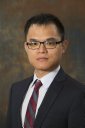
 Bo Tang
· 4 previous affiliations
- Worcester Polytechnic InstituteSince 2023
- Associate Professor · Since 2023
- Mississippi State University2017–2022
- Assistant Professor · 2017–2022
- Hofstra University2016–2017
- Assistant Professor · 2016–2017
- University of Rhode Island2012–2016
- PhD student · 2012–2016
3 other authors named Bo Tang: Bo Tang (Southern University of Science and Technology · 60 papers), Bo Tang (阿里巴巴集團 · University of Science and Technology of China · 22 papers), Bo Tang (Massachusetts Institute of Technology · 3 papers)
Research Overview
Bo Tang focuses on computational learning theory, specifically the complexity of concept classes, and natural language understanding. Early work established quantitative bounds for the recursive teaching dimension with respect to the Vapnik-Chervonenkis dimension. More recent contributions address data augmentation for dialogue generation and the integration of logical inference into story comprehension tasks.
Research Trajectory
Bo Tang's research trajectory reflects an initial focus on the theoretical foundations of machine learning, followed by collaborative contributions to applied natural language processing. In 2016, Tang served as the senior author on On the Recursive Teaching Dimension of VC Classes, a paper that investigated the quantitative relationship between the recursive teaching dimension (RTD) and the Vapnik-Chervonenkis (VC) dimension. This work established new upper and worst-case lower bounds for the RTD of concept classes, contributing to the broader research direction of Bounding Machine Teaching Complexity by the VC Dimension. By analyzing the worst-case number of labeled examples required to learn a target concept, this research also intersected with the area of Recursive Decomposition of Complex Concept Classes.
By 2019, Tang's published work shifted toward natural language understanding and generation, participating as a co-author in projects addressing data scarcity and logical reasoning in text. As a middle author on Insufficient Data Can Also Rock! Learning to Converse Using Smaller Data with Augmentation., Tang contributed to the development of a generative model utilizing a conditional variational autoencoder (CVAE) to augment training data for open-domain dialogue systems. In the same year, Tang collaborated on Find a Reasonable Ending for Stories: Does Logic Relation Help the Story Cloze Test?. This research explored the integration of cross-task features, specifically using Natural Language Inference (NLI) to extract logical relationships between sentences, thereby improving performance on the Story Cloze Test.
Current Directions
The most recent papers in the evidence are from 2019 and indicate a focus on applied natural language processing. Recent work investigates methods for overcoming data limitations in dialogue generation through generative augmentation techniques. Additionally, this research addresses the challenge of story comprehension by incorporating explicit logical relationships and cross-task features from natural language inference, moving beyond traditional semantic or topic-based approaches to text understanding.
Profile updated
Loading new papers…
Loading research neighbors…
See something wrong? Report a mistake