

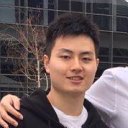
 Bo Liu
· 2 previous affiliations
- Microsoft Super IntelligenceCurrent
- Current
- The University of Texas at AustinSince 2019
- PhD student · Since 2019
20 other authors named Bo Liu: Bo Liu (University of Technology Sydney · 444 papers), Bo Liu (University of Washington · Stanford University · 87 papers), Bo Liu (Shenzhen University of Advanced Technology · 63 papers), Bo Liu (ByteDance (China) · 26 papers), Bo Liu (University of Arizona · 19 papers), and 15 more
Research Overview
Bo Liu focuses on reinforcement learning, continual learning, and scalable optimization for deep neural networks. His trajectory spans foundational work in multi-task gradient descent and lifelong robotic learning to memory-efficient training algorithms for large-scale models. Currently, his research addresses the alignment and efficiency of generative architectures, including state-space models and diffusion language models.
Research Trajectory
Early work (2020–2021) focused on robotics and multi-task optimization. He developed APPLD: Adaptive Planner Parameter Learning From Demonstration to improve robotic navigation by learning planner parameters from human demonstrations. In optimization, he addressed the challenge of conflicting gradients in multi-task learning with Conflict-Averse Gradient Descent for Multi-task learning, proposing a method to align task objectives and prevent average gradient directions from degrading specific task performance.
In 2022, his research expanded into reinforcement learning safety and bilevel optimization. Contributing to the research direction of Transferable Safety Constraints for Autonomous Systems, he introduced A Rule-based Shield: Accumulating Safety Rules from Catastrophic Action Effects, a framework that extracts generalizable safety rules from failures to prevent agents from repeating catastrophic mistakes. Concurrently, he developed BOME! Bilevel Optimization Made Easy: A Simple First-Order Approach, which simplifies the typically computationally expensive process of differentiating through low-level optimization by relying solely on first-order gradient information.
The focus on lifelong learning and decision-making matured in 2023 with LIBERO: Benchmarking Knowledge Transfer for Lifelong Robot Learning. This benchmark evaluates how agents transfer both declarative and procedural knowledge over their lifespan in robotic manipulation tasks, establishing a standardized environment for lifelong learning in decision-making.
By 2024, while serving as a Senior Research Scientist at Meta, his work increasingly addressed the computational bottlenecks of training large-scale models. He collaborated on Memory-Efficient LLM Training with Online Subspace Descent, which advances the area of Compressing Optimizer States via Low Rank Subspace Projection by using continuous online PCA to project gradients into low-rank subspaces, bypassing expensive singular value decomposition. In the broader area of Decoupled Weight Decay as Constrained Optimization, he also co-authored Lion Secretly Solves a Constrained Optimization: As Lyapunov Predicts, providing a theoretical foundation for the Lion optimizer by proving it operates as a principled method for keeping model weights within a defined box.
In 2025, transitioning to a role as a Member of Technical Staff at Microsoft Superintelligence, his research output diversified across generative modeling, state-space models (SSMs), and multi-task reinforcement learning. In generative modeling, he investigated flow-based approaches, identifying and addressing mathematical flaws in generation trajectories with Improving Rectified Flow with Boundary Conditions. He also developed the AMO Sampler: Enhancing Text Rendering with Overshooting, a training-free method that injects corrective noise to improve text accuracy in rectified flow models.
Simultaneously, he explored the application of SSMs to overcome context limitations, contributing to the research direction of Mitigating Length Extrapolation Failure in Transformers. He introduced RoboSSM: Scalable In-context Imitation Learning via State-Space Models, which replaces Transformers with SSMs to process significantly longer demonstration prompts in robotics. Building on this architectural shift, he developed Longhorn: State Space Models are Amortized Online Learners, framing the hidden state update as a closed-form solution to an online regression problem to improve sample efficiency and context extrapolation.
His 2025 work also included advancements in model compression and lifelong planning. He participated in developing SKIM: Any-bit Quantization Pushing The Limits of Post-Training Quantization, which contributes to areas such as Any-Bit Quantization for Fine-Grained Model Compression and Specialized Kernels for Non-Uniform Mixed-Precision Quantization by offering flexible bit-width reductions for large language models. Returning to robotics and planning, he introduced Benchmarking Massively Parallelized Multi-Task Reinforcement Learning for Robotics Tasks, presenting MTBench to demonstrate the efficacy of GPU-accelerated on-policy algorithms, and explored the intersection of lifelong learning and language models in L3M+P: Lifelong Planning with Large Language Models.
In 2026, his trajectory reflects a continued emphasis on optimization and the alignment of generative models. He led the development of SPG: Sandwiched Policy Gradient for Masked Diffusion Language Models. This work addresses the intractability of log-likelihoods in diffusion language models by bounding the true likelihood, significantly reducing gradient bias and improving performance on logic tasks. Additionally, he collaborated on Improving Adaptive Moment Optimization via Preconditioner Diagonalization, which seeks to enhance Adam-style optimizers by better leveraging gradient covariance information to accelerate convergence.
Current Directions
The most recent papers in the evidence point toward a dual focus on the alignment of generative architectures and the refinement of foundational optimization algorithms. Recent work investigates how to apply reinforcement learning to diffusion language models, developing bounded policy gradients to overcome the intractability of log-likelihoods and improve performance on complex reasoning and logic tasks. Alongside this, there is an ongoing effort to enhance adaptive moment optimization by better utilizing gradient covariance to accelerate convergence in deep learning.
Additionally, recent research addresses the architectural limitations of traditional Transformers by exploring state-space models. This includes framing hidden state updates as online learning problems to improve sample efficiency and leveraging these models to process significantly longer contexts for in-context imitation learning. Finally, ongoing work in generative modeling continues to refine flow-based approaches, focusing on satisfying boundary conditions and developing training-free sampling methods to improve text rendering accuracy without increasing inference costs.
Profile updated
Loading new papers…
Other researchers whose papers cluster into the same research directions — a proxy for overlapping technical interests and shared intellectual neighborhoods.
See something wrong? Report a mistake