

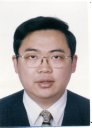
 Bo Hu
· 1 previous affiliation
- Fudan UniversitySince 1986
- Full Professor · Since 2001
- Associate Professor · 1999–2000
- Lecturer · 1997–1998
- PhD student · 1993–1996
- MS student · 1990–1993
- Undergrad student · 1986–1990
7 other authors named Bo Hu: Bo Hu (University of Science and Technology of China · 51 papers), Bo Hu (12 papers), Bo Hu (Chongqing University of Posts and Telecommunications · 10 papers), BO HU (American Express (United States) · 5 papers), Bo Hu (3 papers), and 2 more
Research Overview
Bo Hu focuses on signal processing, graph neural networks, and event-based computer vision. His trajectory spans early contributions to wireless communications and wavelet theory to recent advances in spatiotemporal representation learning and network transferability. Currently, his research emphasizes hybrid architectures for asynchronous event vision and the theoretical foundations of graph neural network scaling.
Research Trajectory
The early phase of Hu's research focused on foundational problems in signal processing, wireless communications, and computer vision. His initial work explored neural network applications, such as Principal independent component analysis (1999). In the domain of computer vision, he addressed tracking challenges in Robust Occlusion Handling in Object Tracking (2007). Concurrently, his signal processing research yielded A Novel Scheme for the Design of Approximate Hilbert Transform Pairs of Orthonormal Wavelet Bases (2008). He also developed practical algorithms for wireless systems, introducing A Fast Joint Frame Synchronization and Frequency Offset Acquisition Algorithm for OFDM Systems (2008). This focus on wireless communications continued with investigations into MIMO-OFDM Wireless Channel Prediction by Exploiting Spatial-Temporal Correlation (2014) and Optimal Transceiver Design for SWIPT in K-User MIMO Interference Channels (2016).
By 2020, Hu's trajectory shifted toward the intersection of signal processing and deep learning. He contributed to the area of Signal Classification on Riemannian Covariance Manifolds, participating in the development of a robust deep learning framework for passive radar systems in DOA Robust Estimation of Echo Signals Based on Deep Learning Networks With Multiple Type Illuminators of Opportunity (2020). This work combined linear classification networks for spatial sub-region identification with parallel convolutional neural networks for fine-grained estimation, maintaining high accuracy despite physical antenna defects.
In recent years, Hu has directed significant research into graph neural networks (GNNs) and event-based vision. A major theme of his recent work is Graphon Neural Networks for Transferable Graph Learning. He contributed to theoretical analyses of how graph sparsity impacts model performance in The Transferability of Downsampling Sparse Graph Convolutional Networks (2024). He subsequently led the development of a unified theoretical framework for this problem in Size Transferability of Graph Convolutional Networks across Sparsity: A Generalized Graphon Perspective (2026). By utilizing generalized graphons and a novel stretching technique, this work proved that transfer error vanishes as graphs scale, enabling models trained on small subgraphs to operate reliably on massive, sparse networks.
Parallel to his theoretical work on graphs, Hu has advanced the field of Preserving Temporal Precision in Asynchronous Event Vision. He directed the design of EGSST: Event-based Graph Spatiotemporal Sensitive Transformer for Object Detection (2024), a novel framework that processes sparse, asynchronous event camera data. By mimicking the human eye's tendency to focus on fast-moving objects, EGSST dynamically allocates compute resources to achieve single-digit millisecond latency. Building on this, he led the creation of EventMG: Efficient Multilevel Mamba-Graph Learning for Spatiotemporal Event Representation (2025). This hybrid architecture integrates the linear-time efficiency of State Space Models (Mamba) with the structural awareness of GNNs, achieving high performance in object detection and action recognition while using significantly fewer parameters than competing models.
Hu has also maintained active collaborations across broader machine learning domains. In the area of Resolving Parameter Interference in Heterogeneous Federated Learning, he co-authored Invariant Federated Learning for Edge Intelligence: Mitigating Heterogeneity and Asynchrony via Exit Strategy and Invariant Penalty (2025). This research introduced an autonomous exit strategy and the FedIPG algorithm, which uses parameter orthogonality to handle abnormal edge clients without adding communication overhead. Additionally, he contributed to Unsupervised Anomaly Detection via Generative Reconstruction through A Survey on Diffusion Models for Anomaly Detection (2025), providing a comprehensive taxonomy of how generative models are repurposed to identify outliers across images, time series, and multimodal data. Bridging his expertise in signal processing and graph structures, he also participated in research on Imputing Block-Wise Missing Data in Spatiotemporal Series, co-authoring Subset Random Sampling and Reconstruction of Finite Time-Vertex Graph Signals (2025). This paper proposed the LSSP framework, integrating low-rank, sparsity, and smoothness priors to recover missing sensor data even when entire rows or columns are absent.
Current Directions
The most recent papers in the evidence address the theoretical scaling of graph neural networks and the design of efficient architectures for spatiotemporal data. Recent work investigates the size transferability of GNNs across varying levels of sparsity, utilizing generalized graphons to guarantee performance on massive real-world networks. Additionally, Hu's current research explores hybrid models for event-based vision, combining State Space Models and graph learning to process asynchronous visual streams with high temporal precision and minimal computational overhead. His collaborative efforts also extend to robust federated learning frameworks for heterogeneous edge devices and the reconstruction of complex graph signals with block-wise missing data.
Profile updated
Loading new papers…
Other researchers whose papers cluster into the same research directions — a proxy for overlapping technical interests and shared intellectual neighborhoods.
See something wrong? Report a mistake