

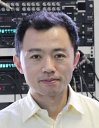
 Bo Hong
· 2 previous affiliations
- Tsinghua UniversitySince 2005
- Full Professor · Since 2022
- Associate Professor · 2012–2022
- Assistant Professor · 2005–2012
- Johns Hopkins University2004–2005
- Postdoc · 2004–2005
Research Overview
Bo Hong focuses on neural engineering, brain-computer interfaces (BCI), and the neural mechanisms underlying human cognition and development. His work spans the development of high-performance neural decoding algorithms, the investigation of cortical processing in speech and spatial navigation, and the application of neurophysiological techniques in clinical settings. Recently, his research has expanded into bio-inspired artificial intelligence, where he integrates hippocampal spatial memory models with transformer architectures to improve machine learning generalization.
Research Trajectory
The evolution of Hong’s research reflects a steady progression from fundamental signal processing in non-invasive brain-computer interfaces to the exploration of complex neural dynamics using invasive recordings and multi-modal neuroimaging. In the early 2000s, his work initially touched upon the role of computer networks in social and educational contexts, but by 2006, his focus shifted decisively toward the technical challenges of BCI systems. During this period, he concentrated on refining the classification of electroencephalogram (EEG) signals, particularly those related to motor imagery and steady-state visual evoked potentials (SSVEP). This phase was characterized by the application of advanced mathematical frameworks, such as phase synchrony and canonical correlation analysis (CCA), to improve the robustness and information transfer rates of BCI systems.
By the mid-2010s, Hong’s research trajectory moved toward understanding the biological basis of sensory perception and the clinical application of neurophysiology. Utilizing electrocorticography (ECoG) and stereo-electroencephalography (SEEG), he began investigating how the human auditory cortex processes lexical tones in tonal languages and how deep-brain electrodes can guide minimally invasive treatments for drug-resistant epilepsy. This period marked a transition from viewing the brain primarily as a source of control signals for computers to treating it as a complex system whose internal mechanisms—such as the epileptogenicity index or categorical perception—could be decoded and modulated for therapeutic purposes.
In recent years, Hong has integrated these diverse strands of inquiry into a broader program of neuro-inspired engineering and developmental neuroscience. This current phase involves mapping the spatiotemporal framework of the infant brain, exploring the emergence of functional networks like the default-mode network (DMN), and developing "flexible" BCI systems that prioritize user experience and environmental adaptability. His most recent work represents a convergence of neuroscience and AI, where biological principles of spatial memory are used to enhance the sequence-modeling capabilities of artificial neural networks.
Current Directions
Hong’s current research is focused on three primary areas: the development of bio-inspired AI architectures, the mapping of infant brain physiology, and the advancement of flexible neural interfaces. In the realm of artificial intelligence, he is investigating how the structural and functional properties of the hippocampus can be mirrored in machine learning models to solve long-horizon navigation tasks. This involves creating hybrid architectures that spontaneously develop representations similar to biological grid cells, aiming to bridge the gap between sequence modeling and spatial reasoning.
In developmental neuroscience, Hong is utilizing multi-modal MRI techniques, including arterial-spin-labeled perfusion MRI, to elucidate the rapid changes in regional cerebral blood flow during infancy. This work seeks to establish a physiology-function coupling framework that explains how metabolic increases support the maturation of fundamental brain systems. Simultaneously, he continues to refine BCI technology, moving away from rigid, stimulus-heavy paradigms toward spatially-coded systems that allow for more natural and flexible interaction between the user and their environment.
Representative Work
Hong’s early contributions to BCI focused on improving the feature extraction process for motor imagery. In Phase Synchrony Measurement in Motor Cortex for Classifying Single-trial EEG during Motor Imagery, he and his colleagues moved beyond traditional power-change measurements of mu and beta rhythms. By employing phase locking value (PLV) features to measure large-scale and local-scale synchrony between the supplementary motor area (SMA) and the primary motor area (M1), the study demonstrated that phase synchrony provides a robust, additional feature for differentiating motor imagery states, thereby enhancing the accuracy of single-trial EEG classification.
In 2014, Hong served as the senior author on a study that utilized high-resolution invasive recordings to explore speech perception. Neural distance amplification of lexical tone in human auditory cortex addressed the neural mechanisms underlying the categorical perception of Mandarin Chinese tones. Using ECoG recordings over the human auditory cortex within an Oddball paradigm, the research provided evidence of neural distance amplification, where the brain’s response to tones with different category labels was significantly more distinct than its response to tones with the same physical distance but identical category labels. This work offered a high-resolution look at how the cortex transforms continuous acoustic signals into discrete linguistic categories.
Hong’s clinical research has also focused on the precision of surgical interventions for epilepsy. In Multiple Stereoelectroencephalography-Guided Radiofrequency Thermocoagulations for Polymicrogyria With Startle Seizures: A Case Report, he participated in a study demonstrating the efficacy of SEEG-guided radiofrequency thermocoagulation (RF-TC). The researchers successfully treated drug-resistant startle seizures associated with diffuse brain malformations by using deep-brain electrodes to map and then minimally destroy the seizure-triggering network. This approach was significant for its ability to preserve critical motor and language functions in regions where traditional open surgery would have posed excessive risk.
The drive toward more practical and user-friendly BCI systems is evident in A Spatially-Coded Visual Brain-Computer Interface for Flexible Visual Spatial Information Decoding. This work addressed a major limitation of conventional visual BCIs: the requirement that every target be tagged with a unique, often distracting, stimulus pattern. Hong and his team proposed a method for decoding targets in the environment more flexibly by using a spatially-coded approach. By interspersing symbols with a limited number of distinct flickers, the system allowed for the decoding of thirteen different symbols with reduced technical complexity, suggesting a path toward BCIs that are more adaptable to real-world settings.
In the field of developmental neuroimaging, Hong contributed to the elucidation of early brain maturation in Infant brain regional cerebral blood flow increases supporting emergence of the default-mode network. This study utilized a cross-sectional sample of 48 infants to create a 4D spatiotemporal framework of regional cerebral blood flow (rCBF). The findings revealed that the most rapid increases in rCBF occur in the regions that form the default-mode network, suggesting a tight coupling between physiological metabolic support and the emergence of fundamental functional networks during the first years of life.
Most recently, Hong has returned to the intersection of neuroscience and computational modeling as the senior author of Hippoformer: Integrating Hippocampus-inspired Spatial Memory with Transformers. This work introduces a hybrid architecture that incorporates a "meta-MLP" to store relational spatial memory, mimicking the hippocampal system's role in navigation. The Hippoformer model demonstrated superior generalization in complex 2D and 3D navigation tasks compared to standard transformers. Notably, the model spontaneously developed grid-cell-like representations, providing a computational bridge between biological spatial reasoning and modern sequence-modeling architectures.
Profile updated
Loading new papers…
Other researchers whose papers cluster into the same research directions — a proxy for overlapping technical interests and shared intellectual neighborhoods.
See something wrong? Report a mistake