

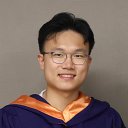
 Bo Ai
· 6 previous affiliations
- physical intelligenceSince 2025
- Research Intern · Since 2025
- University of California San DiegoSince 2024
- PhD student · 2024–2029
- Research Intern · 2025
- Research Engineer · 2023–2024
- Stanford University2023–2024
- Intern · 2023–2024
- Visiting Student Researcher · 2023
- National University of Singapore2019–2023
- Undergrad student · 2019–2023
Research Overview
Bo Ai focuses on robotic manipulation, dynamics modeling, and cross-embodiment generalization. His work explores how robots can learn to interact with complex environments and deformable objects using multimodal perception, including visuo-tactile sensing. Recently, he has investigated embodiment scaling laws and the development of unified world models that allow learned skills to transfer across diverse robotic hardware.
Research Trajectory
Early work in 2023 explored high-level reasoning for robotics. With collaborators, he investigated how large language models could provide commonsense reasoning and long-horizon planning for tasks like room tidying in Integrating Common Sense and Planning with Large Language Models for Room Tidying. This research addressed the challenge of operating with incomplete map information by leveraging the layout priors embedded in language models to guide physical execution.
Moving into 2024, the focus shifted toward low-level physical interaction and multimodal perception. He introduced RoboPack: Learning Tactile-Informed Dynamics Models for Dense Packing, which demonstrated how combining visual and tactile sensing can improve the understanding of object dynamics. By employing a recurrent graph neural network, this work estimated latent physics information from historical visuo-tactile observations to predict future states in dense packing tasks.
In 2025, this interest in dynamics modeling expanded significantly, particularly concerning complex materials and diverse robotic hardware. He provided a comprehensive synthesis of the field in A review of learning-based dynamics models for robotic manipulation, detailing how data-driven state transition functions can capture hard-to-model factors and predictive uncertainty without requiring full-state information. Concurrently, he participated in research applying generative models to highly complex physical systems, such as in Diffusion Dynamics Models with Generative State Estimation for Cloth Manipulation, which utilized diffusion-based approaches to reconstruct full cloth states from partial observations and predict future deformations.
A major theme of his 2025 research involves cross-embodiment generalization—enabling skills to transfer across robots with different kinematic structures. He contributed to Learning Dexterous Deformable Object Manipulation Through Cross-Embodiment Dynamics Learning, which taught robots to manipulate materials like clay by learning a shared, embodiment-agnostic dynamics model from human demonstrations. This work intersects with several broader research areas, including the specific challenge of Learning Representations for Deformable Object Manipulation, the area of Bridging the Embodiment Gap in Robot Learning, and the overarching goal of Scaling Robotic Intelligence Across Diverse Hardware.
Building on the concept of cross-embodiment transfer, he led an investigation into how the diversity of training hardware affects policy generalization in Towards Embodiment Scaling Laws in Robot Locomotion. By procedurally generating 1,000 distinct robot morphologies, this research provided empirical support for embodiment scaling laws, showing that increasing the number of training embodiments yields broader generalization than merely scaling data on fixed hardware. He further explored this invariance in Scaling Cross-Embodiment World Models for Dexterous Manipulation, which proposed that environment dynamics remain constant across different robots, allowing for the creation of unified world models that abstract away embodiment-specific details.
Alongside dynamics and scaling, he continued to advance multimodal perception for specialized tasks. In SAVOR: Skill Affordance Learning from Visuo-Haptic Perception for Robot-Assisted Bite Acquisition, he and his collaborators developed a method for learning skill affordances in robot-assisted feeding, addressing the temporal variability of food properties through visuo-haptic feedback to determine the most suitable manipulation strategy.
Current Directions
The most recent papers in the evidence indicate a strong focus on cross-embodiment generalization and the formulation of scaling laws for robotic hardware. Recent work investigates how training across procedurally generated or highly diverse morphologies can yield embodiment-agnostic world models, allowing complex skills—such as dexterous manipulation and locomotion—to transfer without task-specific retraining. Additionally, ongoing research addresses the manipulation of challenging, high-degree-of-freedom materials, including cloth, clay, and food items. This involves developing advanced perception techniques, particularly visuo-tactile and visuo-haptic integration, to model the intricate dynamics and temporal variability of deformable objects in real-world environments.
Profile updated
Loading new papers…
Other researchers whose papers cluster into the same research directions — a proxy for overlapping technical interests and shared intellectual neighborhoods.
See something wrong? Report a mistake