

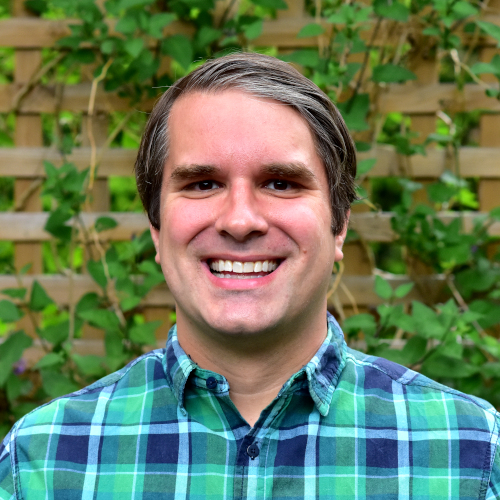
 Blase Ur
· 3 previous affiliations
- University of ChicagoSince 2017
- Associate Professor · Since 2023
- Assistant Professor · 2017–2023
- Carnegie Mellon University2011–2016
- PhD student · 2011–2016
- Harvard University2003–2007
- Undergrad student · 2003–2007
Research Overview
Blase Ur focuses on usable security and privacy, with an emphasis on password authentication, data-driven security metrics, and user-centric access control. His trajectory spans large-scale empirical studies of password guessability to the development of neural network-based tools that provide actionable security feedback. Recent work investigates the application of machine learning architectures to model password resistance and improve client-side security evaluation.
Research Trajectory
Blase Ur’s research trajectory is defined by a sustained focus on the intersection of human behavior and computer security, commonly known as usable security. Beginning in the early 2010s, Ur established a foundation in empirical password analysis and social media privacy. As the senior author of Measuring password guessability for an entire university (2013), Ur led an investigation into the properties of high-value account passwords, utilizing a rare dataset of plaintext single-sign-on passwords from over 25,000 university users to better understand real-world password strength. Concurrently, Ur directed research into the temporal dynamics of social media privacy. In The post anachronism: the temporal dimension of facebook privacy (2013), longitudinal and retrospective studies were used to demonstrate that users' preferences for who can view their content evolve over time, highlighting the limitations of static privacy settings.
During the mid-2010s, Ur participated collaboratively in several large-scale evaluations of authentication mechanisms across different platforms and policies. This included contributing to studies on the efficacy of length-based versus complexity-based password policies, as well as examining the friction introduced by mobile interfaces. For instance, as a co-author of Usability and Security of Text Passwords on Mobile Devices (2016), Ur helped assess how mobile input methods impact the creation of strong passwords, finding that mobile environments often lead to increased user frustration and higher error rates compared to desktop settings.
By 2017, Ur's work increasingly integrated machine learning to build proactive, user-facing security tools. As the first author of Design and Evaluation of a Data-Driven Password Meter, Ur led the development of a password meter that combined neural networks with heuristics to provide users with accurate strength measurements and detailed, actionable feedback. This period also saw Ur expanding usable security research to cryptographic applications. As the principal investigator on Can Unicorns Help Users Compare Crypto Key Fingerprints?, Ur directed a large-scale experiment testing the usability and security of various visual representations of cryptographic key fingerprints, aiming to mitigate man-in-the-middle attacks caused by user inattention.
In recent years, Ur has continued to refine the application of neural networks in security contexts. As the second author of Fast, Lean, and Accurate: Modeling Password Guessability Using Neural Networks (2023), Ur contributed to the design of efficient neural network architectures capable of modeling adversarial password guessing. This work specifically addressed the computational bottlenecks of previous models, enabling real-time, client-side password evaluation without sacrificing accuracy.
Current Directions
The most recent papers in the evidence indicate a continued focus on optimizing machine learning models for practical, client-side security applications and automating privacy management. Recent work investigates how artificial neural networks can be trained and structured to evaluate password resistance more effectively than traditional probabilistic context-free grammars, while remaining lightweight enough for real-time deployment. Additionally, ongoing research addresses the persistent challenge of "set-it-and-forget-it" privacy configurations on social media, exploring semi-automated inference systems designed to detect and flag mismatches between a user's active privacy settings and their evolving life circumstances.
Profile updated
Loading new papers…
Other researchers whose papers cluster into the same research directions — a proxy for overlapping technical interests and shared intellectual neighborhoods.
See something wrong? Report a mistake