

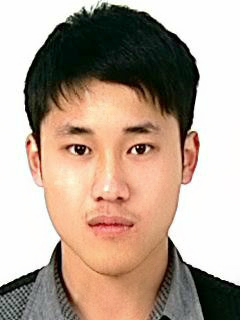
 Binwu Wang
· 1 previous affiliation
- Assistant Professor · Since 2024
- PhD student · 2019–2024
Research Overview
Binwu Wang focuses on spatio-temporal data mining, graph learning, and multivariate time series forecasting. His trajectory spans from modeling dynamic urban traffic networks to developing robust, linear-complexity graph neural networks that handle out-of-distribution shifts. Recently, his work emphasizes continual learning architectures and the integration of large language models for causal reasoning in complex time series.
Research Trajectory
Wang’s early research addressed the complexities of urban mobility and traffic flow prediction. With collaborators, he developed CMT-Net: A Mutual Transition Aware Framework for Taxicab Pick-ups and Drop-offs Co-Prediction (2022), which moved beyond uniform grid partitions to explicitly model the mutual influences between passenger pick-ups and drop-offs. In 2023, he expanded this focus by integrating exogenous knowledge into graph convolutional networks in A Knowledge-Driven Memory System for Traffic Flow Prediction. Recognizing that urban networks are rarely static, he also investigated the challenge of continuous traffic prediction on expanding networks, proposing a continual learning framework in Pattern Expansion and Consolidation on Evolving Graphs for Continual Traffic Prediction.
This interest in non-stationary and noisy environments naturally extended to broader multivariate time series (MTS) forecasting. He contributed to CrossGNN: Confronting Noisy Multivariate Time Series Via Cross Interaction Refinement (2023), a framework that refines interactions across multiple time scales to handle noise, advancing the research direction of Mitigating Non-Stationary Distribution Shift in Time-Series Forecasting.
In 2024, Wang further addressed dynamic environments by proposing a decoupled learning framework in Towards Dynamic Spatial-Temporal Graph Learning: A Decoupled Perspective. This approach separated stable seasonal patterns from rapidly changing trend components, allowing for efficient updates without expensive retraining. He continued to tackle distribution shifts in STONE: A Spatio-temporal OOD Learning Framework Kills Both Spatial and Temporal Shifts, which provided a unified approach to out-of-distribution (OOD) generalization. Concurrently, he addressed the computational bottlenecks of these advanced models. In Make Bricks with a Little Straw: Large-Scale Spatio-Temporal Graph Learning with Restricted GPU-Memory Capacity, he explored memory-efficient learning on large-scale road networks, contributing to the broader areas of Scaling Graph Neural Networks via Partitioning and Sampling and Continual Graph Learning for Evolving Data Streams.
Alongside his spatiotemporal work, Wang investigated fundamental challenges in data distribution. He explored structure-driven approaches in When Imbalance Meets Imbalance: Structure-driven Learning for Imbalanced Graph Classification (2024) and re-evaluated data augmentation strategies for deep long-tailed learning in Kill Two Birds with One Stone: Rethinking Data Augmentation for Deep Long-tailed Learning (2024).
Moving into 2025, Wang’s research increasingly leveraged brain-inspired architectures and foundation models. He introduced ComS2T: A Complementary Spatiotemporal Learning System for Data-Adaptive Model Evolution, which disentangled stable historical knowledge from dynamic new information, aligning with the research direction of Dual Memory Architectures for Continual Learning. He also explored the intersection of time series and natural language processing in Augur: Modeling Covariate Causal Associations in Time Series via Large Language Models, utilizing LLMs as causal reasoning engines to discover directed graphs among covariates.
His recent work continues to push the boundaries of efficiency and robustness in graph learning. He contributed to Robust Spatio-Temporal Centralized Interaction for OOD Learning (2025), which replaced traditional node-to-node messaging with a centralized mechanism to improve OOD generalization, advancing the area of Linear Complexity Graph Transformers for Large Scale Networks. Similarly, Less but More: Linear Adaptive Graph Learning Empowering Spatiotemporal Forecasting (2025) introduced a sparse, balanced mixture-of-experts strategy to reduce computational complexity from quadratic to linear.
Looking ahead to 2026, Wang’s focus includes refining interaction strategies for complex data. He developed Crisp: A Spectral-Based Interaction Strategy for Multivariate Time Series Forecasting, which addresses the trade-offs between channel isolation and interaction, contributing to the broader area of Modeling Cross-Variable Dependencies in Multivariate Time Series. He also continued his work on data imbalance with One for Two: A Unified Framework for Imbalanced Graph Classification via Dynamic Balanced Prototype, proposing dynamic prototypes to handle skewed graph data. Expanding his spatial modeling to environmental domains, Wang co-developed ExtrapAir: Air Quality Inference at Unmonitored Locations via Weather-Bridged Spatial Attention, which infers air quality at unmonitored sites by learning weather-AQI correlations alongside inductive spatial priors. Additionally, Wang collaborated on TStruct: Learning Shared Temporal Structures for Long-Term Time Series Forecasting, which captures reusable temporal dependency matrices to address Mitigating Non-Stationary Distribution Shift in Time-Series Forecasting. In autonomous agent systems, Wang participated in developing ChipOmni: A General-Purpose AI Agent for Electronic Design Automation, a unified framework coordinating multimodal reasoning and verification-driven tool interaction for end-to-end chip design.
Current Directions
The most recent papers in the evidence indicate a strong focus on scaling spatiotemporal models and improving their robustness to distribution shifts. Recent work investigates linear-complexity graph learning architectures, utilizing mixture-of-experts and centralized interaction mechanisms to drastically reduce computational overhead while maintaining high accuracy on large-scale networks. Additionally, Wang is exploring the integration of Large Language Models (LLMs) into time series forecasting, specifically using them to extract and model causal associations between covariates. Finally, addressing data imbalance, out-of-distribution generalization, and autonomous engineering workflows remains a core theme, with ongoing research into reusable temporal dependency structures, unmonitored spatial inference, and agent frameworks for electronic design automation.
Profile updated
Loading new papers…
Other researchers whose papers cluster into the same research directions — a proxy for overlapping technical interests and shared intellectual neighborhoods.
See something wrong? Report a mistake