

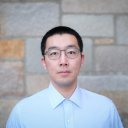
 Bingsheng Yao
· 2 previous affiliations
- Northeastern UniversitySince 2024
- Postdoc · Since 2024
- Rensselaer Polytechnic Institute2014–2024
- PhD student · 2019–2024
- MS student · 2018–2019
- Undergrad student · 2014–2018
Research Overview
Bingsheng Yao focuses on natural language processing, human-AI interaction, and explainable artificial intelligence. His trajectory spans early work in narrative comprehension and interactive storytelling to recent developments in active learning architectures and the objective evaluation of human-annotated explanations. His current research investigates how to better integrate natural language explanations and discourse structures into machine learning workflows.
Research Trajectory
Early in his career, Yao's research addressed challenges in question answering and user trust in automated systems. With collaborators, he explored the difficulties of retrieving evidence from long-form text in Frustratingly Hard Evidence Retrieval for QA Over Books (2020). This work contributed to the broader research areas of Hierarchical and Modular Reasoning for Long Document Understanding and The Evidence Localization Bottleneck in Complex Document Reasoning, while also touching upon the area of Noise Robustness in Distantly Supervised Relation Extraction. Concurrently, he participated in human-computer interaction research, investigating the information needs required to establish user confidence in machine learning pipelines in Trust in AutoML: exploring information needs for establishing trust in automated machine learning systems.
By 2022, Yao's focus expanded significantly into narrative comprehension, educational applications, and interactive storytelling. He was part of the team that developed a large-scale dataset derived from children's stories in Fantastic Questions and Where to Find Them: FairytaleQA - An Authentic Dataset for Narrative Comprehension. This project was designed to assess nuanced narrative understanding and advance the research direction of Expert Annotation for Specialized Machine Learning. Building on this educational context, he contributed to the design of StoryBuddy: A Human-AI Collaborative Chatbot for Parent-Child Interactive Storytelling with Flexible Parental Involvement. Taking a leading role in this domain, he introduced methods for automated question generation to support reading comprehension in It is AI's Turn to Ask Humans a Question: Question-Answer Pair Generation for Children's Story Books. During this period, he also collaborated on tools for analyzing unstructured text, participating in the development of NECE: Narrative Event Chain Extraction Toolkit, which aligns events chronologically to enable downstream analysis and supports work in the area of Temporal Grounding for Large Language Models.
In 2023, Yao's research shifted toward explainable artificial intelligence (XAI) and the integration of natural language explanations into machine learning workflows. He proposed a novel active learning architecture in Beyond Labels: Empowering Human Annotators with Natural Language Explanations through a Novel Active-Learning Architecture. This system addresses the real-world workflow of domain experts—who rarely provide decision labels without accompanying rationale—by leveraging an explanation-generation model guided by human inputs to improve prediction faithfulness in low-resource scenarios. Recognizing the subjective nature of free-form text, he subsequently investigated the utility of these annotations in Are Human Explanations Always Helpful? Towards Objective Evaluation of Human Natural Language Explanations. In this work, he proposed evaluating the quality of human-crafted explanations objectively, measuring them by their helpfulness or impairment to a model's performance on the target NLP task. Additionally, he collaborated on applications of discourse structure for natural language generation, helping to design an automated system for translating technical scientific papers into accessible news articles in 'Don't Get Too Technical with Me': A Discourse Structure-Based Framework for Automatic Science Journalism. This research introduced the SciTechNews dataset and demonstrated how integrating a paper's discourse structure with its metadata can effectively guide the generation of science journalism.
Current Directions
The most recent papers in the evidence indicate a strong focus on the intersection of explainable AI, human-in-the-loop machine learning, and specialized natural language generation. Yao's current work investigates how natural language explanations provided by human domain experts can be systematically evaluated and integrated into active learning pipelines, particularly in low-resource environments. Furthermore, his recent research addresses the challenge of adapting complex, technical discourse into accessible formats, highlighting an ongoing interest in making scientific and technical knowledge more comprehensible to general audiences through automated journalism frameworks.
Profile updated
Loading new papers…
Other researchers whose papers cluster into the same research directions — a proxy for overlapping technical interests and shared intellectual neighborhoods.
See something wrong? Report a mistake