

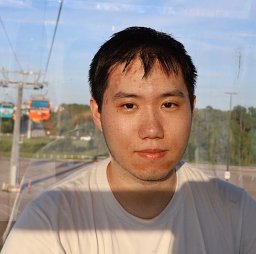
 Binchi Zhang
· 5 previous affiliations
- LinkedIn (United States)Since 2026
- Research Intern · Since 2026
- University of VirginiaSince 2022
- PhD student · 2022–2027
- Current
- Intern · 2025
- NEC (United States)2024–2025
- Research Intern · 2024–2025
- Xi'an Jiaotong University2018–2022
- Undergrad student · 2018–2022
Research Overview
Binchi Zhang focuses on the intersection of trustworthy artificial intelligence, graph machine learning, and large language models. His work addresses the challenges of maintaining fairness, safety, and modular knowledge in complex data structures, particularly within distributed and heterogeneous environments. Currently a Ph.D. candidate at the University of Virginia, Zhang’s research has evolved from optimizing graph neural network (GNN) architectures for anomaly detection and federated learning toward developing certified defenses for algorithmic fairness and robust protocols for machine unlearning in generative models.
Research Trajectory
Zhang’s early research, beginning around 2021, was primarily concerned with the structural and distributional challenges inherent in Graph Machine Learning. A significant portion of this work focused on Federated Graph Learning (FGL), where the objective is to train GNNs across distributed clients without centralizing sensitive data. In Tackling the Local Bias in Federated Graph Learning, Zhang investigated the "local bias" phenomenon, where missing inter-client connections and imbalanced local data distributions degrade model performance. This period also involved addressing the complexities of Heterogeneous Information Networks (HINs). In AHEAD: A Triple Attention Based Heterogeneous Graph Anomaly Detection Approach, he developed methods to identify anomalies in graphs with diverse node and edge types, leveraging multi-view attention mechanisms to capture heterogeneous relationships.
By 2023, Zhang’s focus shifted toward the broader domain of Trustworthy AI, specifically Fair and Stable Graph Representation Learning. Recognizing that GNNs are susceptible to inheriting and amplifying biases present in graph topology and node attributes, he began developing formal defense mechanisms. This led to the development of ELEGANT: Certified Defense on the Fairness of Graph Neural Networks, which utilizes randomized smoothing to provide mathematical guarantees that a model's fairness remains intact under adversarial perturbations. This work aligns with broader efforts in Post-Hoc Fairness Adjustment for Machine Learning, seeking to ensure equitable model outcomes without requiring exhaustive retraining.
In 2024 and 2025, Zhang expanded his investigation into the reliability of model maintenance protocols, specifically machine unlearning and knowledge updating. In Verification of Machine Unlearning is Fragile, he demonstrated that existing methods for verifying data deletion in machine learning models are vulnerable to adversarial manipulation, suggesting that a model can appear to have "forgotten" data while secretly retaining it. This period also saw a transition toward Large Language Models (LLMs) and modular knowledge management. He participated in collaborative efforts to define the landscape of Safety in Graph Machine Learning: Threats and Safeguards and explored Optimization over Discrete Graph Topology as a means of improving model robustness.
Current Directions
Zhang’s current research focuses on the scalability and modularity of knowledge in generative models. A primary area of interest is the conflict between model editing (adding new information) and machine unlearning (removing outdated or sensitive information). His work on the LOKA framework addresses these "editing-unlearning conflicts" by employing modular knowledge codebooks, allowing for precise updates to an LLM’s internal knowledge base without the performance degradation typically associated with global fine-tuning.
Additionally, Zhang is investigating model fusion and the geometric properties of neural networks. His recent work explores the role of rotation and permutation symmetry in merging disparate models, aiming to improve the efficiency of model integration. He also continues to contribute to the evolution of graph-based prompting, participating in the development of frameworks that adapt pre-trained GNNs through topological "rewiring" rather than feature manipulation, thereby enhancing the flexibility of frozen foundation models in graph-centric tasks.
Representative Work
Tackling the Local Bias in Federated Graph Learning This work addresses the performance drop in distributed GNN training caused by "local bias." Zhang introduced a framework that reconstructs the centralized training process in a federated setting using label-guided sampling. This approach reduces computational overhead by approximately 80% while maintaining accuracy, providing a more efficient path for training GNNs on decentralized data.
AHEAD: A Triple Attention Based Heterogeneous Graph Anomaly Detection Approach In this paper, Zhang tackled the problem of anomaly detection in Heterogeneous Information Networks (HINs). Because anomalies in HINs manifest differently across various node types and relations, he proposed a triple attention mechanism to capture these nuances. The method enables more precise identification of irregular patterns in complex, multi-typed graph structures.
TwiBot-22: Towards Graph-Based Twitter Bot Detection Zhang participated in this large-scale benchmarking effort to improve the detection of automated accounts on social media. The project addressed the limitations of existing bot detection datasets by providing a comprehensive, graph-based Twitter dataset with high-quality annotations, facilitating the development of more robust GNN-based detection methods.
ELEGANT: Certified Defense on the Fairness of Graph Neural Networks This research introduced the first framework for providing certified fairness guarantees in GNNs. By applying randomized smoothing techniques, Zhang demonstrated that it is possible to mathematically bound the impact of adversarial perturbations on a model's fairness metrics. This approach provides a rigorous safeguard against attacks that attempt to induce discriminatory behavior in graph-based classifiers.
Verification of Machine Unlearning is Fragile Zhang investigated the security of machine unlearning protocols, revealing that current verification checks can be easily bypassed. Through the development of "adversarial unlearning" techniques, the study showed that dishonest model providers could pass standard verification tests while maintaining the privacy-sensitive information they were tasked to delete, highlighting a critical gap in current privacy-preserving machine learning.
Resolving Editing-Unlearning Conflicts: A Knowledge Codebook Framework for Large Language Model Updating Addressing the challenges of maintaining up-to-date LLMs, Zhang developed the LOKA framework. This work introduces a modular "knowledge codebook" and a conflict-aware training strategy to manage the simultaneous addition and removal of information. The framework prevents the catastrophic forgetting and overfitting often seen in traditional fine-tuning, allowing for more stable and precise knowledge management in large-scale generative models.
Profile updated
Loading new papers…
Other researchers whose papers cluster into the same research directions — a proxy for overlapping technical interests and shared intellectual neighborhoods.
See something wrong? Report a mistake