

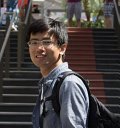
 Bin Shen
· 5 previous affiliations
- CelonisSince 2022
- Engineer · Since 2022
- Pinterest (United States)2019–2022
- Applied Scientist · 2019–2022
- Google (United States)2015–2019
- Software Engineer · 2015–2019
- Purdue University West Lafayette2009–2014
- PhD student · 2009–2014
- Tsinghua University2003–2009
- MS student · 2007–2009
- Undergrad student · 2003–2007
Research Overview
Bin Shen focuses on machine learning and computer vision, with specific emphasis on sparse representation, multi-modal data processing, and domain adaptation. His trajectory spans foundational work in image alignment and kernel methods to advanced architectures for recommendation systems and network embedding. Recently, his research investigates deep learning approaches for handling incomplete and partial multiplex data in complex networks.
Research Trajectory
Bin Shen’s early research concentrated on optimizing image alignment and representation techniques for computer vision applications. In 2012, he and his collaborators developed Online robust image alignment via iterative convex optimization, which addressed the challenge of aligning newly arrived images to previously well-aligned datasets. By treating the new image as a sparse linear reconstruction of existing images, the work utilized a sequence of convex optimizations minimizing the l1-norm to achieve robust online basis updating. Building on themes of sparse coding, he subsequently participated in extending these concepts into reproducing kernel Hilbert spaces (RKHS). This effort resulted in Self-explanatory Sparse Representation for Image Classification (2014), which explicitly linked learned dictionary atoms with original feature spaces to ensure that coding derivatives remained independent of the chosen kernel. That same year, he co-developed techniques to manage incomplete and noisy labels in large-scale applications, proposing a novel hashing approach in Binary Codes Embedding for Fast Image Tagging with Incomplete Labels.
By 2015, his focus expanded to include broader machine learning optimizations, particularly concerning kernel methods, manifold learning, and multi-modal data. He contributed to the theoretical underpinnings of kernel acceleration in Nystrom Approximation for Sparse Kernel Methods: Theoretical Analysis and Empirical Evaluation, which leveraged the restricted eigenvalue condition to provide robust approximation and recovery bounds without relying on traditional low-rank assumptions. Concurrently, he introduced a novel formulation for Support Vector Machines in SP-SVM: Large Margin Classifier for Data on Multiple Manifolds. Recognizing that high-dimensional data often lies on low-dimensional manifolds, this work allowed samples to be represented as linear combinations of their neighbors on the same manifold, thereby preserving local geometric structures within the SVM framework.
During this period, Shen also directed research addressing the practical realities of missing data in complex datasets. He led the development of Learning to Hash on Partial Multi-Modal Data (2015), which tackled the common problem where real-world multi-modal datasets suffer from missing modalities across different examples. He continued to guide work on learning from imperfect data structures with Instance-Level Label Propagation with Multi-Instance Learning (2017). This research identified the limitations of whole-image similarity in semi-supervised label propagation—where shared backgrounds might falsely link distinct objects—and proposed an instance-level approach to ensure more accurate information transfer across graphs.
In subsequent years, Shen’s trajectory incorporated deep learning architectures applied to recommendation systems and cross-domain classification. He co-developed the Collaborative Memory Network for Recommendation Systems (2018), a deep learning architecture that unified latent factor and neighborhood-based approaches. By integrating memory networks and attention mechanisms, the model effectively captured both global user-item relationships and local neighborhood structures. This contribution intersects with the broader research direction of Graph Contrastive Learning for Sparse Recommendation.
His work then expanded into unsupervised domain adaptation. He participated in the design of DART: Domain-Adversarial Residual-Transfer networks for unsupervised cross-domain image classification (2020). This method enhanced domain-adversarial approaches by jointly learning domain-invariant features and modeling the subtle differences between source and target domain classifiers. This work aligns closely with research areas such as Joint Distribution Alignment for Domain Adaptation and the broader area of Test Time Adaptation for Distribution Shift. Most recently, he contributed to Deep Partial Multiplex Network Embedding (2022), returning to the theme of missing data by developing techniques to learn low-dimensional node representations in multiplex networks where individual views or relations are incomplete.
Current Directions
The most recent papers in the evidence, spanning from 2020 to 2022, address the challenges of learning robust representations from incomplete, multi-view, or domain-shifted data. A primary focus is the development of deep network embedding techniques specifically designed for partial multiplex data. Because real-world networks often feature multiple types of relations (views) that suffer from missing information, recent work investigates how to effectively synthesize these fragmented views into cohesive, low-dimensional node representations. Additionally, this recent phase of research explores unsupervised domain adaptation, utilizing adversarial and residual-transfer mechanisms to jointly learn domain-invariant features while accounting for classifier discrepancies across different domains.
Profile updated
Loading new papers…
Other researchers whose papers cluster into the same research directions — a proxy for overlapping technical interests and shared intellectual neighborhoods.
See something wrong? Report a mistake