

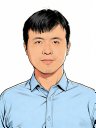
 Bin Liu
· 12 previous affiliations
- Chery Automobile (China)Since 2026
- Director of Embodied Intelligence Lab and Intelligent Algorithm Lab; Chief Engineer of Kaiyang Lab · Since 2026
- PIA Automation2025–2026
- Chief Scientist and CEO at PIA AI and Humanoid Robotics Research Institute Co., Ltd. · 2025–2026
- China Telecom2024–2025
- Chief Robot Expert at E-Surfing Digital Life Technology Co., Ltd. · 2024–2025
- Group Chief Expert (Level 2) · 2025
- Senior Research Fellow in AI at Corporate Research Center (CRC) · 2024
- Zhejiang Lab2021–2024
- Team Leader & Project Lead & Professor (PhD & Postdoc Advisor) · 2021–2024
- Full Professor · 2022–2024
- Zhejiang University2022–2024
- Full Professor · 2022–2024
- Full Professor · 2022–2024
- Alibaba Group (China)2020–2021
- Senior Algorithm Expert · 2020–2021
- Associate Professor · 2013–2020
- Kuang-Chi (China)2010–2012
- Senior Research Fellow · 2010–2012
- Doctor of Philosophy - PhD, Computer and Information Sciences, General
- Bachelor's degree, Mechatronics, Robotics, and Automation Engineering
11 other authors named Bin Liu: Bin Liu (Institute of Automation · 155 papers), Bin Liu (West Virginia University · 24 papers), Bin Liu (Southwestern University of Finance and Economics · 21 papers), Bin Liu (University of Science and Technology of China · 13 papers), Bin Liu (Alibaba Group (China) · 10 papers), and 6 more
Research Overview
Bin Liu focuses on Bayesian inference, robust state estimation, and sequential decision-making under uncertainty. His trajectory spans foundational work in particle filtering and probabilistic trust modeling to recent advances in adaptive sampling for physics-informed neural networks and reinforcement learning with large language models. Currently, he investigates efficient optimization and sequential learning in complex, high-dimensional environments.
Research Trajectory
His early research addressed state-space modeling and posterior exploration in complex dynamic systems. In Instantaneous Frequency Tracking under Model Uncertainty via Dynamic Model Averaging and Particle Filtering, he developed a strategy combining state-space models with Markov chains to handle irregular temporal variations in signal frequencies. He subsequently expanded his focus to highly nonlinear models, introducing techniques for multimodal posterior exploration in ADAPTIVE ANNEALED IMPORTANCE SAMPLING FOR MULTIMODAL POSTERIOR EXPLORATION AND MODEL SELECTION WITH APPLICATION TO EXTRASOLAR PLANET DETECTION, which applied importance sampling to astrophysical challenges like exoplanet detection.
Around the mid-2010s, he began investigating decentralized systems, particularly focusing on how agents interact reliably. This led to Probabilistic Trust Evaluation with Inaccurate Reputation Reports, addressing trust evaluation in large-scale open-ended environments. Concurrently, he continued advancing filtering techniques to handle outliers. He proposed a Robust particle filter by dynamic averaging of multiple noise models, utilizing heavier-tailed Student's t-distributions alongside Gaussian models to mitigate the impact of anomalous measurements. He also explored global optimization through Posterior exploration based sequential Monte Carlo for global optimization, enhancing the sequential Monte Carlo framework to better navigate multimodal search spaces.
Building on his filtering research, he contributed to the broader area of Robust State Estimation Under Non-Gaussian Noise. He introduced ILAPF: Incremental Learning Assisted Particle Filtering, a method that dynamically estimates outlier ranges to improve estimation accuracy and enable transfer learning across related tasks. His work during this period also touched upon network structures, as seen in his participation in On relationship formation in heterogeneous information networks: An inferring method based on multilabel learning, which sought to predict relationships and discover interaction patterns within complex networks.
By 2020, his work synthesized several of these threads into comprehensive frameworks. He formalized his contributions to the research direction Probabilistic Trust Modeling for Distributed Systems with A Survey on Trust Modeling from a Bayesian Perspective, proposing a unified "Generic Bayesian Trust" framework to contextualize existing models. His interest in optimization and filtering yielded several methodological advances, including Harnessing Low-Fidelity Data to Accelerate Bayesian Optimization via Posterior Regularization, which reduced the overhead of evaluating expensive black-box functions, and Data-Driven Model Set Design for Model Averaged Particle Filter, which offered a practical approach to designing model sets without prior parameter knowledge. He also addressed temporal anomalies in Sequential online prediction in the presence of outliers and change points: An instant temporal structure learning approach. These efforts aligned with his broader interest in areas such as Recursive Bayesian Updating for Continual Learning and Temporal Dynamics for Evolving Trust Networks. In 2021, he extended his model uncertainty perspective to sensor networks with Robust Dynamic Multi-Modal Data Fusion: A Model Uncertainty Perspective, creating a framework to adaptively manage unexpected sensor failures.
In recent years, his research has expanded to encompass modern machine learning paradigms, including foundation models and reinforcement learning. He guided research on Collaborative Consortium of Foundation Models for Open-World Few-Shot Learning, investigating how to harness models like CLIP and DINO in resource-constrained settings with unreliable labels. He also explored the intersection of embodied agents and large language models in Enabling Intelligent Interactions between an Agent and an LLM: A Reinforcement Learning Approach, focusing on cost-effective, high-level instruction following. Most recently, he has applied adaptive sampling to scientific machine learning, detailing an approach in Annealed adaptive importance sampling method in PINNs for solving high dimensional partial differential equations to improve the accuracy of Physics-Informed Neural Networks in regions with high residuals. He also contributed to dynamic bandit problems with Thompson Sampling For Bandits With Cool-Down Periods, designing algorithms for environments where arms become temporarily inactive after successful selections. In embodied AI, Liu also participated in developing ALAM: Algebraically Consistent Latent Action Model for Vision-Language-Action Models, which extracts structured latent transitions regularized by composition and reversal consistency from action-free videos and co-generates them with robot actions via joint flow matching.
Current Directions
The most recent papers in the evidence indicate a focus on adapting advanced machine learning models for complex, resource-constrained, and dynamic environments. Recent work investigates the efficient utilization of foundation models and large language models, exploring structured latent action models for vision-language-action policies as well as reinforcement learning for cost-effective interactions between embodied agents and remote LLMs. Additionally, his current research addresses scientific machine learning and sequential decision-making, developing adaptive sampling techniques to solve high-dimensional partial differential equations with Physics-Informed Neural Networks, and designing Thompson Sampling algorithms for dynamic bandit problems with complex availability constraints.
Profile updated
Loading new papers…
Other researchers whose papers cluster into the same research directions — a proxy for overlapping technical interests and shared intellectual neighborhoods.
See something wrong? Report a mistake