

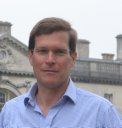
 Bill Byrne
· 9 previous affiliations
- University of CambridgeSince 2004
- Full Professor · Since 2013
- Current
- Head of Information Engineering Division · 2014–2019
- Reader in Information Engineering · 2008–2013
- Lecturer · 2004–2013
- Amazon (United States)Since 2019
- Researcher · Since 2019
- Amazon Scholar · Since 2019
- CytoraSince 2016
- Scientific Advisory Board · Since 2016
- SDL Research2012–2019
- Senior Research Scientist, Director of UK R&D Office · 2012–2019
- SDL2012–2019
- Researcher · 2012–2019
- Thought Machine2014–2015
- Scientific Advisory Board · 2014–2015
- University of Maryland, College Park1987–1993
- Doctor of Philosophy (Ph.D.), Electrical and Computer Engineering · 1987–1993
- Cornell University1978–1982
- Bachelor's Degree, Electrical Engineering · 1978–1982
Research Overview
Bill Byrne focuses on machine translation, speech recognition, and the alignment of large multimodal models. His early research explored minimum Bayes-risk decoding and finite-state transducers for statistical translation and speech systems. More recently, his work addresses preference optimization, cross-lingual retrieval-augmented generation, and the development of robust foundation models for complex reasoning tasks.
Research Trajectory
In the early 2000s, Byrne's research addressed fundamental decoding challenges in speech and language processing. He and his collaborators developed efficient A* search algorithms over word lattices to approximate minimum-risk classifiers in Minimum Bayes-risk automatic speech recognition (2000). This foundational work naturally extended to statistical machine translation in Minimum Bayes-Risk Decoding for Statistical Machine Translation (2004), contributing to the broader research direction of Consensus Decoding via Minimum Bayes Risk and the area of The Limits of Automated Metrics for Machine Translation.
As machine translation systems evolved, his focus expanded to hierarchical and syntax-based architectures. He oversaw the development of Hierarchical Phrase-Based Translation with Weighted Finite State Transducers (2009), which integrated weighted finite-state transducers into hierarchical phrase-based translation to optimize the search space. Later, during the transition to neural architectures, he investigated optimization strategies for complex models. This included Multi-representation ensembles and delayed SGD updates improve syntax-based NMT (2018), which advanced techniques in the area of Gradient Accumulation for Scaling Memory Intensive Models.
In 2020, Byrne addressed algorithmic fairness in language technologies. He introduced a novel approach in Reducing Gender Bias in Neural Machine Translation as a Domain Adaptation Problem, fine-tuning models on balanced datasets with lattice rescoring to improve accuracy without degrading general performance, thereby contributing to the direction of Gender Aware Neural Machine Translation. He continued to refine domain adaptation techniques, later exploring methods to mitigate catastrophic forgetting across diverse target domains in Improving the quality trade-off for neural machine translation multi-domain adaptation (2024).
His recent work in machine translation has also revisited core decoding and vocabulary challenges. In The devil is in the details: on the pitfalls of vocabulary selection in neural machine translation. (2024), his lab demonstrated the limitations of static alignment models for idiomatic expressions and proposed an integrated Neural Vocabulary Selection model. He also returned to finite-state automata to enforce lexical constraints in fast, non-autoregressive models, as detailed in Control-DAG: Constrained Decoding for Non-Autoregressive Directed Acyclic T5 using Weighted Finite State Automata (2024). Furthermore, he bridged his historical work on Minimum Bayes Risk with modern alignment techniques in Direct Preference Optimization for Neural Machine Translation with Minimum Bayes Risk Decoding (2024), using Direct Preference Optimization (DPO) to distill the quality benefits of MBR into a single decoding pass.
Concurrently, Byrne's research expanded into multimodal reasoning and retrieval. He guided the development of PreFLMR: Scaling Up Fine-Grained Late-Interaction Multi-modal Retrievers (2024), a system designed to retrieve external knowledge for complex visual questions. He also investigated how best to interface vision with language models in Few-Shot VQA with Frozen LLMs: A Tale of Two Approaches (2024), comparing image captioning against direct feature embedding for few-shot visual question answering.
In recent years, his work has increasingly focused on the alignment, evaluation, and application of large-scale foundation models. Serving as an Amazon Scholar, he contributed to the architecture and evaluation of a diverse suite of multimodal foundation models in The Amazon Nova Family of Models: Technical Report and Model Card (2025). He also advanced alignment methodologies by addressing the limitations of strict preference pairs in On Extending Direct Preference Optimization to Accommodate Ties (2025). He participated in evaluating the multilingual reasoning capabilities of these large models in XRAG: Cross-lingual Retrieval-Augmented Generation (2025). Finally, his research has tackled complex content moderation challenges using large multimodal models. He oversaw the development of retrieval-augmented strategies in Improved Fine-Tuning of Large Multimodal Models for Hateful Meme Detection (2025) and subsequently introduced an interpretable pipeline in ExPO-HM: Learning to Explain-then-Detect for Hateful Meme Detection (2026), which trains models to generate explanations prior to classification using a novel Conditional Decision Entropy reward.
Current Directions
The most recent papers in the evidence indicate a strong focus on the alignment, reasoning capabilities, and safety of large multimodal foundation models. Current work investigates how to improve preference optimization algorithms to handle nuanced, real-world data where outputs may be equally valid rather than strictly ranked. Additionally, recent research addresses the challenge of automated content moderation, specifically developing retrieval-augmented and explainable pipelines that allow multimodal models to interpret and classify complex, context-dependent media such as hateful memes.
Profile updated
Loading new papers…
Other researchers whose papers cluster into the same research directions — a proxy for overlapping technical interests and shared intellectual neighborhoods.
See something wrong? Report a mistake