

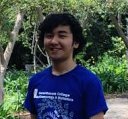
 Berlin Chen
· 3 previous affiliations
- Princeton UniversitySince 2023
- PhD student · Since 2023
- University of Cambridge2020–2021
- MS student · 2020–2021
- Swarthmore College2015–2019
- Undergrad student · 2015–2019
1 other author named Berlin Chen: Berlin Chen (National Taiwan Normal University · 1 paper)
Research Overview
Berlin Chen focuses on sequence modeling, geometric deep learning, and efficient architectures for large-scale generative models. His trajectory spans from early evaluations of sentence-level pretraining to the development of fast geometric algorithms for hidden Markov models. Recently, his work addresses state-space models and elastic attention mechanisms to improve long-context reasoning and memory efficiency in language and video generation.
Research Trajectory
Chen’s early research examined the foundational training paradigms of natural language processing models. In 2018, he directed a systematic evaluation of pretraining methodologies in Looking for ELMo's friends: Sentence-Level Pretraining Beyond Language Modeling. By analyzing 19 different pretraining tasks against standard language modeling, this work demonstrated that while intermediate training on labeled tasks offers modest gains, it frequently induces catastrophic forgetting. This investigation contributed to the broader area of Disentangling Architectural Bias from Learned Representations, establishing that foundational language modeling remains the most robust approach for general-purpose capabilities.
In 2022, Chen shifted toward geometric methods for probabilistic modeling. He introduced a novel algorithm for training Hidden Markov Models (HMMs) on curved surfaces in Geometric Learning of Hidden Markov Models via a Method of Moments Algorithm. By adapting the Method of Moments to Riemannian manifolds, this approach bypassed the slow, local-optima-prone iterations of standard Expectation-Maximization algorithms. The resulting method achieved dramatic speedups—reducing training time from hours to seconds—while maintaining or improving accuracy. This advanced the research direction of Modeling Higher-Order Temporal Dynamics in Sequential Data, intersected with the area of Machine Learning on Curved Riemannian Manifolds, and informed techniques in the related field of Accelerated Langevin Dynamics for High Dimensional Sampling.
By 2025, Chen's focus expanded to the architectural bottlenecks of large-scale generative models, particularly in video and long-context domains. He collaborated on Long-Context State-Space Video World Models, which proposed replacing traditional Transformers with State-Space Models (SSMs) to achieve near-infinite temporal memory in video generation. Utilizing a block-wise SSM scanning scheme combined with dense local attention, the architecture maintained long-term environmental consistency and constant per-frame inference speeds. This research addressed critical challenges in the area of Persistent Memory for Generative World Models and contributed to the research direction of Overcoming Truncation Bias in Recurrent Learning.
In 2026, Chen continued to refine sequence modeling architectures. He participated in the development of Mamba-3: Improved Sequence Modeling using State Space Principles, which advanced sub-quadratic sequence modeling through a second-order "exponential-trapezoidal" discretization and complex-valued state updates. This Multi-Input Multi-Output (MIMO) formulation enabled the model to solve complex state-tracking tasks that eluded previous linear models, significantly improving hardware utilization and language modeling accuracy. That same year, he co-developed MatMLA: Matryoshka Multi-Head Latent Attention, an architecture that merges Matryoshka nesting with Multi-Head Latent Attention. MatMLA allows a single model to dynamically scale its compute budget by adjusting active attention heads while maintaining a fixed-size, compressed key-value cache, thereby resolving the memory fragmentation issues typical of standard nested attention mechanisms.
Current Directions
The most recent papers in the evidence indicate a strong focus on overcoming the computational and memory bottlenecks of large-scale sequence and generative models. Chen is currently investigating advanced State-Space Models (SSMs) to enable sub-quadratic scaling and persistent memory in both language and video domains. This includes refining discretization techniques and state updates to handle complex state-tracking tasks without the quadratic cost of traditional attention. Additionally, recent work explores elastic compute mechanisms, such as dynamic multi-head latent attention, to optimize hardware utilization and manage key-value cache memory efficiently during inference.
Profile updated
Loading new papers…
Other researchers whose papers cluster into the same research directions — a proxy for overlapping technical interests and shared intellectual neighborhoods.
See something wrong? Report a mistake