

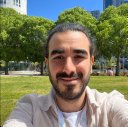
 Berkant Turan
· 1 previous affiliation
- Zuse Institute BerlinSince 2022
- PhD student · Since 2022
Research Overview
Berkant Turan focuses on the development of trustworthy machine learning systems through the lens of prover-verifier games, formal interpretability, and model security. His work bridges the gap between theoretical computer science—specifically interactive proof systems and cryptography—and practical deep learning applications. By framing model explanations and security guarantees as game-theoretic interactions, he develops frameworks where the evidence behind a prediction can be formally verified rather than merely estimated through heuristics. Additionally, he applies scalable machine learning techniques to Earth observation, specifically for high-resolution temporal monitoring of forest dynamics and biomass.
Research Trajectory
Turan’s early research focused on the intersection of generative and discriminative models, specifically investigating how Variational Autoencoders (VAEs) and Residual Networks (ResNets) could be combined to improve out-of-distribution detection and robustness in computer vision. This foundational interest in model reliability evolved into a more rigorous pursuit of Formal Logic and Abductive Reasoning for Provable Explanations. Recognizing that popular post-hoc explanation methods often rely on statistical approximations that lack mathematical rigor, he began developing multi-agent models designed to provide provable guarantees.
In 2023, this direction culminated in the introduction of the Merlin-Arthur Classifier framework. This approach treats interpretability as a protocol between a "prover" (Merlin), who provides a certificate of features, and a "verifier" (Arthur), who validates the classification based on that certificate. By introducing an adversarial prover to ensure truthfulness, Turan and his collaborators established a method to move beyond Hiding Algorithmic Bias Through Deceptive Explanations, which often plagues standard saliency-based tools.
Starting in 2024, Turan expanded this game-theoretic perspective to the broader domain of AI safety and security. He initiated a formal study of the trade-offs between model watermarking, adversarial defenses, and transferable attacks. This work sought to unify previously disparate areas of security research into a single mathematical framework. His contributions in this period identified a "trichotomy" in machine learning security, suggesting that for any given learning task, there exists a fundamental tension between the ability to protect model ownership and the ability to resist adversarial manipulation.
Most recently, Turan has focused on Scaling Neural Network Verification via Optimization Relaxations. While initial prover-verifier games were limited to low-dimensional or simplified inputs, his recent development of the Neural Concept Verifier (NCV) allows these formal protocols to operate on high-dimensional image data. By shifting the verification process from raw pixels to structured concept encodings, he has enabled the application of verifiable AI to complex datasets like ImageNet.
Parallel to his theoretical work, Turan has contributed to the Overcoming Remote Sensing Saturation in High Biomass Canopies, addressing challenges in remote sensing. This work involves Learning from Spatially Misaligned Labels and multi-sensor fusion to estimate canopy height. His contributions to this field emphasize temporal consistency, using self-supervised losses to ensure that machine learning predictions of tree growth align with natural ecological development.
Current Directions
Turan’s current research is centered on the refinement of the Neural Concept Verifier to handle increasingly complex multi-agent scenarios. He is investigating how concept-based verifiers can be made more robust to Overcoming Spurious Contextual Correlations in Visual Models, ensuring that the "concepts" used for verification are truly causal rather than coincidental.
In the domain of Earth observation, his focus has shifted toward the ECHOSAT project. This work aims to provide the first global-scale, high-resolution height maps that capture forest dynamics over time, rather than static snapshots. This involves developing specialized vision transformers capable of pixel-level temporal regression across multi-year satellite data streams, providing critical data for carbon accounting and climate change mitigation.
Representative Work
Extending Merlin-Arthur Classifiers for Improved Interpretability In this first-author work, Turan proposes a formal game-theoretic framework for AI interpretability. By framing the explanation process as a contest between a prover and an adversary attempting to convince a verifier, the paper establishes a path toward mathematically grounded saliency maps. This work serves as a foundational step in moving interpretability research away from unreliable heuristics and toward formal verification.
Unified Taxonomy in AI Safety: Watermarks, Adversarial Defenses, and Transferable Attacks As the senior author, Turan establishes a unified framework for studying the safety aspects of machine learning. The paper formalizes the relationship between watermarking (model ownership) and adversarial defenses. It introduces a rigorous taxonomy that accounts for transferable attacks, which are often developed empirically but had previously lacked a cohesive theoretical connection to defense mechanisms.
The Good, the Bad and the Ugly: Meta-Analysis of Watermarks, Transferable Attacks and Adversarial Defenses In this second-author paper, Turan contributes to the proof of a "trichotomy" theorem for machine learning security. The research demonstrates that for any learning task, there must exist either a robust watermark, an effective adversarial defense, or a universal transferable attack. This work connects machine learning security directly to cryptographic principles, providing a theoretical limit on what defenders can achieve.
Neural Concept Verifier: Scaling Prover-Verifier Games via Concept Encodings As first author, Turan introduces the Neural Concept Verifier (NCV) to bridge the gap between formal verifiability and large-scale deep learning. By integrating Prover-Verifier Games with Concept Bottleneck Models, the NCV framework allows models to provide sparse, human-understandable justifications for decisions on high-dimensional data. This work represents a significant scaling of formal verification methods to real-world computer vision tasks.
ECHOSAT: Estimating Canopy Height Over Space And Time Turan participated in the development of ECHOSAT, a global and temporally consistent tree height mapping system. The work utilizes a specialized vision transformer and a self-supervised growth loss to regularize predictions according to natural tree development. This contribution enables more accurate quantification of tree growth and forest disturbances, such as fires, over multiple years at a 10-meter resolution.
Capturing Temporal Dynamics in Large-Scale Canopy Tree Height Estimation In this collaborative work, Turan contributed to a deep learning approach that processes 12-month time series of Sentinel-2 and Sentinel-1 data. The model uses a 3D U-Net architecture to capture forest dynamics, significantly improving the accuracy of height estimations for tall trees, which are ecologically critical for biomass and carbon storage calculations.
Profile updated
Loading new papers…
Other researchers whose papers cluster into the same research directions — a proxy for overlapping technical interests and shared intellectual neighborhoods.
See something wrong? Report a mistake