

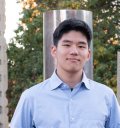
 Benjamin Shiue-Hal Chou
· 6 previous affiliations
- Purdue University West LafayetteSince 2023
- PhD student · 2023–2027
- Graduate Research Assistant · Since 2024
- ShureSince 2026
- Applied Research Scientist Intern · Since 2026
- Google (United States)Current
- Current
- PhD Resident · 2026
- PhD Resident · 2026
- Reality Defender2025
- Applied Scientist Intern · 2025
- National Cheng Kung University2020–2023
- Undergrad student · 2020–2023
Research Overview
Benjamin Shiue-Hal Chou focuses on audio machine learning, multimodal systems, and efficient transformer architectures. His early work addresses computational bottlenecks in vision and generative models through adaptive token reduction and inference-time optimization. More recently, his research centers on music informatics, specifically developing multimodal architectures for music practice error detection and polyphonic transcription.
Research Trajectory
Chou’s research trajectory begins with contributions to model efficiency and architectural design for vision and generative systems. In early 2025, he collaborated on methods to optimize transformer architectures and reduce computational overhead. This included work in the area of Token Reduction for Efficient Vision Transformers, where he helped develop a dual-token system inspired by Neural Turing Machines. Detailed in Token Turing Machines are Efficient Vision Models, this approach separates processing tokens from memory tokens to improve inference speed on ImageNet without sacrificing accuracy. This architecture also intersects with broader efforts in the research directions of Operator Fusion for Memory-Bound Deep Learning and Multimodal Memory Systems for Persistent AI Agents.
Continuing this focus on flexible and efficient modeling, Chou contributed to AdaPerceiver: Transformers with Adaptive Width, Depth, and Tokens. This architecture introduced a unified, runtime-configurable framework that allows a single trained model to adapt its embedding dimensions, layer count, and sequence length dynamically, achieving significant reductions in encoder operations for dense prediction tasks. Around the same time, he explored optimization strategies for generative models in Inference-Time Alignment of Diffusion Models with Evolutionary Algorithms. By treating diffusion models as black boxes and evolving initial noise vectors, this work demonstrated how evolutionary algorithms could align outputs with specific aesthetic or safety goals while reducing GPU memory usage compared to gradient-based methods.
Parallel to his work on foundational model efficiency, Chou established a primary research focus in audio and music machine learning. He introduced new transformer-based approaches for analyzing musical performances, beginning with Detecting Music Performance Errors with Transformers. This work laid the groundwork for identifying discrepancies between a musician's execution and the intended musical score. He also participated in community-wide efforts to benchmark and improve polyphonic audio analysis, contributing to Advancing Multi-Instrument Music Transcription: Results from the 2025 AMT Challenge. This collaborative report evaluated the state of automatic music transcription, highlighting ongoing challenges in distinguishing similar instrument timbres and processing dense polyphony.
Building on these insights, Chou advanced the capabilities of music practice evaluation with LadderSym: A Multimodal Interleaved Transformer for Music Practice Error Detection. Addressing the complex domain of Resolving Spectral Overlap in Polyphonic Audio, this architecture interleaves alignment modules directly into a two-stream encoder. By utilizing symbolic musical scores as decoder prompts, the model significantly improves the detection of missed and extra notes in complex piano recordings.
Current Directions
The most recent papers in the evidence indicate a strong focus on multimodal systems for music informatics and audio analysis. Current work investigates how symbolic representations—such as MIDI or sheet music—can be tightly integrated with raw audio streams to improve the reliability of machine listening tasks. By developing specialized transformer architectures that align these modalities, Chou addresses persistent challenges in dense polyphony, instrument transcription, and the precise detection of performance errors in complex musical environments.
Profile updated
Loading new papers…
Other researchers whose papers cluster into the same research directions — a proxy for overlapping technical interests and shared intellectual neighborhoods.
See something wrong? Report a mistake