

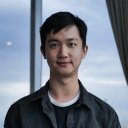
 Beichen Li
· 4 previous affiliations
- OpenAI (United States)Since 2025
- Member of Technical Staff · Since 2025
- Graduate Research Assistant · 2018–2025
- PhD student · 2018–2021
- Research Intern · 2020
- Tsinghua University2014–2018
- Undergraduate Research Assistant · 2017–2018
- Undergrad student · 2014–2018
Research Overview
Beichen Li focuses on the intersection of computer graphics, machine learning, and computational design, with a primary emphasis on visual program synthesis and the automated generation of procedural materials. His work leverages multimodal large language models (MLLMs) and differentiable programming to bridge the gap between physical material properties and digital content creation. By developing algorithms that can interpret visual data and translate it into editable, high-quality procedural representations, he addresses long-standing challenges in the scalability and accessibility of 3D asset creation.
Research Trajectory
The early stages of Li’s research were characterized by an investigation into the physical properties of materials and the application of deep learning to computational optics. In 2020, he contributed to the Physical Realization of Elastic Cloaking with a Polar Material, work that explored the design and fabrication of polar materials capable of asymmetric stresses to achieve elastic cloaking. This period established a foundation in understanding how complex material distributions can be engineered to achieve specific physical behaviors.
In 2021, Li shifted focus toward the computational challenges of 3D displays, specifically holography. As a lead author of Towards real-time photorealistic 3D holography with deep neural networks, he addressed the computational bottleneck of generating high-quality holograms. This work introduced a deep learning-based pipeline that enabled the real-time generation of photorealistic 3D holograms, a significant departure from traditional, computationally expensive physics-based simulations. He further refined this domain in End-to-end learning of 3D phase-only holograms for holographic display, introducing a novel two-stage training protocol and a dataset based on Layered Depth Images (LDI) to resolve occlusion artifacts and optimize the quality-runtime tradeoff for mobile hardware.
Parallel to his work in optics, Li participated in interdisciplinary research applying machine learning to structural engineering and molecular biology. He was involved in developing the Data-Efficient Graph Grammar Learning for Molecular Generation framework, which utilized graph grammars to generate physically synthesizable molecules from limited datasets. He also contributed to the Computational discovery of microstructured composites with optimal stiffness-toughness trade-offs, which integrated physical experiments with neural networks to identify material designs that significantly outperformed standard composites. These projects demonstrated his ability to apply generative modeling to diverse physical domains, emphasizing data efficiency and the bridging of simulation-to-reality gaps.
In the latter half of his doctoral work, Li’s focus consolidated around procedural material generation. Procedural materials, represented as node graphs, are essential for 3D artists but are notoriously difficult to author or reverse-engineer from images. In End-to-end Procedural Material Capture with Proxy-Free Mixed-Integer Optimization, he explored the use of differentiable programs and mixed-integer optimization to automate the capture of material appearances. This trajectory culminated in the integration of large-scale generative models with graphics programs. His recent work, VLMaterial: Procedural Material Generation with Large Vision-Language Models, represents a shift from pure optimization to a synthesis-based approach. By fine-tuning Vision-Language Models (VLMs) to generate Python-based procedural code, he enabled the creation of fully editable materials from single images, surpassing the limitations of previous zero-shot and optimization-centric methods.
Current Directions
Li’s current work continues to explore the capabilities of large language models (LLMs) and MLLMs in complex reasoning and synthesis tasks. This includes moving beyond the generation of visual assets to the creation of the problems themselves, as seen in his participation in the AutoCode: LLMs as Problem Setters for Competitive Programming project. This research investigates the ability of LLMs to act as "problem setters," designing novel, contest-grade programming challenges and validating them through multi-role loops. This direction suggests a broader interest in the role of AI in the creative and technical pipelines of software and content engineering.
Representative Work
Towards real-time photorealistic 3D holography with deep neural networks This work addresses the long-standing challenge of generating high-quality holograms in real-time. By replacing traditional wave-propagation simulations with a deep neural network, the research demonstrated that photorealistic 3D holography could be achieved on consumer-grade hardware. Li’s contribution as a first author involved the development of the neural architecture and the physical refinements necessary to ensure the generated holograms remained faithful to optical principles.
End-to-end learning of 3D phase-only holograms for holographic display Building on previous holographic research, this paper introduces an end-to-end pipeline for phase-only holograms. The primary innovation is the use of Layered Depth Images (LDI) to handle occlusions more effectively than standard RGB-D inputs. The work also details a two-stage training strategy that allows the model to generalize across different depths, significantly improving the visual quality of 3D reconstructions on mobile devices.
End-to-end Procedural Material Capture with Proxy-Free Mixed-Integer Optimization This research focuses on the automated reproduction of material appearances using procedural node graphs. The paper proposes a method to convert artist-created material graphs into differentiable programs. By employing mixed-integer optimization, the system can optimize both the discrete structure of the graph and the continuous parameters of the nodes, allowing for the high-fidelity capture of photographed materials without the need for simplified proxy models.
Computational discovery of microstructured composites with optimal stiffness-toughness trade-offs This interdisciplinary study addresses the fundamental engineering conflict between material stiffness and toughness. Li participated in the development of a "nested-loop" computational pipeline that combines physical testing, numerical simulation, and neural networks. The system autonomously explores the design space of 3D-printable microstructures to identify Pareto-optimal designs, discovering composites that exceed the performance of traditional materials by significant margins.
VLMaterial: Procedural Material Generation with Large Vision-Language Models In this work, Li introduces a framework that fine-tunes Vision-Language Models to synthesize procedural materials directly from visual inputs. By representing complex node graphs as standard Python code, the system leverages the code-generation capabilities of LLMs. A key contribution is an evolutionary data augmentation strategy that allows the model to learn from a diverse range of procedural structures, resulting in a system that can generate editable, high-quality materials from a single reference image.
Data-Efficient Graph Grammar Learning for Molecular Generation As a contributing author, Li worked on a generative model designed for molecular discovery in data-constrained environments. The approach uses graph grammars to ensure that the generated molecules are physically synthesizable, a common failure point for standard neural network-based generative models. This work highlights a recurring theme in Li’s research: the use of structured, grammar-based representations to constrain and improve the output of machine learning models in physical domains.
Profile updated
Loading new papers…
Other researchers whose papers cluster into the same research directions — a proxy for overlapping technical interests and shared intellectual neighborhoods.
See something wrong? Report a mistake