

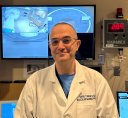
 Baris Turkbey
· 5 previous affiliations
- National Institutes of HealthSince 2007
- Senior Clinician, Radiologist · Since 2021
- Director · Since 2020
- Researcher · Since 2012
- Staff Clinican/Radiologist · 2007–2021
- National Cancer InstituteSince 2020
- Senior Clinician, Radiologist · Since 2021
- Director · Since 2020
- Hacettepe University Hospital2003–2007
- Radiology Resident · 2003–2007
- Hacettepe University1996–2003
- Doctor of Medicine (MD) · 1996–2003
- Gazi Anadolu Lisesi1989–1996
- High School Diploma, Mathematics and Science · 1989–1996
Research Overview
Baris Turkbey focuses on advanced medical imaging, artificial intelligence applications in radiology, and the diagnosis and management of prostate cancer. His trajectory spans the clinical validation of multiparametric MRI and targeted biopsies to the integration of deep learning models for volumetric tumor analysis. Currently, his work explores AI-assisted image interpretation and novel computational methods for high-fidelity ultrasound and PET imaging.
Research Trajectory
Turkbey's early work at the National Institutes of Health established foundational clinical evidence for the utility of advanced imaging in urologic oncology. In 2011, he detailed the evolving role of magnetic resonance imaging in staging localized disease in Magnetic resonance imaging of localized prostate cancer: coming of age in the psa era. This work highlighted how superior soft-tissue resolution could improve tumor localization and monitoring compared to traditional clinical indicators. Building on this diagnostic foundation, he investigated the outcomes of targeted biopsy techniques. In Imaging and pathology findings after an initial negative MRI-US fusion-guided and 12-core extended sextant prostate biopsy session (2014), he examined the detection rates in follow-up sessions for patients with initial negative results, suggesting that increasing the follow-up interval is appropriate for low-risk groups.
As imaging techniques matured, Turkbey's research expanded into image-guided therapeutics and interventions. He contributed to prospective clinical trials evaluating the safety and feasibility of targeted treatments, such as the study detailed in MRI-guided focal laser ablation of prostate cancer: a prospective single-arm, single-center trial with 3 years of follow-up (2021). Concurrently, his collaborative efforts began to incorporate deep learning methodologies to solve complex spatial alignment problems in medical imaging. For instance, he participated in the development of novel optimization techniques for neural networks in Transformed Grid Distance Loss for Supervised Image Registration (2022), addressing challenges with rotation representation in volume-to-volume registration tasks.
In recent years, Turkbey has focused heavily on the intersection of artificial intelligence and clinical radiology, specifically evaluating how deep learning models compare to and assist human experts. He directed research comparing AI models against expert radiologists in estimating tumor volume using biparametric MRI (bpMRI). This work, presented in Evaluating deep learning and radiologist performance in volumetric prostate cancer analysis with biparametric MRI and histopathologically mapped slides (2024), demonstrated that while both AI and humans tend to underestimate tumor size relative to histopathology, human experts currently maintain an edge in volumetric accuracy. This research contributes to the area of Native 3D Volumetric Feature Extraction and informs the broader field of Conformal Dose Distribution for Precision Toxicity Mitigation by improving the precision of tumor boundary delineation for focal therapies.
Continuing the evaluation of AI in clinical workflows, Turkbey investigated its potential to reduce diagnostic variability. The 2025 study Evaluating Artificial Intelligence–Assisted Prostate Biparametric MRI Interpretation: An International Multireader Study assessed how deep learning models impact the detection rates of clinically significant prostate cancer across readers with varying levels of experience. Alongside MRI and AI, his research also encompasses advanced molecular imaging. He evaluated the use of 18F-DCFPyL in PSMA-based PET imaging in newly diagnosed, high-risk localized prostate cancer, a National Cancer Institute (NCI) Cancer Moonshot trial. (2025), exploring how PSMA-PET/CT can improve patient selection for local therapy by better detecting metastatic disease prior to radical prostatectomy.
Most recently, Turkbey has collaborated on the development of open-source computational resources to advance novel imaging modalities. He contributed to OpenPros: A Large-Scale Dataset for Limited View Prostate Ultrasound Computed Tomography (2026), which provides over 280,000 paired samples of realistic anatomical phantoms and simulated acoustic waveforms. This dataset is designed to train machine learning models to overcome the "limited-angle" problem in ultrasound computed tomography, supporting the research direction of Deep Learning for Accelerated Image Reconstruction by facilitating the shift from slow physics-based reconstruction to real-time clinical imaging.
Current Directions
The most recent papers in the evidence indicate a dual focus on integrating artificial intelligence into clinical radiology workflows and advancing novel imaging modalities for prostate cancer. Turkbey is actively investigating how deep learning models can assist radiologists in interpreting biparametric MRI, with an emphasis on reducing inter-reader variability and improving the detection of clinically significant disease. Additionally, his recent work explores the clinical utility of PSMA-based PET imaging for high-risk patients and supports the development of machine learning techniques for ultrasound computed tomography. By contributing to large-scale, open-source datasets, he is helping to facilitate the transition of computationally intensive reconstruction methods into real-time, high-fidelity clinical tools.
Profile updated
Loading new papers…
Other researchers whose papers cluster into the same research directions — a proxy for overlapping technical interests and shared intellectual neighborhoods.
See something wrong? Report a mistake